

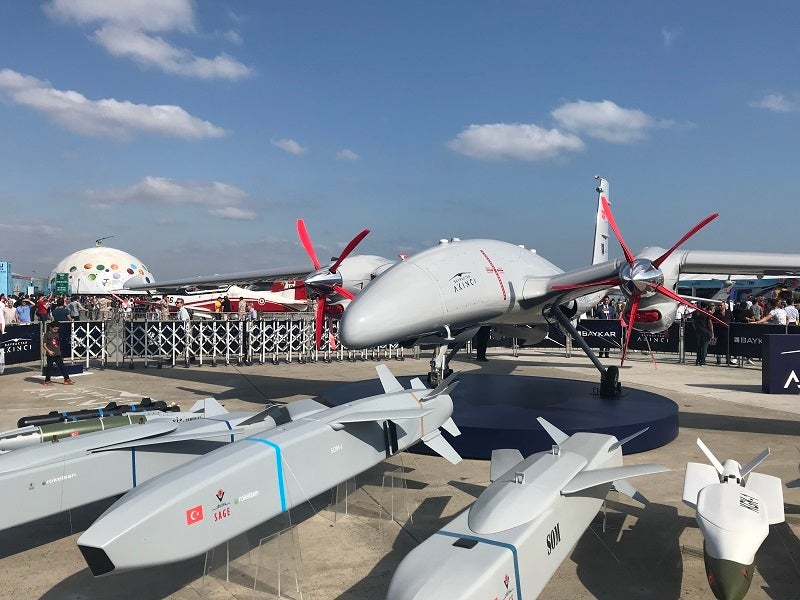
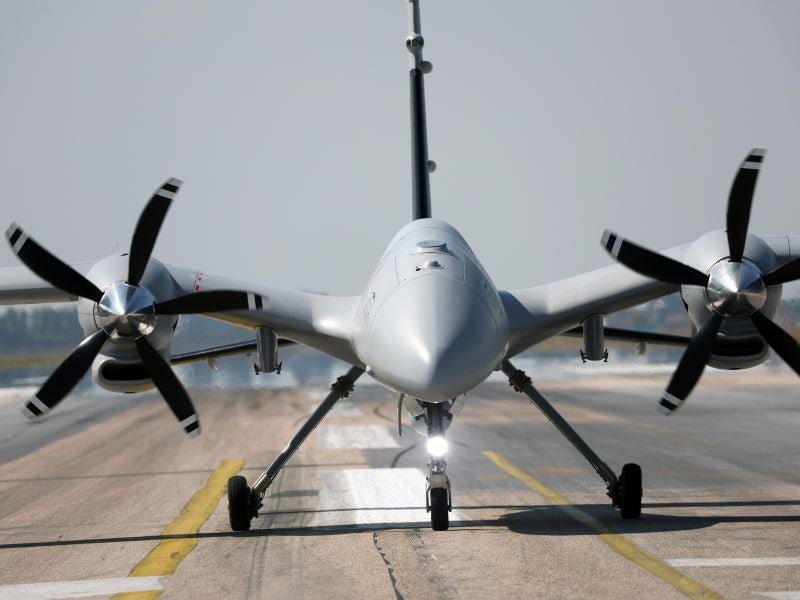
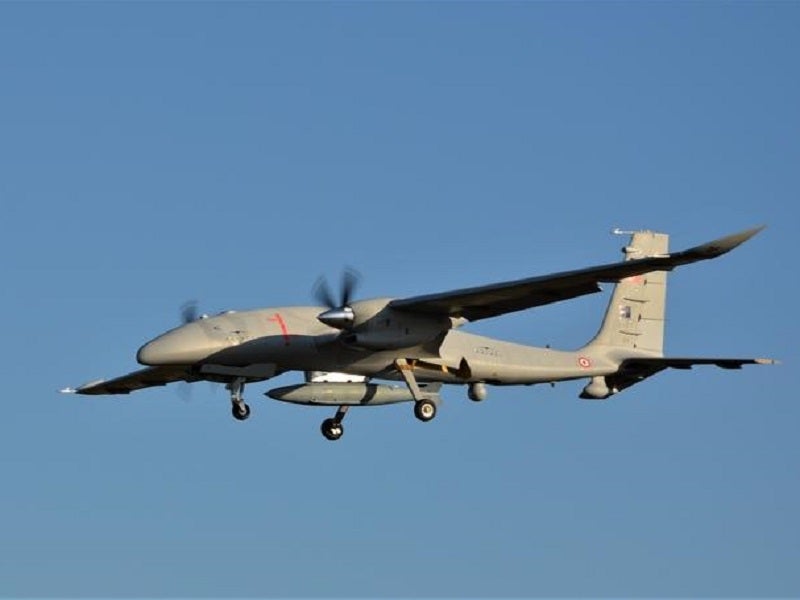
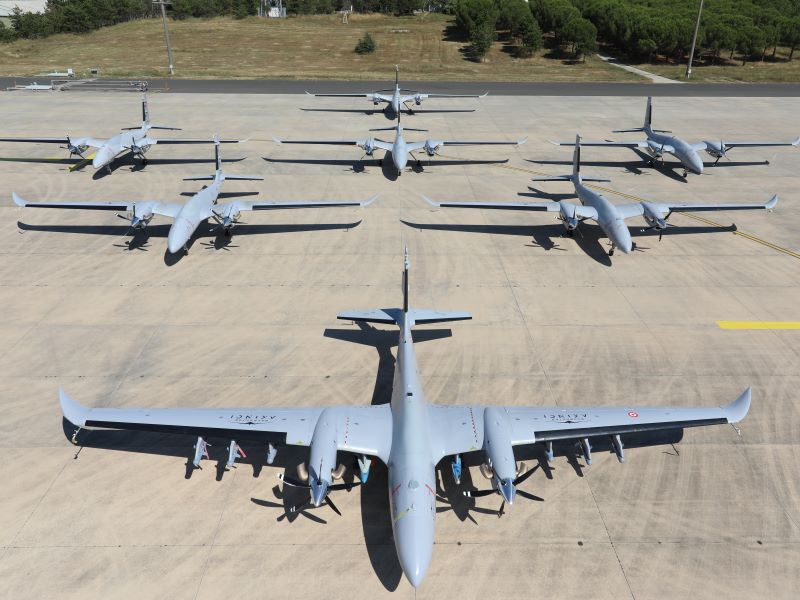
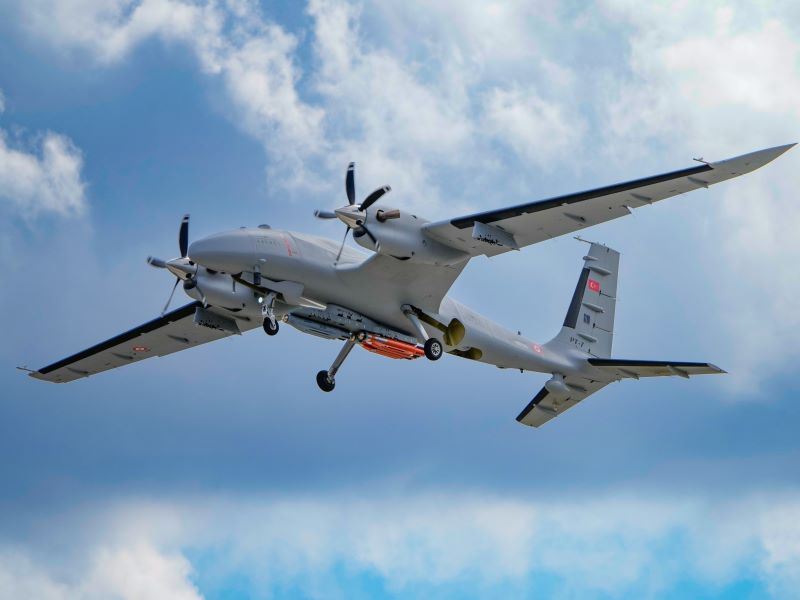
The Bayraktar Akinci is a long-endurance unmanned combat aerial vehicle (UCAV) developed by Turkish drone manufacturer Baykar.
Designed to operate with different ammunition configurations, the hi-tech unmanned aircraft has been designed to perform various operations supporting fighter jets.
Recommended Buyers Guides

Baykar unveiled the drone at the TEKNOFEST Istanbul Aviation, Space and Technology Festival in September 2019.
The Akinci is currently serving the Turkish security forces in both air-to-ground and air-to-air attack missions.
Bayraktar Akinci development details
The drone is the successor of the Bayraktar TB2 Tactical UAV and serves as a leading variant in its class.
The first engine test of the vehicle was performed in September 2019, while the maiden flight was completed in December 2019.
The first prototype of the Akinci UCAV, the PT-1, made its second flight in January 2020 and landed at the Corlu Airport Base Command in Tekirdag province for further testing in May 2020. The PT-2, the second prototype, completed its testing in August 2020, followed by a developed system identification test in March 2021.
The first flight of the third prototype was completed in March 2021, followed by a first firing test in April 2021. Developed locally by Turkish weapons manufacturer Roketsan, the munitions that were used during the testing included laser-guided smart micro munitions (MAM), namely MAM-T, MAM-C and MAM-L.
The flight test for the first mass-produced Bayraktar Akinci UCAV was completed in May 2021. The unmanned system was delivered to Türkiye in August 2021.
The Akinci UCAV has been carrying out various live fire tests, such as a successful firing test with a laser-guided missile and integration of MAM-L and MAM-T guided bombs and the TOLUN IIR guided munition. By March 2025, the Akinci had successfully surpassed 100,000 flight hours.
In February 2026, Akinci successfully conducted an air-to-air firing test with the EREN high-speed multi-purpose loitering munition, scoring a direct hit on an airborne target UAV.
Design and features of Bayraktar Akinci UCAV
The Bayraktar Akinci combat drone has a length of 12.3m (40.35ft), a height of 4.1m, a wingspan of 20m and a maximum take-off weight of 6,000kg (13,227lb). It can take off and land on a runway.
The UCAV has a fault-tolerant system architecture and a cross-redundant ground control station architecture. It features a uniquely designed fuselage and wings for enhancing its ability to carry a variety of payloads. It can perform operations that are conventionally performed by fighter jets.
Flight control and avionics
The combat UAV is equipped with a triple redundant flight control system. The dual AI-powered avionics system integrated into the platform helps to improve signal processing, sensor fusion and situational awareness in real time. Advanced features of the Akinci UCAV include fully automatic and semi-automatic flight modes, as well as unique flight control and avionics architecture.
Domestically developed satellites can be used to control the combat drone. The drone uses advanced AI features to collect and process data received from onboard sensors and cameras. The sensors and actuators are highly redundant.
The AI system can determine key details of the aircraft, such as the angle of roll, stand-up and orientation.
Sensor payloads on Akinci UCAV
The drone has the capacity to carry a maximum payload of 1,500kg, including simultaneous electro-optic/infrared/laser designation, multi-mode active electronically scanned array radar and a signals intelligence system.
Weapon payloads on Bayraktar Akinci UCAV
The UCAV can be fitted with different weapon payloads such as laser-guided smart munitions, missiles and long-range stand-off weapons.
The weapon payloads that can be carried by the drone include the Cirit missile, the mini smart munition Bozok, the MAM-L (thermobaric) and MAM–C (high-explosive), a long-range anti-tank missile system missile, and MK-81, MK-82, MK-83 guided bombs. The UCAV can also be armed with Gokdogan and Bozdogan air-to-air missiles, the wing-assisted MK-82 guided bomb and the SOM-A stand-off missile.
Ground control station
The ground control station utilises triple bands to implement both line of sight control and video transmission, while beyond line of sight (BLOS) control and video transmission of the drone is enabled through satellite communication.
The drone supports BLOS operations through global satellite networks and attendant ground data terminals.
The ground control station features various components including Nato-specification shelter systems, tactical radio systems, intercom systems, multi-function pilot console and radar, plus payload operator consoles.
Engines and performance
The Akinci is powered by two turboprop engines with power options available for 450hp, 750hp or 850hp engines.
The unmanned aircraft can burn jet-A1 and JP-8 fuel types. The upward thrust is imparted by a turboprop with a five-blade propeller.
The unmanned vehicle can achieve a cruise speed of 150 knots and a maximum speed of 240 knots true air speed (KTAS) with an operational range of 6,000km and an endurance of more than 24 hours.
The Akinci has an operational altitude and a service ceiling of 30,000ft and 40,000ft, respectively.
Orders and deliveries
Azerbaijan signed a memorandum of understanding with Baykar in April 2023 for a drone production facility to be constructed. Azerbaijan unveiled a training centre and hangar for a new Akinci drone in February 2024, confirming a purchase had been made.
In August 2023, Baykar signed an agreement with the Kingdom of Saudi Arabia for the sale of Akinci drones.
