

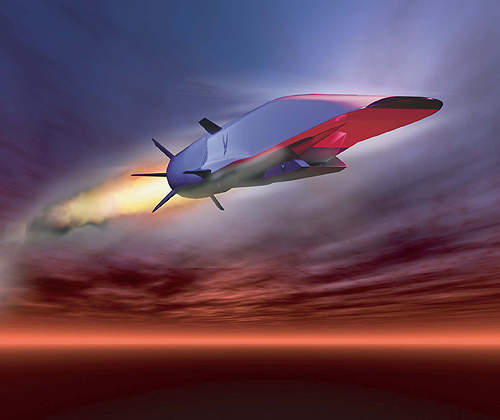

The X-51 is an unmanned scramjet demonstration aircraft designed and developed by the consortium of Defence Advanced Research Project Agency (DARPA), Boeing Integrated Defence Systems, Pratt & Whitney Rocketdyne and Nasa.
Recommended Buyers Guides

The aircraft was developed to meet the requirements of the US Air Force (USAF) as part of the WaveRider programme. The programme envisages design and development of demonstrator aircraft for the USAF.
The X-51 is principally used to demonstrate the speeds and various aspects of hypersonic flight. It is developed to demonstrate a reliable system adequate to jet fuel and accelerate through multiple Mach numbers. The maiden flight of the aircraft was completed on 26 May 2010. The aircraft remained in air for 200 seconds at a top speed of Mach 5.
Fuelled by military fuel JP-7, the scramjet engine of X-51 is designed to run for five minutes (300s), while the unmanned experimental supersonic aircraft X-43 is fuelled by hydrogen and runs for just 100s.
USAF scramjet demonstration aircraft programme
The US Air Force Research Laboratory (AFRL) launched the endothermically fuelled scramjet engine flight demonstrator (EFSEFD) programme in December 2003. The programme envisages the development of demonstrator aircraft series X-43 and X-51. It was later renamed scramjet engine demonstrator – WaveRider (SED-WR) and the vehicle was officially named X-51 in September 2005. Four scramjet-powered X-51s were manufactured for the USAF.
Researching the air-breathing system-level potential of scramjets through multiple flight tests will cost around $7.7m.
Developing the X-51 Wave Rider demonstrator
The X-51 is being developed to operate at speeds of more than Mach 7 (8,575km/h) at an altitude of 50,000ft. The number of flight tests was increased by AFRL from four to six, with flights at four to six-week intervals, assuming no failures.
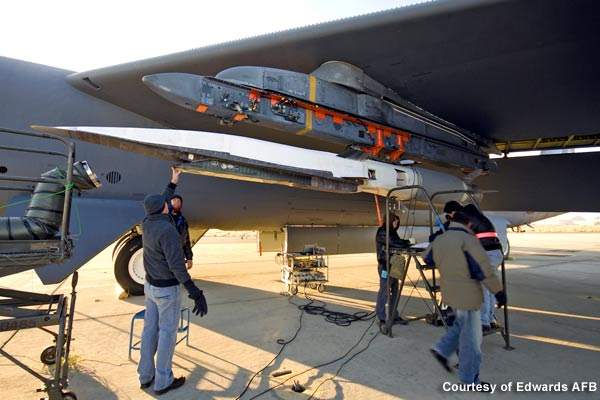
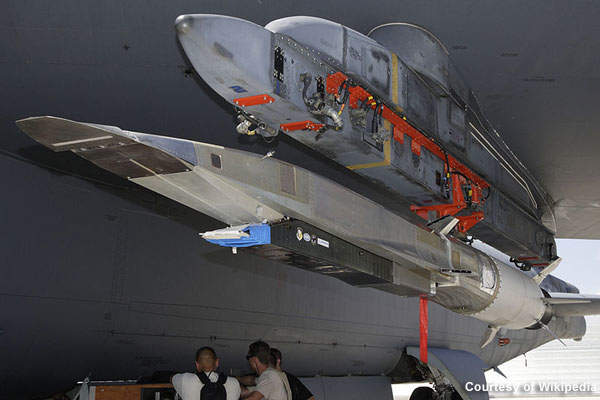
On 14 December 2009, the first captive flight was carried on the B-52 bomber aircraft from Edwards Air Force Base with the unmanned craft snugged under a wing.
During the first hypersonic flight test, conducted on 26 May 2010, the B-52 bomber aircraft carried the Scramjet demonstration aircraft to 50,000ft above the Point Mugu Naval Air Warfare Center Sea Range, from where it was released. An army tactical missile system (ATACMS) solid-rocket booster burnt and propelled the X-51 to achieve Mach 4.5 speed.
Following this, the booster was thrown away and the X-51A’s SJY61 supersonic combustion ramjet propulsion system ignited the ramjet engine and impelled the vehicle to fly at an altitude of 70,000ft at a top speed of Mach 5 for 140s.
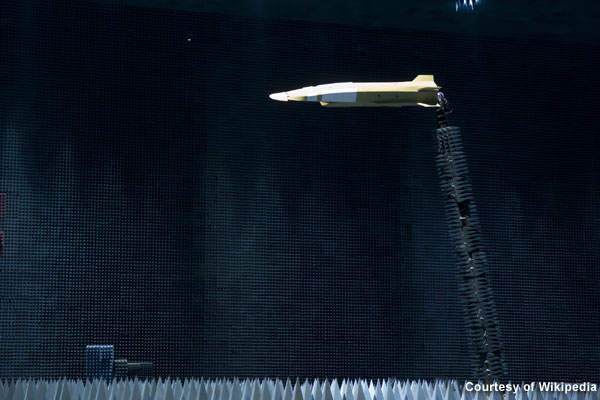
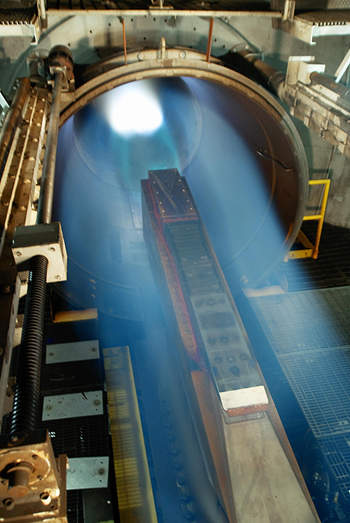
Wind tunnel tests and modelling were performed during this test to assure the safe separation of the vehicle from B-52.
The on-board sensors equipped in the vehicle transmitted the data to ground systems located at Point Mugu, Edwards Air Force base and Vandenberg Air Force Base before the flight was terminated.
The ground station operators reviewed the data and identified that the vehicle failed to fly at Mach 6 speed due to quicker acceleration at an altitude lower than expected, as well as unexpected temperatures and pressures in the internal sections of the scramjet.
The second test flight of the vehicle took place in June 2011. The X-51 was dropped from the Boeing B-52 Stratofortress over the Pacific Ocean. The aircraft failed while approaching Mach 5 speeds due to an inlet un-start.
In August 2012, the third hypersonic flight test was conducted with the goal to achieve Mach 6 speed for five minutes. The X-51 was launched by the B-52 from an altitude of 50,000ft. The test failed due to problems with the control fin which caused the aircraft to lose control and crash after 16s of launch
X-51 unmanned scramjet aircraft design
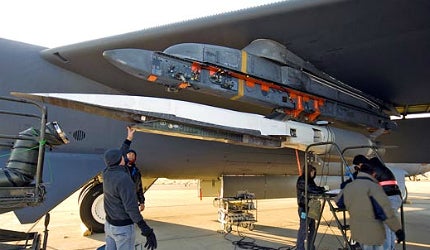
The aircraft was developed to meet the requirements of the US Air Force (USAF) as part of the WaveRider programme
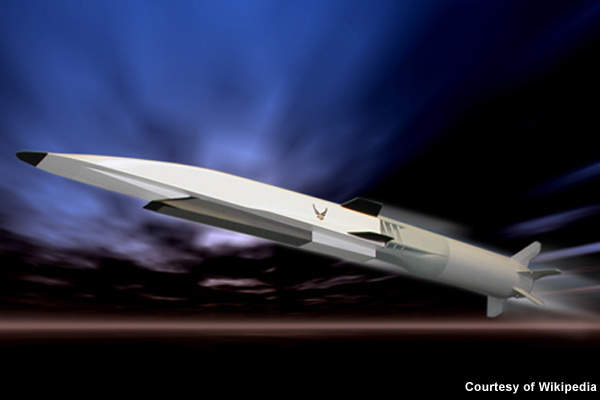
The X-51 is designed as a missile-size demonstration aircraft to showcase scramjet operation from Mach 4.5 to Mach 6.
Related project
Firebird MALE Manned / Unmanned Aerial Vehicle, United States of America
Firebird is a medium altitude and long endurance manned or unmanned aerial vehicle designed and manufactured by US-based company Northrop Grumman Corporation (NGC).
The SED-WR programme successfully completed the preliminary design review (PDR) in December 2004, and in January 2005, a contract was awarded to execute the detailed design phase of the X-51. The critical design review (CDR) of the vehicle, completed in January 2007, cost around $70m.
The lifting body design provides the vehicle with a substantial amount of lift for flights without being dependent on the wings.
The aircraft weighs about 1,814kg and is designed to be fully controlled in supersonic speeds, even when gliding without propulsion.
When the X-51 travels at high speeds, the increased heat can damage the metal portions of the airframe by melting them.
In order to avoid damage, the hypersonic combustion is used to produce cycling water behind the engine cowl and sidewall edges, thereby cooling the surfaces. As a result, the engine is maintained at the required operating temperature.
Turbine engine on the US Air Force’s aircraft
The X-51 is powered by Pratt & Whitney Rocketdyne’s hydrocarbon (JP-7) fuel-cooled or SJY61-2 scramjet engine. The conventional turbine engines are used to achieve high-speed flight research at supersonic speeds.
When the engine is ignited, a mixture of both ethylene and JP-7 is burnt before switching solely to JP-7 fuel.
The Global Military Aircraft Market 2011-2021
This project forms part of our recent analysis and forecasts of the global Military Aircraft market available from our business information platform Strategic Defence Intelligence. For more information click here or contact us: EMEA: +44 20 7936 6783; Americas: +1 415 439 4914; Asia Pacific: +61 2 9947 9709 or via email.
Related content
Scramjets – Boeing’s X-51A rides the supersonic wave
Successful tests of Boeing’s X-51A Waverider aircraft have given new blood to the scramjet concept.
Phantom Eye HALE Unmanned Aerial Vehicle (UAV), United States of America
A high-altitude long-endurance (HALE) unmanned aerial vehicle (UAV), Phantom Eye is designed and manufactured by Boeing Phantom Works, US.
RQ-11B Raven Unmanned Air Vehicle (UAV), United States of America
The RQ-11B Raven (Raven B) is a lightweight and low-altitude remote-controlled unmanned air vehicle (UAV) system designed and developed by AeroVironment, US.
