
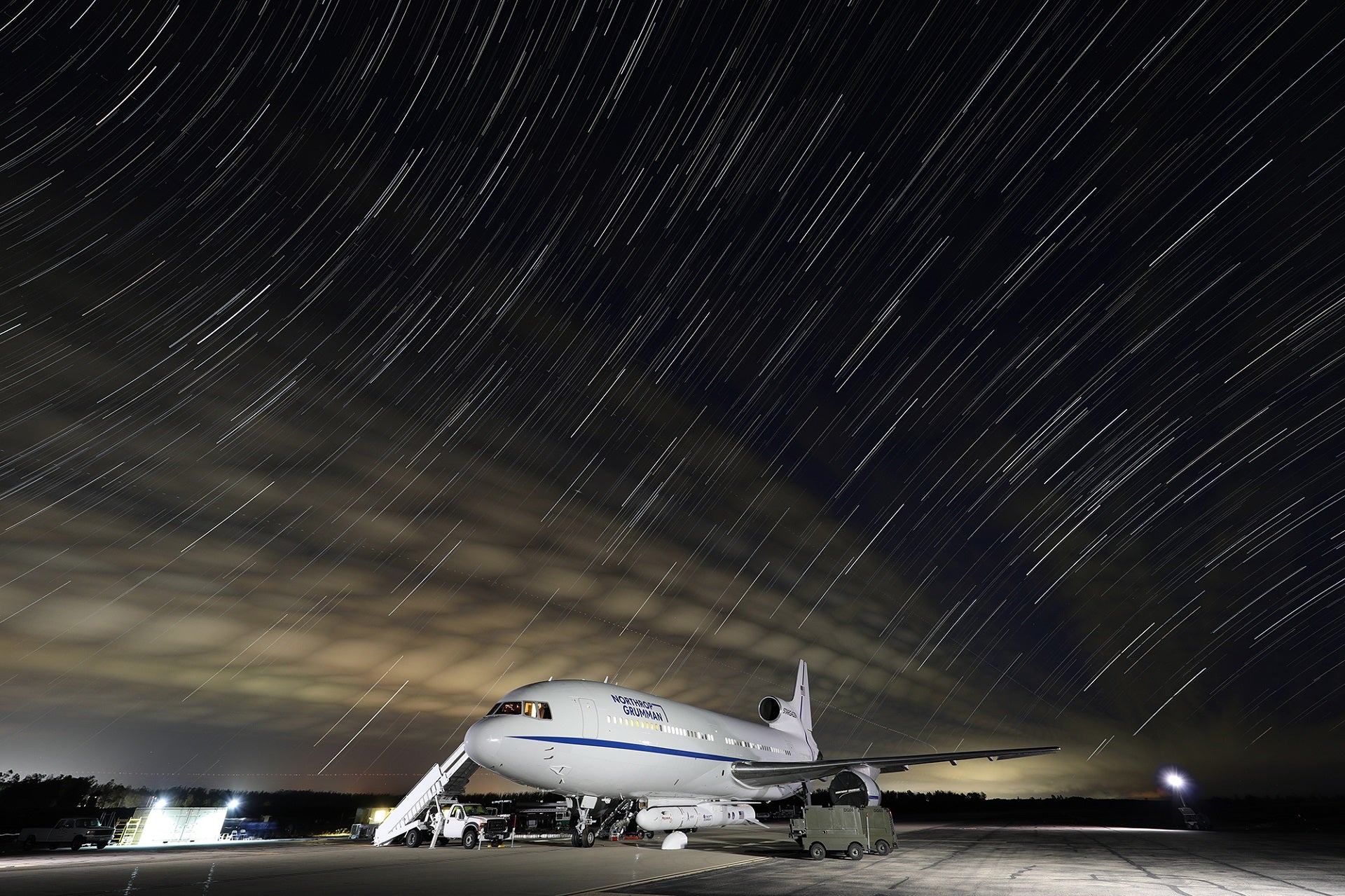
A Northrop Grumman Pegasus XL rocket has launched the US Space Force’s (USSF) Tactically Responsive Launch-2 (TacRL-2) mission on 13 June.
The three-stage rocket was launched from Vandenberg Space Force Base in California to deliver a ‘technology demonstration satellite’ to low-Earth orbit (LEO).
Go deeper with GlobalData

Discover B2B Marketing That Performs
Combine business intelligence and editorial excellence to reach engaged professionals across 36 leading media platforms.
Pegasus is an air-launched rocket system. It was carried by Stargazer L-1011 aircraft.
Within a short period after its release from Stargazer, Pegasus ignited its first stage at approximately 40,000ft above the Pacific Ocean and carried the TacRL-2 mission to its intended orbit.
Northrop Grumman launch vehicles vice-president Rich Straka said: “This Pegasus launch was a clear demonstration of our team’s ability to provide rapid and responsive operational needs.
“Our team was able to execute the design, integration and testing of the TacRL-2 launch vehicle in less than four months from contract award.”
US Tariffs are shifting - will you react or anticipate?
Don’t let policy changes catch you off guard. Stay proactive with real-time data and expert analysis.
By GlobalDataThe latest one is the 45th launch of Pegasus, which uses solid propulsion to provide maximum responsiveness by allowing launch to a wide range of orbits within ‘short timelines’.
So far, Pegasus has launched more than 90 satellites into LEO from five different launch sites in the US, Europe, and the Marshall Islands.
USSF Space Operations chief general John Raymond said: “The space domain is defined by speed and with this effort, we demonstrated the kind of speed it will take to win. We executed a ‘21-day call-up’ to get a satellite on orbit, pulling the payload, mating it with the rocket and integrating the combined package onto the aircraft.”
The TacRL-2 mission was executed by the Small Launch and Targets Division within the Space and Missile Systems Center’s (SMC) Launch Enterprise, in collaboration with SMC’s Space Safari Office.
It is operated by the Air Force Research Laboratory (AFRL) and Space Dynamics Laboratory.
According to the USSF, TacRL-2 was the first mission supported by SMC’s Space Safari Program Office.



