

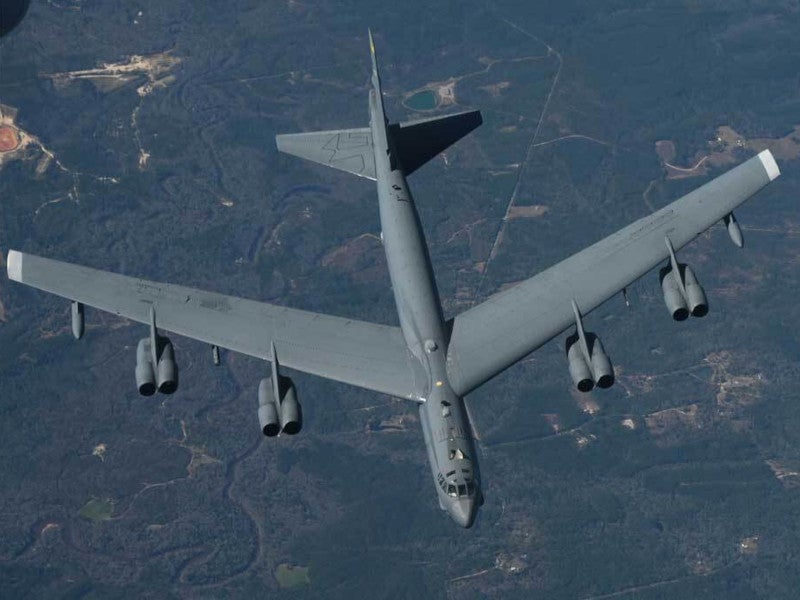
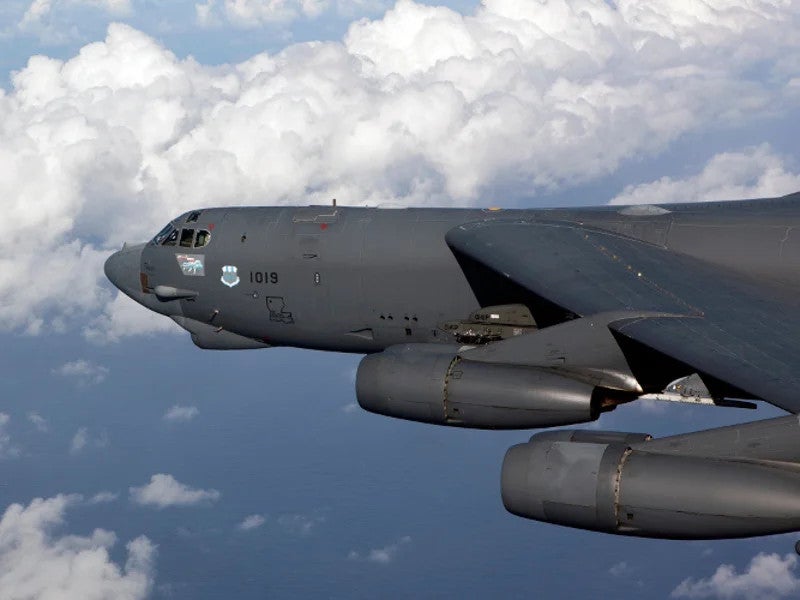
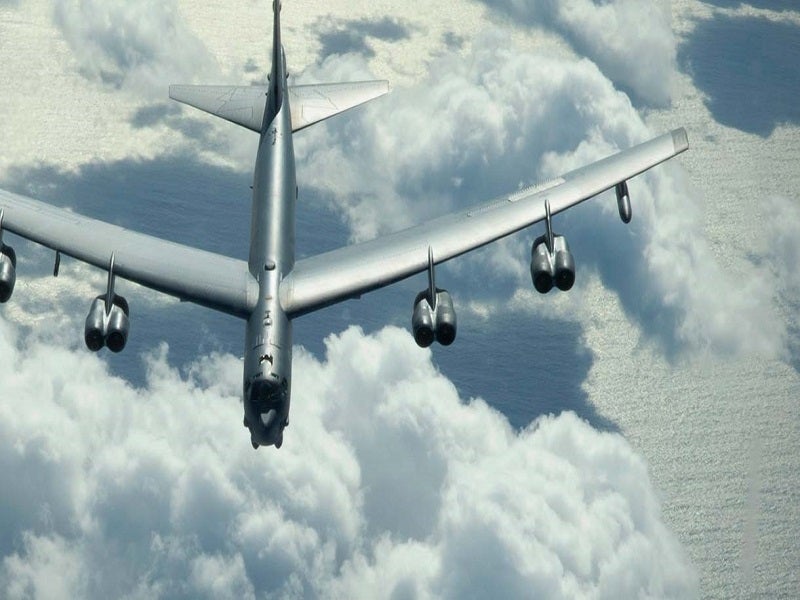
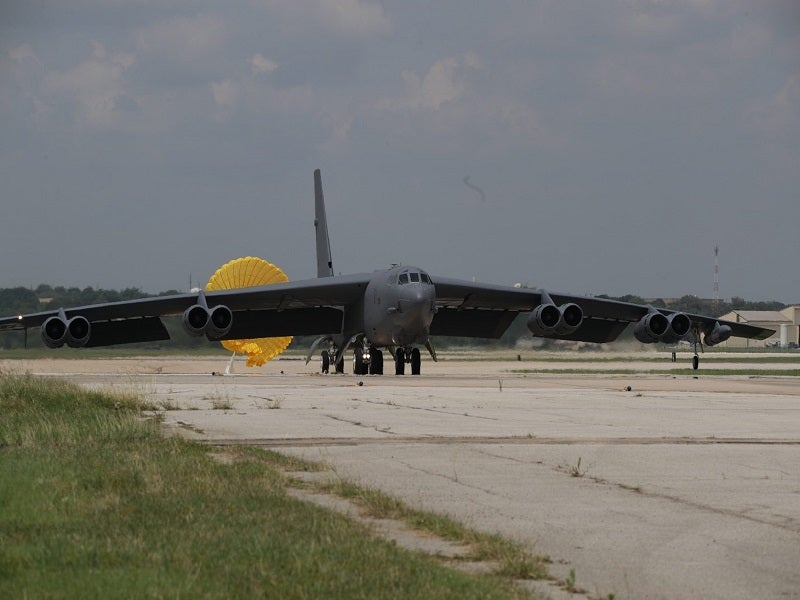
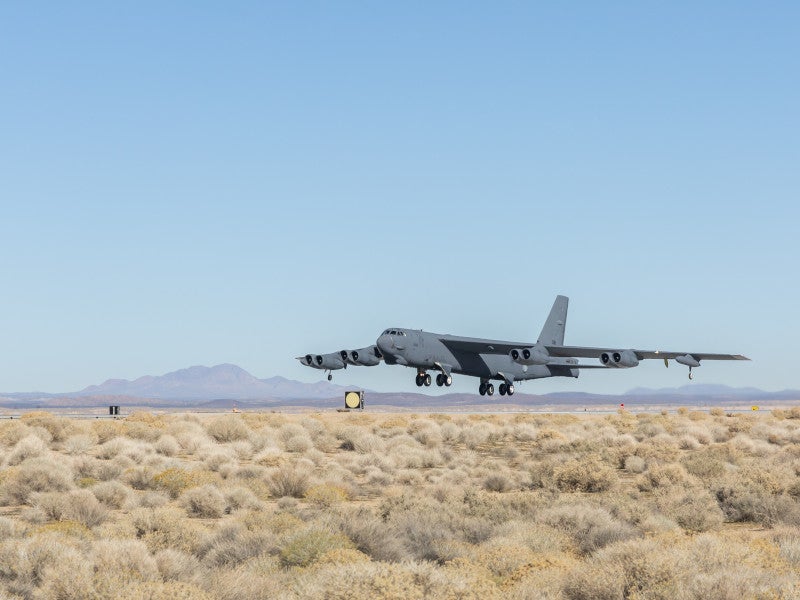
The B-52H is the US Air Force’s (USAF) long-range, large-payload multirole bomber, commonly known as the Stratofortress or the Buff (short for ‘Big Ugly Fat Fellow’). The bomber serves as the USAF’s principal strategic nuclear and conventional weapons platform.
In April 2002, the Boeing B-52 Stratofortress bomber celebrated the 50th anniversary of its first flight, making it the longest-serving combat aircraft in the world, with a total of 744 built. The B-52H entered service in 1961, with 104 units built. The last was delivered in October 1962.
Recommended White Papers

Recommended Buyers Guides

The USAF retired 18 B-52H aircraft, leaving 76 bombers in service, stationed at Barksdale Air Force Base (AFB), Louisiana, and Minot AFB in North Dakota. These aircraft are stored in a hangar at Tinker AFB in Oklahoma, in case they are needed in the future.
The first aircraft was retired in July 2008. All B-52s were transferred from Air Combat Command (ACC) to the Air Force Global Strike Command in 2010.
The B-52H is undergoing extensive upgrades, including engines, radar and digital systems. The upgraded variant is designated B-52J and is expected to reach initial operating capability by 2032.
Due to the extensive system and structural upgrades, the B-52’s service life is expected to continue beyond 2050.
B-52H Stratofortress operational in Iran-Middle East crisis
The US is actively deploying the B-52H in the ongoing Operational Epic Fury launched against Iran in February 2026.
In March 2026, US Central Command (CENTCOM) announced on social media that the aircraft struck Iranian ballistic missiles and command and control posts during the initial 100 hours of operations.
CENTCOM added that the bomber is enabling extended-range strike operations, employing precision-guided and stand-off weapons to help achieve joint force goals throughout the region.
B-52H Stratofortress multirole bomber design and features
The B-52H is a very large aircraft, measuring 159.4ft (48.5m) in length. It weighs approximately 83,250kg with a maximum take-off weight of 488,000lb (219,600kg).
The all-metal skin of the aircraft bears a high proportion of flight loading. When on the ground, the forward section of the fuselage appears wrinkled, but the skin expands and smooths out as the crew compartment pressurises when the aircraft gains altitude.
B-52H Commercial Engine Replacement Programme (CERP)
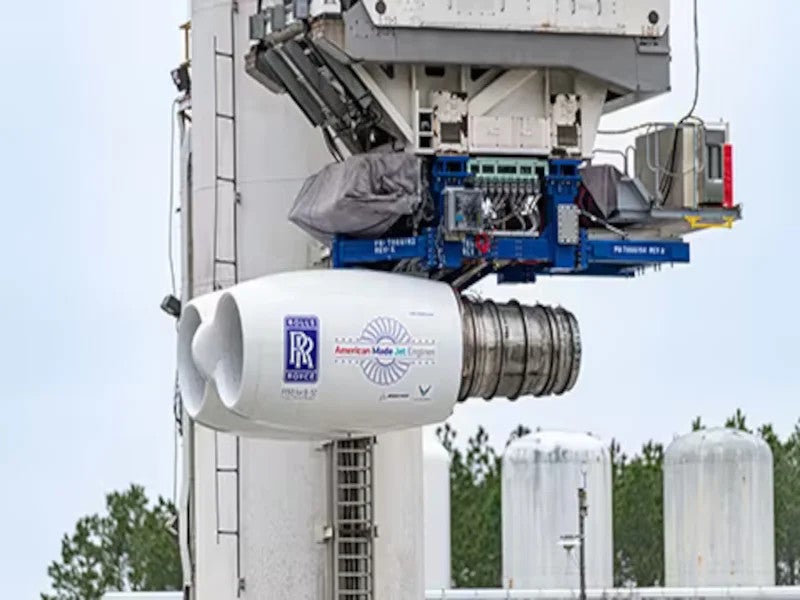
The USAF is re-engining its B-52 fleet under the Commercial Engine Replacement Programme (CERP), as the existing TF33-PW-103 engines are expected to be non-viable to support by 2030 due to a decline in production and outdated technologies.
Under this sustainment initiative, the existing TF33-PW-103 powerplants will be swapped out for Rolls-Royce F130 engines, offering broadly comparable dimensions, mass and thrust performance.
The enhancement is expected to improve fuel economy and boost onboard electrical power output while introducing up-to-date digital engine management systems and updated cockpit displays.
In September 2021, Rolls-Royce was awarded a $2.6bn contract to supply 608 F130 engines to replace the current TF33-PW-103 engines. The contract also includes the supply of spare engines and related equipment.
In addition to the engine change, the CERP will renew key supporting systems, including the pylons / struts and nacelles, the aircraft’s electrical power generation equipment and flight-deck displays.
Spirit AeroSystems secured a contract from Boeing to supply engine pylons and nacelles for the initial phase of the B-52 CERP programme in April 2022.
In December 2025, Boeing was awarded a $2.04bn contract to initiate the next stage of the CERP, which includes upgrading and conducting flight trials on two B-52 test aircraft to confirm the improvements, ahead of progressing to full-rate production.
In February 2026, Rolls-Royce announced the completion of altitude and operability trials for the F130 engine for the programme.
The programme will now advance to system integration and dual-pod testing.
B-52 Radar Modernisation Programme (RMP)
In June 2023, Boeing initiated upgrades to the radar system of the B-52 bombers as part of the B-52 Radar Modernisation Programme (RMP) to replace the existing AN/APQ-166 radar with the APQ-188 active electronically scanned array (AESA) radar system.
The programme is aimed at increasing system reliability and minimising sustainment costs. The new radar suite will deliver enhanced high-resolution ground-mapping, improving targeting precision and enabling the tracking of moving targets on both land and in the air.
In December 2025, Boeing delivered a B-52 equipped with the new radar system to the USAF for testing purposes. The aircraft subsequently completed its ferry flight during the same month.
Information collected during testing will shape the next stages of development testing.
B-52H engineering sustainment programme
In October 2007, Boeing partnered with Northrop Grumman to develop a new electronic attack capability for the B-52, the B-52H core component jammer (CCJ) programme. Boeing was awarded a USAF contract in June 2008 to develop the technologies required for the CCJ programme.
The USAF awarded a $750m, ten-year engineering sustainment programme (ESP) contract to Boeing in June 2009 to provide engineering and technical support services for the B-52H and its components, as well as support and test equipment, and a system integration laboratory.
Boeing was awarded a $70m contract by the Pentagon in August 2009 to upgrade the communications system of the B-52H bomber aircraft.
In September 2009, the USAF awarded a $5.4m contract to Boeing to install an advanced satellite communication system on the B-52H.
A $22m contract was awarded to Boeing in January 2010 under the ESP to provide engineering services to the B-52H, followed by a second $21.7m contract in February 2011 to continue supporting the B-52H Stratofortress bomber.
B-52 CONECT programme
In April 2005, the USAF awarded Boeing a contract for the system design and development (SDD) of the B-52 combat network communications technology (CONECT) programme, which provides network-centric operations capability.
CONECT includes new computer architecture and colour displays, a Link 17 tactical datalink and an advanced wideband terminal, which allows the dynamic retasking of missions and weapons during flight and provides increased situational awareness. The SDD phase was completed in early 2009.
In August 2009, Boeing delivered the B-52H upgraded with CONECT to the USAF, with the first flight test carried out in January 2010 at Edwards AFB.
In December 2011, Boeing announced that all flight testing required for the B-52 CONECT programme to attain low-rate initial production clearance from the USAF was carried out at Edwards AFB. Milestone C authorisation for the LRIP was achieved in 2012.
