

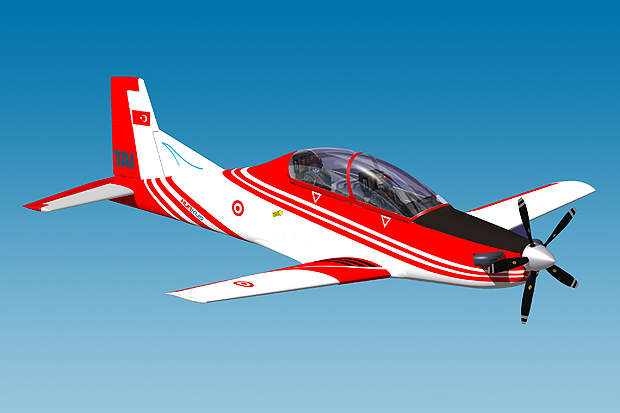
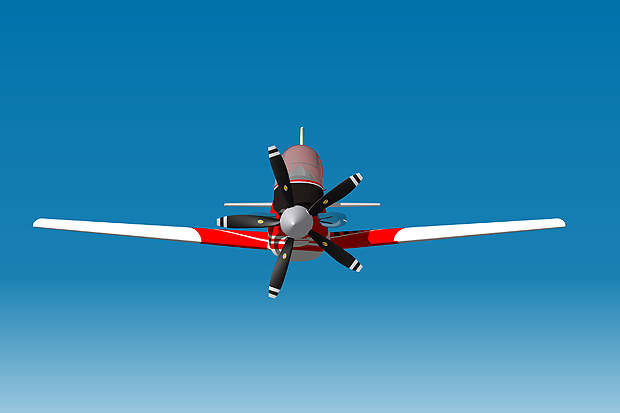
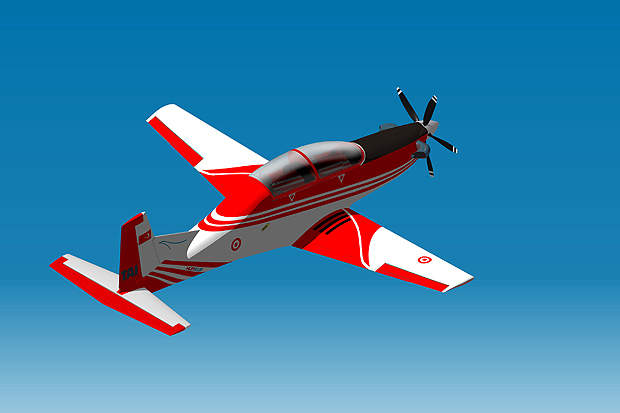

TAI Hurkus is a primary and basic trainer aircraft designed and manufactured by Turkish Aerospace Industries (TAI). It is a two-seat, single-engine turboprop aircraft being developed from the KAI KT-1 trainer. It is being built principally to meet the requirements of the Turkish Air Force (TAF). The aircraft will be used to execute basic pilot training, instrument flying, navigation training, and weapons and formation training missions.
Recommended Buyers Guides

The Hurkus will also be exported as a civilian and military flight trainer aircraft. The first aircraft was rolled out in June 2012. Its maiden flight, which was expected to take place in 2009, was first delayed until November 2012 and then further until mid-2013. It was finally held in August 2013 and three more tests were performed in September 2013. Hurkus flew at an altitude of 10,200ft during its fourth flight.
Hurkus training aircraft design
Hurkus has been designed to execute its missions day or night. It is being built adhering to the EASA CS 23 standards. In December 2006, the Secretariat for Defence Industries (SSM) approved the eight-month conceptual design of the Hurkus. The critical design review of the aircraft was completed in April 2009.
The aircraft has been designed to be fully operational in civil and military pilot training bases all over the world. Hurkus is equipped with a Pratt & Whitney Canada engine that can produce 1,600hp of output power.
Development of the Hurkus aircraft
The development programme of the Hurkus began in March 2006 as part of the contract signed between the SSM and TAI. The programme includes the development of two aircraft variants, namely Hurkus-A basic trainer and Hurkus-B advanced trainer. Four aircraft will be designed, built, examined, verified and certified by TAI under the programme.
Related project
EMB-312 Tucano Trainer Aircraft, Brazil
The EMB-312 Tucano is a tandem-seat, single-turboprop basic trainer developed by Embraer for the Brazilian Air Force (FAB).
The aircraft was named after Turkey’s first aviator, Vecihi Hurkus. It was designated such during the eighth International Defence Industry Fair held in Ankara, Turkey. The indigenous design prototype of Hurkus was showcased at the 47th International Paris Air Show in June 2007.
Microtecnica (now part of Goodrich) was awarded a contract by TAI in April 2010 to supply the environmental control system (ECS) for the Hurkus trainer aircraft. The ECS is equipped with three major subsystems including bleed air, temperature control and cooling. The system uses air discharged from the engine to pressurise, ventilate and heat the cabin. In contrast, cooling is rendered by a separate vapour cycle compressor. Work on the first prototype of the ECS was concluded at the end of 2010. The European Aviation Safety Agency (EASA) certified the Hurkus aircraft design in July 2012.
Tandem cockpit
Hurkus features a full glass cockpit with a tandem seat configuration for two crew – a student pilot and an instructor.
The cockpit is equipped with zero-zero ejection seats and provides 11° outside view to the front pilot and 5° outside view to the pilot seated at the rear. It is also fitted with an all-digital avionics suite, cockpit pressurisation system, escape system and on-board oxygen generating system.
The cockpit is fitted with a strengthened glass canopy for clear visibility and bird strike resistance. It incorporates a primary flight display (PFD), which provides flight data to the pilot. A small multifunctional display is also installed on the left side of the PFD. The flight controls are located on the left side of the displays.
Hurkus avionics
The avionics suite installed in the Hurkus includes a head-up display (HUD), multi-function displays (MFDs), global positioning system, a mode S transponder, radar altimeter, attitude heading reference system and an emergency locator beacon. An air data computer will analyse the flight data and display it to the pilot in a readable format.
Engine
Hurkus is powered by a Pratt & Whitney Canada PT6A-68T turboprop engine driving a five-bladed Hartzell HC-B5MA-3 propeller. The engine develops a power output of 1,600shp.
Performance
The Hurkus has a service ceiling of 34,700ft and can climb at the rate of 4,370ft a minute. The aircraft has a maximum cruise speed of 574km/h. Its stall speed is 143km/h. The maximum range of Hurkus is 1,478km.
Related content
Hawk Trainer Aircraft, BAE Systems, UK
The Hawk family of aircraft has been made famous by the Red Arrows Royal Air Force Aerobatic Team.
Pilatus PC-21 Turboprop Trainer Aircraft, Switzerland
Pilatus Aircraft Limited rolled out the PC-21 training aircraft in May 2002.
