
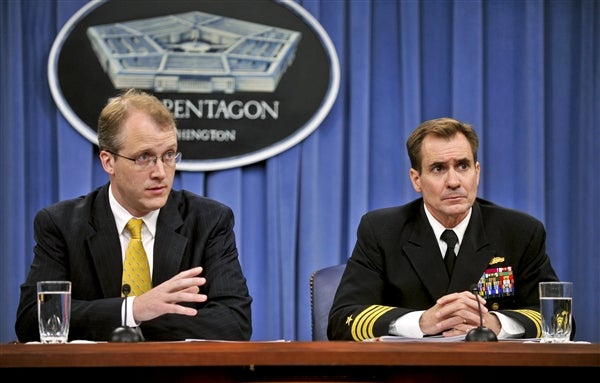
US defense secretary, Leon Panetta, has asked the US Air Force (USAF) to take additional steps to alleviate risks associated with Lockheed Martin-built F-22 Raptor pilots.
Go deeper with GlobalData


Discover B2B Marketing That Performs
Combine business intelligence and editorial excellence to reach engaged professionals across 36 leading media platforms.
Some F-22 pilots had recently refused to fly the aircraft in public areas due to Hypoxia-like symptoms during flights.
In a joint conference with navy captain John Kirby, George Little, the acting assistant secretary of defense for public affairs, said that Panetta has closely followed progress in the F-22 and ordered the air force to accelerate installation of automatic backup oxygens system on all aircraft.
Little said: "Secretary Panetta believes the department must do everything possible to ensure pilot safety and minimise flight risks."
According to Little, all F-22 flights will be conducted at a limited distance from airstrips with immediate effect, to enable quick recovery and landing in the event of a pilot encountering unanticipated physiological conditions during flight.
The defense secretary has also asked the air force to provide him with a monthly report on its progress in finding the root cause of the problem.

US Tariffs are shifting - will you react or anticipate?
Don’t let policy changes catch you off guard. Stay proactive with real-time data and expert analysis.
By GlobalData"The root cause of hypoxia-like events has not been determined. It is possible … that it could be attributed to the oxygen system in the airplane, thus the installation of a backup system. But it could have other causes, too, and the Air Force is aggressively looking at other factors that could be contributing," said Little.
Kirby said the automatic backup oxygen system is scheduled to complete testing by the end of November, followed by installation on ten Raptors per month, beginning from December 2012.
"There’s a troubleshooting process going on right now, so the aircraft being in operation assists that process. We believe we’ve mitigated the risks as much as possible."
Kirby said if required the secretary will ground the fleet further, adding: "But right now, he believes … this is the right course."
Around 12 hypoxia-related incidents, including dizzy spells and blackouts, were reported by F-22 pilots between April 2008 and January 2011, prompting USAF to frequently ground the fighter fleet.
Image: George Little and John Kirby during the F-22 Raptor press conference. Photo: courtesy of Glenn Fawcett (DoD).



