
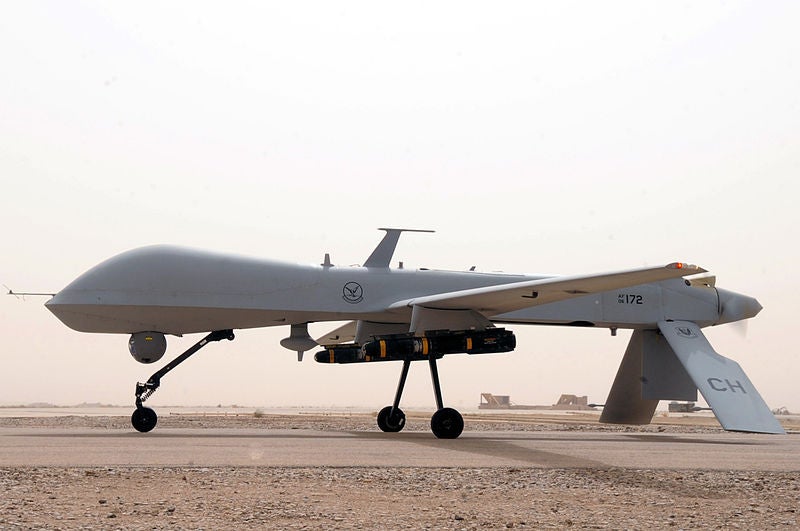
The US Air Force (USAF) has released a report that determined a lost satellite link event as the cause of an MQ-1B Predator remotely piloted aircraft crash.
The MQ-1B Predator crashed in the US Central Command area of responsibility while being operated by an aircrew from the 432d Air Expeditionary Wing, Creech Air Force Base, Nevada, US, on 4 September 2017.
Go deeper with GlobalData


Discover B2B Marketing That Performs
Combine business intelligence and editorial excellence to reach engaged professionals across 36 leading media platforms.
It was forward-deployed and participating in a combat support mission at the time of the crash.
According to the Air Combat Command Abbreviated Accident Investigation Board report, the incident occurred after the crew lost complete video and command link with the aircraft within one minute of sitting in the cockpit and failed to re-establish the link for ‘unknown reasons’.
The aircraft was around 16 hours into the mission and flying at an altitude of 13,000ft when the aircrew permanently lost the ability to monitor and control it.
The report further stated that the aircraft wreckage was not recovered and as a result hardware could not be analysed.

US Tariffs are shifting - will you react or anticipate?
Don’t let policy changes catch you off guard. Stay proactive with real-time data and expert analysis.
By GlobalDataLoss of government property caused by the crash and the subsequent disappearance of the MQ-1B aircraft is estimated at around $4m.
A statement in the report read: “There were no known injuries or damage to private property, and there was insufficient evidence of any substantially contributing factors.”
MQ-1 is manufactured by General Atomics Aeronautical Systems and is armed with AGM-114 Hellfire missiles. The aircraft is a multi-role version used in support of armed reconnaissance and interdiction.
The company’s Predator B series offers an endurance of more than 27 hours, speeds of 240k true airspeed, and can fly at an altitude of up to 50,000ft.



