

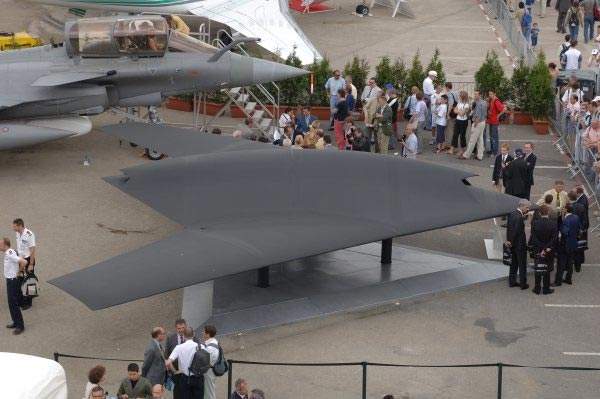
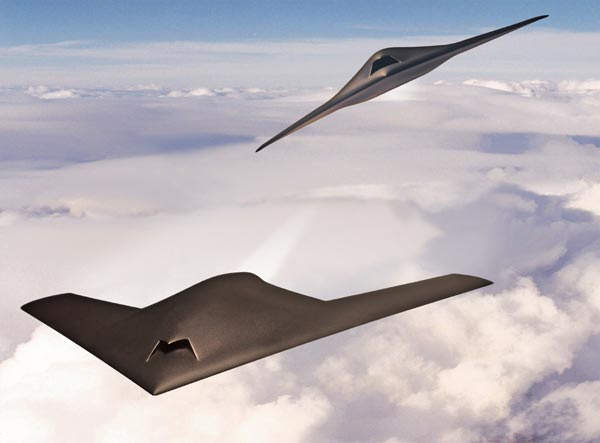
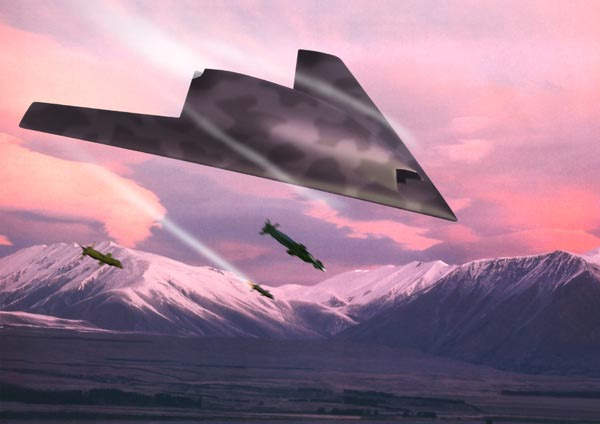
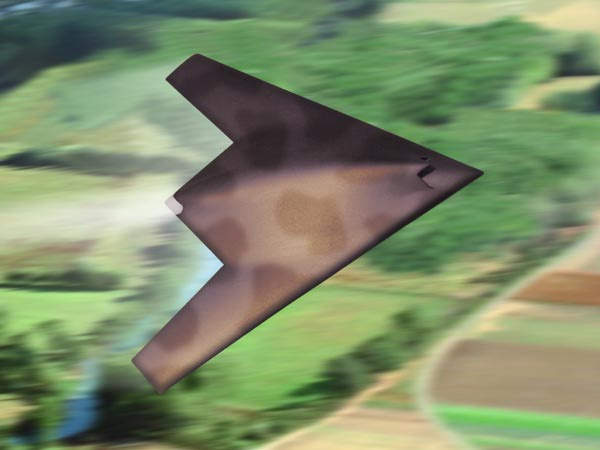
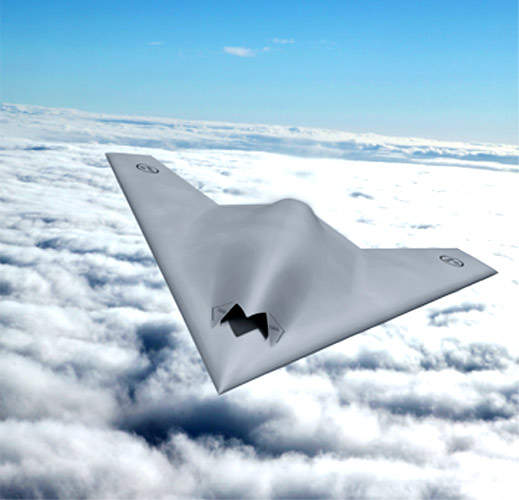
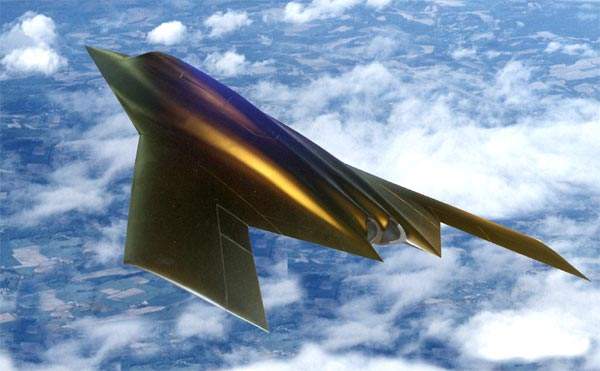
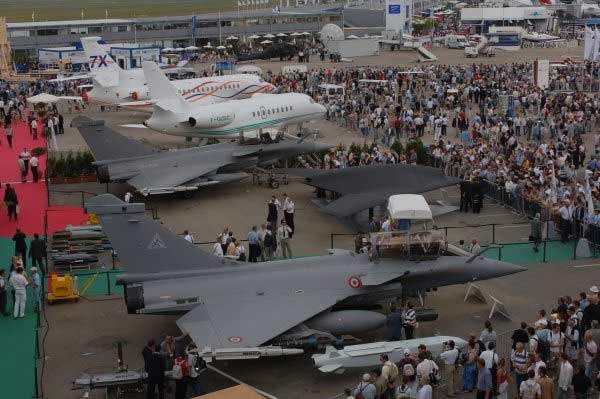
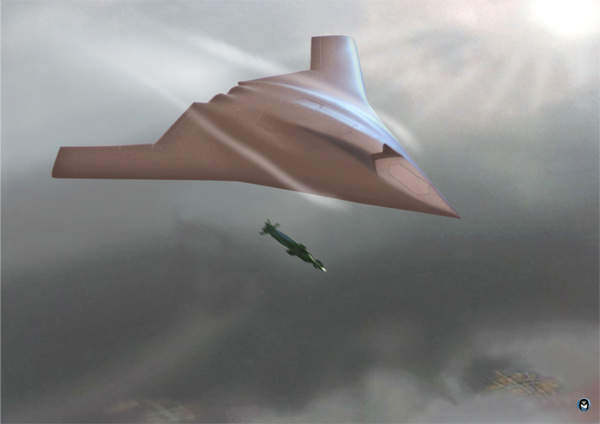

nEUROn is the European unmanned combat air vehicle (UCAV) demonstrator for the development, integration and validation of UCAV technologies and is not for military operational deployment. Dassault unveiled a life-size model of nEUROn at the 2005 Paris Air Show. The operational UCAV is expected to be a larger design than the nEUROn demonstrator. The aircraft performs an air-to-ground mission in a network centric warfare.
Recommended Buyers Guides
nEUROn future UCAV programme
The main aim of the nEUROn programme is to sustain and develop European manufacturers’ aeronautic and other technologies for next-generation combat aircraft and UAVs.
By mid 2005, a series of memorandums of understanding had been signed and industrial teaming arrangements been set up. By the end of 2005, the governments of France, Greece, Italy, Spain, Sweden and Switzerland had agreed to invest in the nEUROn programme.
In February 2006, the nEUROn programme was formally launched with the award, by the French DGA on behalf of the participating nations, of a contract to Dassault as prime contractor for the design and development of the nEUROn demonstrator.
This began a 15-month feasibility phase. The French defence procurement agency (DGA) awarded a contract for a 19-month project definition phase in June 2007, followed by the production of a nEUROn demonstrator.
Following successful ground tests and first engine run up, nEUROn completed its maiden flight from the company’s flight test base in Istres, France, in December 2012. The first flight test was conducted in collaboration with the flight test personnel of the DGA.
Dassault Aviation conducted a formation flight of the nEUROn UCAV with a Rafale fighter and a Falcon 7X business jet in March 2014, marking the world’s first operation in which a combat drone flew in formation with other aircraft.
The entire operation, which lasted for about an hour and 50 minutes, was conducted over the Mediterranean to a range of several hundred kilometres.
The UCAV will be able to launch precision-guided munitions from an internal weapons bay and will have a stealth airframe with reduced radar and infrared cross-sections.
nEUROn contractors and component delliveries
Dassault Aviation is the design authority with responsibility for the general design, system architecture, the flight control system and final assembly together with ground tests and flight tests. Dassault’s UAV and UCAV design capability was developed under a sequence of experimental development and validation programmes, Aeronef validation experimental (AVE). Dassault started the AVE LogiDuc programme (AVE logistics to demonstrate UCAV) in 1999.
Saab Aerosystems, based in Linkoping, Sweden, is responsible for overall design, fuselage, avionics, fuel system, flight control, airworthiness, autonomy, multipayload capabilities, structural design and manufacture and ground and flight testing.
Dassault Aviation received the front and central fuselage section of the nEUROn UCAV demonstrator from Saab on 25 January 2011. Saab has built strong capability in UAV and UCAV technology with the SHARC Swedish highly advanced research configuration demonstrator, FILUR flying innovative low-observable unmanned research UAV, the EuroMALE European medium-altitude long-endurance UAV with EADS and the establishment of the Link Lab drone development centres, a joint venture with Linkoping University.
Technology development on the nEUROn programme would be applicable to planned upgrades of the Saab Gripen fighter aircraft, which is expected to remain in service until about 2035.
In March 2004, the Hellenic Aerospace Industry (HAI) and Dassault signed a memorandum of understanding (MoU) on the Dassault UCAV programme, which became the nEUROn programme. Under the terms of the MoU, HAI is responsible for the engine exhaust, the rear fuselage section and the test rig. The rear fuselage section was delivered to Dassault Aviation in January 2011.
EADS CASA of Spain is responsible for the wings and also the ground station and integration of the data link. EADS CASA and Dassault signed the MoU agreement in May 2005. EADS CASA delivered the wings of the nEUROn to Dassault in March 2011. The wings were shipped to Istres for final assembly.
Ruag in Switzerland is responsible for the weapons interface and wind tunnel testing.
Alenia Aeronautica in Italy is responsible for the development of the electrical power system, the air data system, development of the Smart Weapon Bay, and for flight testing. It delivered the weapon bay doors and mechanism of the nEUROn demonstrator to Dassault Aviation in May 2011.
During 2005, Turkey formally applied to take part in the EADS MALE medium-altitude long-endurance UAV programme and the Dassault-led nEUROn programme.
An attitude and heading reference system (AHRS) is supplied by the LITEF, a subsidiary of Northrop Grumman to the nEUROn UCAV. The LCR-100 Gyrocompass AHRS is a north-finding attitude and heading reference system based on a fibre-optic gyro and micro-electromechanical (MEMS) accelerometers.
nEUROn unmanned combat air vehicle design
The nEUROn is of similar appearance to the AVE-C which is the second prototype of the Dassault Petit Duc and which has high-manoeuvrability unstable yaw aircraft control. Like the Ave-C, the nEUROn has no tail fin and a swept W-shaped wing design
The system incorporates highly advanced avionics, stealth and network-centric technologies. Simulations and flight tests demonstrate the capability of flight in controlled airspaces and the operation of the Neuron in a network-centric battlefield environment.
The air vehicle fuselage length and the wingspan are approximately 10m. The empty weight of the air vehicle is around 4,500kg and with a full payload the weight will be about 6,000kg. The air vehicle has tricycle-type landing gear for runway take-off and landing.
nEUROn will have the capability to carry two laser guided 250kg (550lb) bombs in two weapon bays. The air vehicle is expected to have an endurance of several hours and high subsonic speed i.e. a maximum speed of Mach 0.7 to Mach 0.8.
The unmanned nEUROn is controlled from ground-based stations and from control stations in combat aircraft such as the French Rafale or the Swedish Gripen.
In June 2005, Thales was selected to develop the datalink system for nEUROn. The system connects the ground control station with the UCAV by a high-rate Nato standard STANAG 7085 datalink and a low-rate datalink: The high-rate datalink allows secure transmission of application data (video, imagery and radar) and air vehicle command and control data. The low-rate datalink uses secure technologies and a different frequency band to ensure data integrity.
nEUROn engines
The air vehicle is powered by two Adour mk951 jet engines from the Rolls Royce and Turbomeca joint venture RRTM. The Adour mk951 is already fitted on BAE Systems Hawk 128 aircraft. The air intake is in a flush dorsal position above the nose.
The engine features a new fan and combustor and is also equipped with full authority digital engine control (FADEC) which reduces the workload of the pilot by performing automated operations.
Performance
The maximum speed of the aircraft varies between Mach 0.7 and 0.8. Neuron weighs around 4,500kg and its maximum take-off weight 6,000kg.
The Global Unmanned Aerial Vehicles (UAV) Market 2011-2021
This project forms part of our recent analysis and forecasts of the global unmanned aerial vehicles (UAV) market available from our business information platform Strategic Defence Intelligence. For more information click here or contact us: EMEA: +44 20 7936 6783; Americas: +1 415 439 4914; Asia Pacific: +61 2 9947 9709 or via email.
