

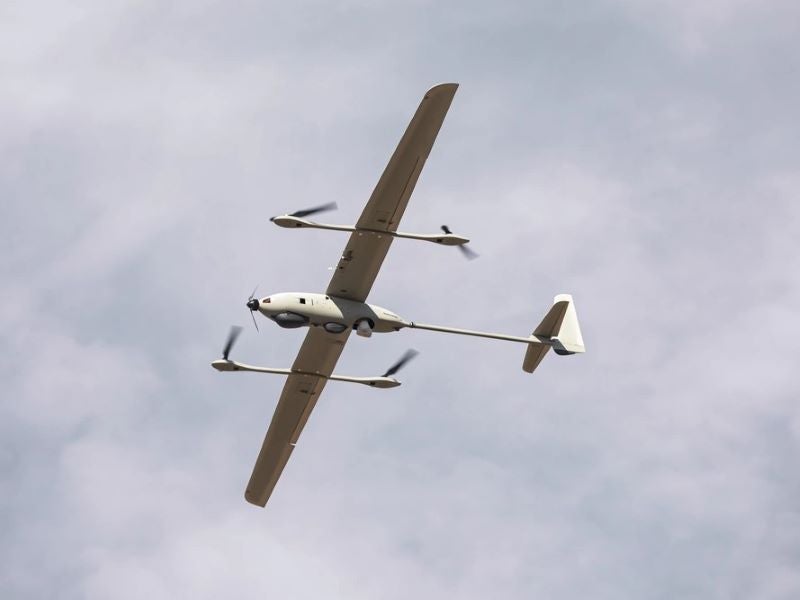
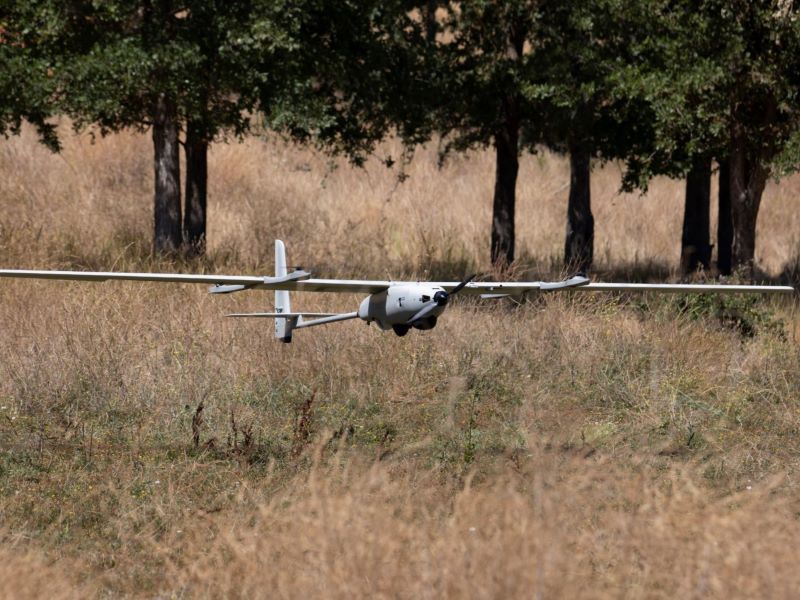
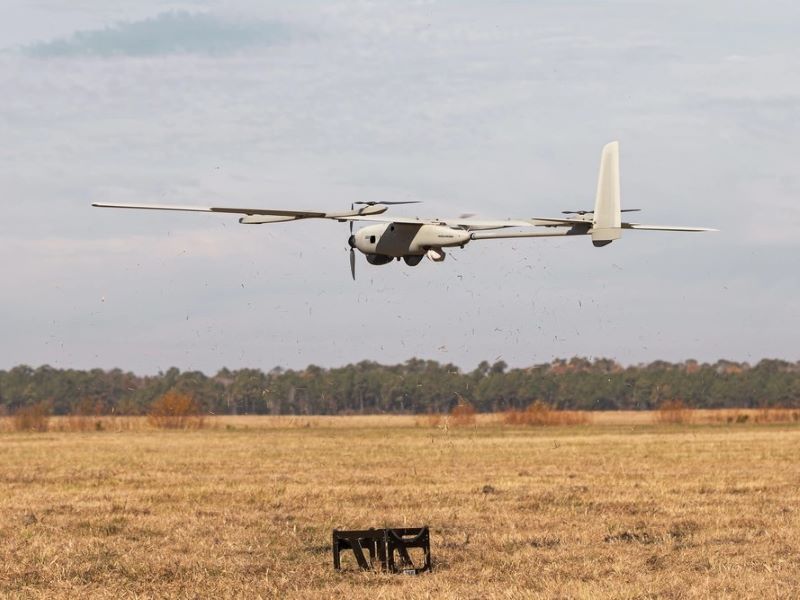
The Stalker VXE30 is a next-generation vertical take-off and landing (VTOL) small uncrewed aerial system (sUAS) developed by Lockheed Martin.
The aircraft is designed to support a wider set of launch and recovery conditions and to achieve consistent, accurate landings while offering additional configuration options and compatibility with existing equipment.
Recommended White Papers

Recommended Buyers Guides

The Stalker VXE30, designated as Eagle in the UK, achieved initial operating capability (IOC) in March 2025, following the completion of training in the US.
Stalker VXE30 testing details
In August 2024, the Stalker VXE30 completed almost 20 hours of trials under Project TIQUILA at Royal Naval Air Service Predannack in Cornwall.
The TIQUILA programme is aimed at delivering an intelligence, surveillance, target acquisition, and reconnaissance (ISTAR) solution to the UK armed forces through UAS provided by Lockheed Martin Skunk Works®.
Testing took place in poor weather to probe operating limits and involved the Joint UAS Test and Evaluation Flight within 744 Naval Air Squadron, the Royal Air Force’s Air and Space Warfare Centre, and Defence Equipment and Support’s TIQUILA delivery team.
The TIQUILA programme achieved a successful factory acceptance test (FAT) for the Eagle sUAS in September 2025.
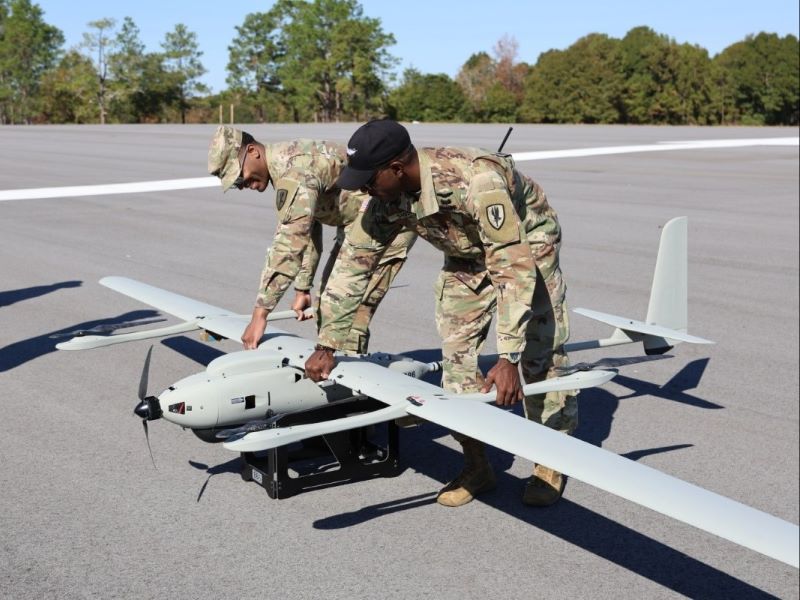
In November 2025, the US Army aviation soldiers commenced training with the Stalker VXE30 in Fort Rucker, Alabama.
The system is designed to work with the US Army’s Common Lethality Integration Kit, enabling troops to choose the required warhead at the user level and deploy both newly developed payloads and legacy ordnance, including 81mm mortar rounds.
In March 2026, personnel from the US Marine Corps’ 12th Littoral Combat Team operated the Stalker VXE30 during a combined-arms live-fire exercise at the Rodriguez Live-Fire Complex in the Republic of Korea.
The sUAS has been tested by the US Marine Corps since 2021.
Stalker VXE30 design details
Drawing on experience from the Stalker extended endurance variant, the platform is intended to combine the flexibility of a portable system with endurance and payload capacity more commonly associated with larger platforms.
The Stalker VXE30 sUAS has a 4.8m (16ft) wingspan and a length of 2.6m. In battery configuration, it weighs 19.3kg (42.5lb) without payload. The weight drops to 17.5kg when equipped with a fuel cell and fuel tank.
The aircraft has a maximum take-off weight of 21.7kg for the battery version and 20kg (44lb) for the fuel-cell version, with a payload capacity up to 2.5kg.
The stated communications range is up to 160.9km. In still air, the aircraft has a quoted ferry range of 222km for the battery variant and 433km for the fuel-cell variant.
The system is designed for vertical take-off and landing, with an operating envelope from 91.5m above ground level (AGL) to 3,657.6m density altitude.
Features of the Stalker VXE30
The Stalker VXE30 has a low acoustic signature and a compact footprint, with a complete mission set transportable in a small SUV or saloon car.
The system supports autonomous mission execution, waypoint navigation and Cursor-on-Target compliance. The architecture allows multiple aircraft to be controlled from a single ground control station and includes scene lock and moving-target tracking features, including auto-track and follow modes.
Communications are radio agnostic, with Silvus Streamcaster MN-MIMO identified as a baseline option while Trillium Engineering payloads are referenced as a baseline for integration.
Engine and performance of the Stalker VXE30
The propulsion for the Stalker VXE30 sUAS is provided either by a propane fuel cell with a rechargeable hybrid battery or by twin rechargeable batteries.
The aircraft has an endurance of up to four hours on batteries and up to eight hours with the fuel cell. The optimum cruise speed is listed at 58km/h, with a maximum dash speed of 93.3km/h.
Stalker VXE30 gimbal options
The Stalker VXE30 sUAS can be equipped with a wide selection of gimbal based on the requirement.
Trillium retractable gimbal options include the HD40XV, which provides a 720p electro-optical daylight sensor with 30× optical zoom.
The HD45LV-CZ-LP combines a 720p electro-optical sensor with 3.5× zoom and a long-wave infrared channel offering 5× optical zoom, while the HD55MV-LP pairs a 720p electro-optical sensor with 3.5× zoom alongside a mid-wave infrared channel with 10× optical zoom.
Modular gimbal pod options are available in several configurations, including a standard definition daylight variant with 26× optical zoom and a 720p high-definition daylight option with 10× optical zoom.
Dual field-of-view options are also available for daylight that combine a wide HD view with a 26× zoom channel, as well as a long-wave infrared (LWIR) version with wide and narrow fields of view.
