

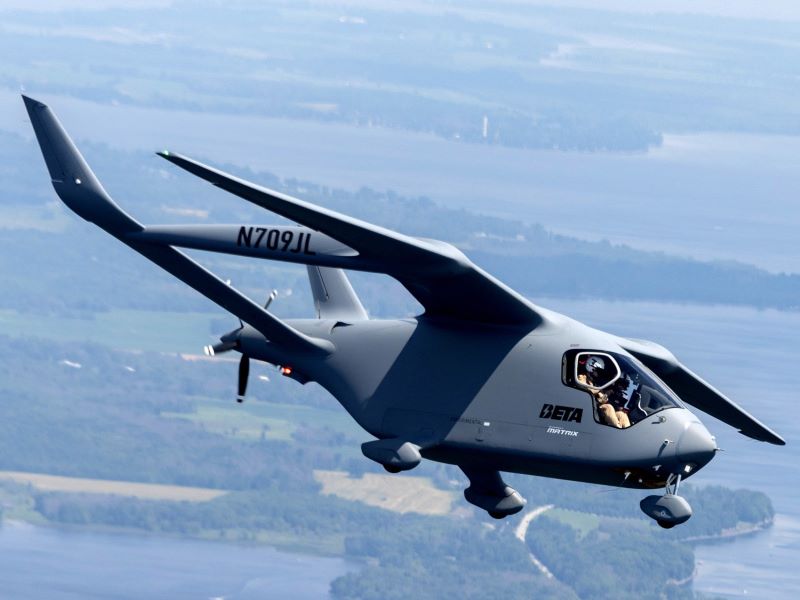
The MV250 is an autonomous hybrid-electric vertical take-off and landing (VTOL) aircraft developed by BETA Technologies.
Unveiled in July 2026, the MV250 sits within the wider ALIA family of aircraft, which comprises BETA’s all-electric designs for cargo and passenger transport.
Recommended White Papers

Recommended Buyers Guides

The aircraft is designed for military logistics, strike and surveillance, humanitarian assistance and disaster response missions. It is ideally positioned to cover the mid‑sized logistics shortfall, providing fast, uncrewed resupply for operators working in contested conditions.
MV250 design and features
The MV250 measures 11.1m (36.4ft) in length with a 15.2m wingspan. It features a streamlined airframe design, which lowers maintenance and long-term sustainment demands.
The aircraft is designed to carry a 2,000lb (907kg) payload and offers 250ft3 (7.1m3) of cabin volume, with space for a 3x joint modular intermodal container.
It features BETA’s open-architecture flight control system, which is designed to remain independent of any single autonomous mission system and integrate with multiple mission platforms.
The platform’s uncrewed fuselage, modular open systems approach and autonomous flight capability are intended to support evolving mission requirements while maintaining a common technology baseline.
Autonomy suite details
In July 2026, Sikorsky, a Lockheed Martin company, announced that it would integrate its MATRIX autonomy suite into the MV250.
MATRIX is an open-architecture system designed to interface with other flight control frameworks. It was integrated into BETA’s CX300 conventional take-off and landing CTOL aircraft and subsequently demonstrated in flight, which directly supported the development of the MV250.
Further flight testing is expected to expand the flight envelope and evaluate the performance of MATRIX when operating alongside BETA’s in-house flight control system.
Propulsion and performance
The MV250 is powered by a 1.3MW turbogenerator, with more than 1MW available for airborne payloads. The turbogenerator is installed above and behind the wing to reduce the risk of foreign object damage and to help lower the infrared signature.
The series hybrid electric turbogenerator was developed with GE Aerospace under a Joint Technology Development Agreement signed in September 2025. The unit combines a CT7/T700-based turbine with an integrated mechatronic design linking electromagnetics and power electronics.
The turbogenerator supplies electricity directly to the aircraft’s 800V high-voltage bus rather than mechanically driving the propellers. The configuration improves efficiency and durability and extends operational range, while reducing weight and overall system cost.
It is designed to support cruise speeds above 170 knots and sustain efficient cruise performance at 300kW or less. During VTOL, when demand can exceed 1.2MW, modular battery packs provide the additional energy.
The MV250 turbogenerator runs on JP-8, JP-5 and Nato-standard F-34/F-44 fuels, removing the requirement for dedicated charging infrastructure or any bespoke fuels and consumables. The system is also intended to provide ground power for auxiliary equipment and forward units on the ground.
In VTOL operations, the aircraft offers more than 250 nautical miles (nm) operational radius carrying 2,000lb on intra-theatre missions and more than 750nm carrying 1,000lb on intra-theatre missions. It also supports more than 1,300nm intelligence, surveillance and reconnaissance (ISR) or ferry profile and can remain airborne for 12 hours at 20,000ft.
Mission capabilities
The MV250 provides the reach, lift capacity and flow of supplies needed to keep dispersed units sustained in the harshest operating conditions. It offers commanders flexibility and stand-off distance while supporting ship-to-shore movements, established airfields or remote forward sites.
The aircraft can be configured to deploy strike and surveillance capabilities, enabling long-range effects without exposing a crewed aircraft to unnecessary risk. Operating from protected, distributed locations, it can release loitering munitions, drones and ISR payloads, increasing operational reach and adding depth to available munitions.
MV250 can help in humanitarian relief and disaster response by moving casualties to treatment more quickly and remains available to continue the task.
Additionally, the aircraft supports the expanding power requirements of widely dispersed forces, reducing reliance on static generators and vulnerable fuel convoys, allowing units to reposition at the pace the mission requires.
Each MV250 sortie can deliver usable power directly to forward positions. With output of up to 500kW, it can support command, control and communications, counter-unmanned aircraft systems, electronic warfare and directed-energy systems.
