


Modern aircrews must process more information, from more sources, in less time than ever before. They also operate in contested environments, where information may be disrupted, manipulated, or delayed before reaching the aircraft. The challenge is not simply delivering data to the crew; it is delivering trusted information securely, in real time, and in a form that supports confident decisions.
Many aircraft operating in combat, search and rescue, transport, ISR, and maritime patrol were designed in a different technological era. For example, the C-17 Globemaster III first flew in 1991, before GPS had reached full operational capability and before today’s connected battlespace existed. Yet the US Air Force expects the aircraft to remain viable through 2075.
The Boeing AH-64 Apache attack helicopter was built during the height of the Cold War in the 1970s to hunt and destroy enemy tanks and more than five decades later it remains in service.
This longevity reflects the enduring value of proven platforms. It also exposes a central challenge: an aircraft may have decades of structural life remaining, while its electronics, interfaces, and computing architecture may become obsolete within a fraction of that time.
When obsolescence becomes operational
Ageing avionics can affect whether aircraft are available to fly. Shortages of critical components, including Common Computing Modules and Input Output Concentrators, have resulted in aircraft being classified as non-mission capable. Obsolescence is therefore not merely a sustainment concern; it can directly impact mission capability.
The problem is intensifying because legacy aircraft are no longer performing only their original roles as weapon platforms.
Modern military aircraft must now operate as airborne data centres and critical network nodes. With thousands of onboard sensors, they face a massive surge in data complexity, requiring them to process, interpret, and distribute enormous streams of intelligence in fractions of a second. Rising cyber threats and electronic warfare means that modern air combat is no longer decided solely by speed, stealth, or firepower, but by who controls the electromagnetic spectrum.
The war in Ukraine has demonstrated how rapidly GNSS jamming and spoofing, contested communications, and drone technologies can change operational requirements. Innovation cycles are speeding up – yet aircraft modernisation can take years. Operators need a practical means to add applications, data sources, and mission capabilities at a pace closer to the threat cycle, without repeatedly redesigning the underlying aircraft.
One answer is to separate the lifecycle of mission capability from that of the aircraft itself. Rather than treating each new requirement as a major cockpit modification, operators can add mission computing, connectivity, and display capability that works with the existing avionics architecture.
That is the philosophy behind TacView, developed by CMC Electronics.
CMC’s TacView: a ‘plug and play’ extension of the mission system purpose built for aviation and defence
TacView is a portable mission display and computing solution designed specifically for military aviation. It combines mission computing, display capability, connectivity, and aircraft interfaces in a purpose-built avionics system that can exchange information with platform avionics in real time while preserving avionics integrity.
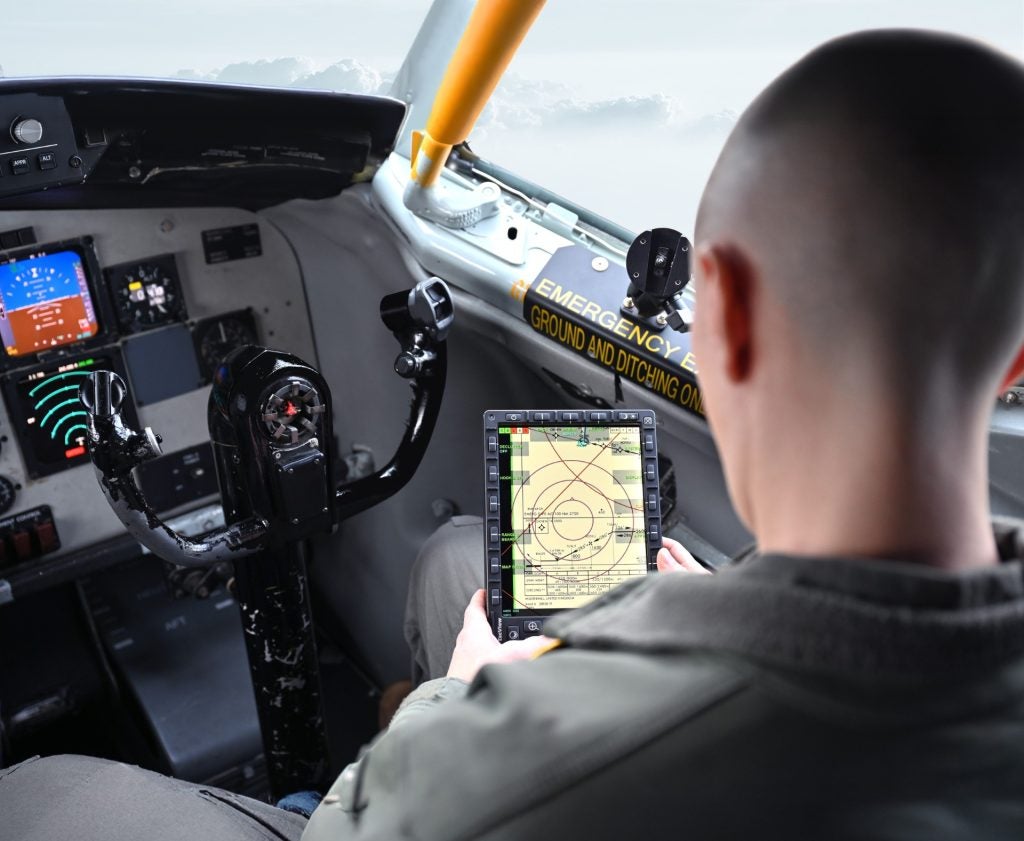
This real-time operation is central. TacView can receive data from aircraft systems and mission equipment, present it to pilots or mission operators when it is needed, and support instant interaction between personnel, applications, and platform avionics.
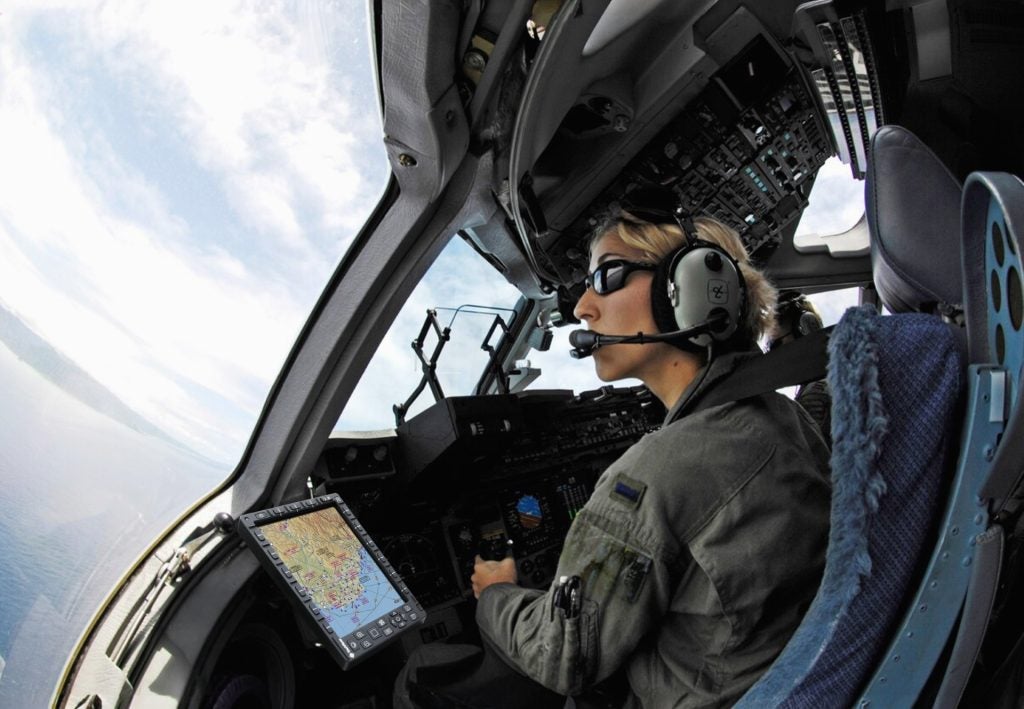
TacView’s role also extends beyond the cockpit. It can support operators in the rear cabin of ISR, maritime-patrol, transport, and other mission rotary-wing and fixed-wing aircraft, where crews need real-time access to moving maps, real-time sensor feeds, tactical data-links sensor and other mission-system information. TacView can provide an effective digital extension for an analogue-equipped aircraft and significantly enhance situational awareness and flight safety without requiring a full flight-deck redesign.
Bringing AI into the mission environment
TacView 3 embeds AI capabilities that operators can exploit according to their needs. These include a dedicated low-power hardware co-processor built directly into an Intel processor die for continuous AI and machine-learning inference tasks; built-in processor technologies that accelerate AI deep-learning training and inference; and GPU architecture that can accelerate deep learning by offloading complex parallel mathematics from the CPU.
These capabilities can support AI-enabled applications designed to assist pilots and mission operators: filtering and prioritising information, identifying patterns in sensor or mission data, supporting route or threat assessment, and reducing workload. Crucially, TacView can enable the safe use of AI in a mission environment without compromising the integrity of the aircraft’s core avionics, while still benefiting from real-time information supplied by platform avionics.
TacView is not a commercial tablet or a ruggedized laptop adapted for aviation.
It is designed as an avionics system that can complement the aircraft mission environment. Qualified to DO-160, MIL-STD-461, and MIL-STD-810 standards, it can be permanently or semi-permanently integrated with aircraft systems. More than 3,000 systems operate across transport, ISR, and tactical platforms.
Designing for the next upgrade
Future proofing does not mean predicting every application, sensor, or communications requirement an aircraft may need in 2040 or 2050. It means creating an architecture able to incorporate capabilities that do not yet exist.
That requires modularity, open interfaces, computing headroom, secure software integration, real-time connectivity with aircraft systems, and avionics-grade performance. By allowing new applications and AI-enabled mission capabilities to be introduced without repeatedly redesigning the platform, TacView can help proven aircraft remain operationally relevant as technology and threats continue to evolve.
Join CMC Electronics’ webinar on 9 November to discover how integrated portable mission displays can help operators introduce new mission capability while retaining the reliability, security, control and lifecycle expectations of mission-ready avionics.
