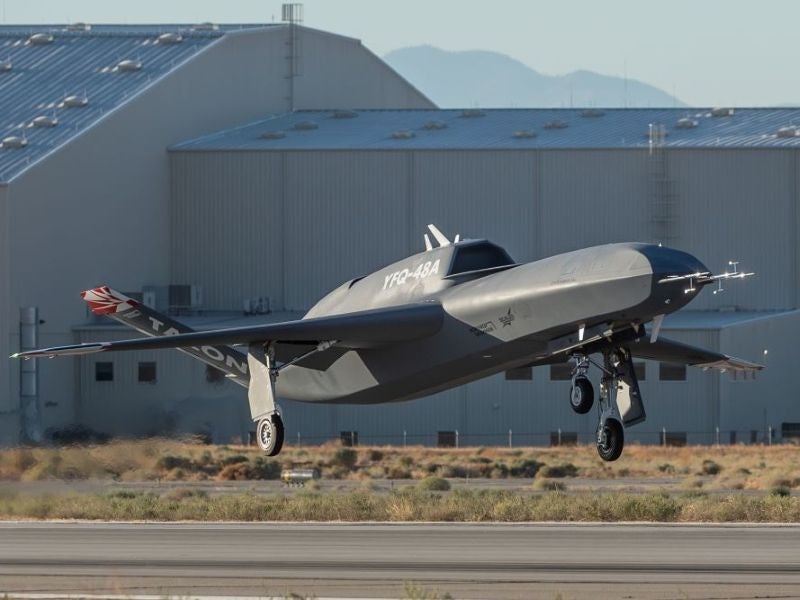
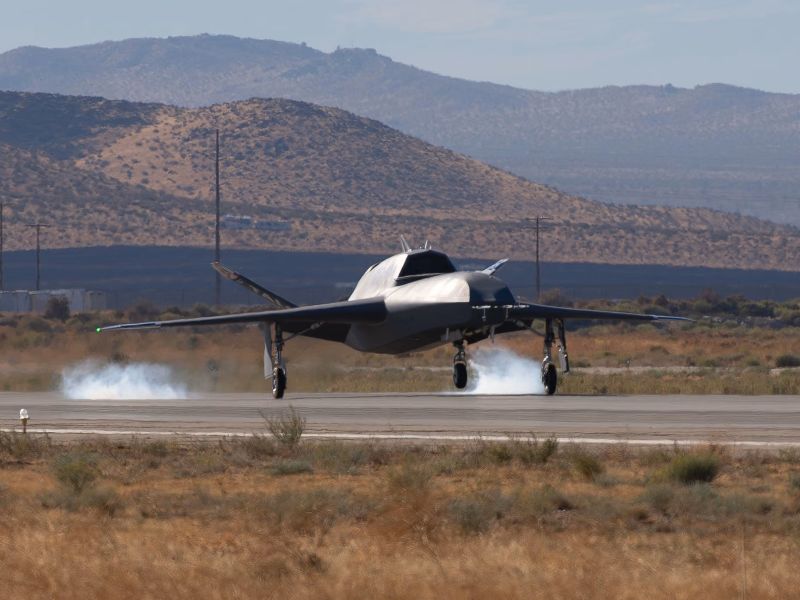
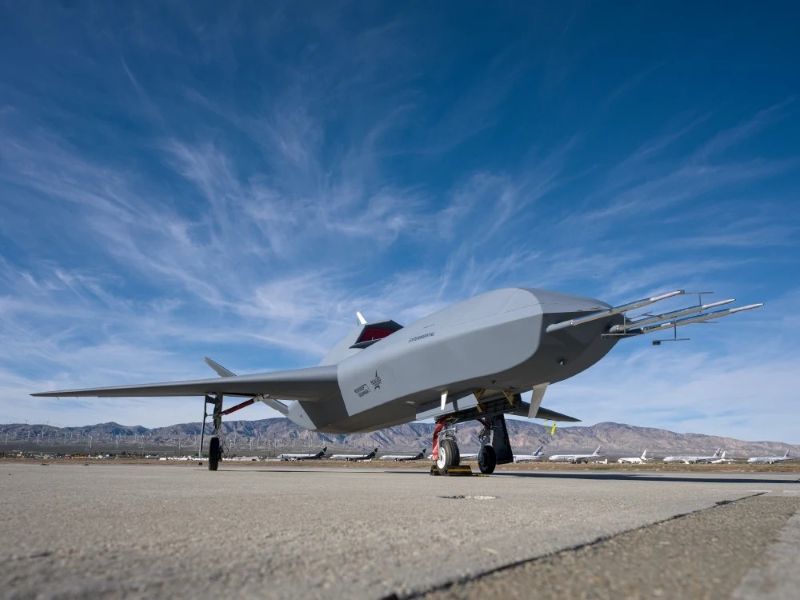
Talon Blue is a US Air Force (USAF) autonomous wingman variant developed by Northrop Grumman for the Collaborative Combat Aircraft (CCA) programme.
The aircraft is part of Northrop Grumman’s internally funded Project Talon development. It is being developed to support crewed fighter aircraft during high-risk operations, and its intended roles include target engagement and missions where survivability is a priority.
Recommended White Papers
Recommended Buyers Guides
The USAF assigned Talon Blue the YFQ-48A Mission Design Series designation in December 2025, placing the aircraft within the CCA programme.
YFQ-48A Talon Blue completed its first fully autonomous flight in October 2026. The flight included taxiing, take-off, in-flight manoeuvres and landing.
YFQ-48A Talon Blue aircraft details
The YFQ-48A Talon Blue aircraft is based on the Model 437 aircraft from Scaled Composites and features a high air intake, wide wheelbase and integrated weapons bay. These features are intended to support different mission requirements for US and allied operators.
The aircraft uses a modular design and advanced manufacturing processes intended to reduce production costs, part count and overall weight, while shortening manufacturing timelines and supporting the continued development of mission-relevant autonomous capabilities. Its airframe can be configured for different mission requirements and customer specifications.
Talon Blue incorporates lessons from 500,000 hours of autonomous flight activity and feedback from potential users. The aircraft is designed to support mission execution through digital control interfaces, reducing the need to expose personnel to operational risk.
Project Talon details
Project Talon is Northrop Grumman’s internally funded portfolio, which focuses on accelerating the development of mission-ready autonomous airpower capabilities. It comprises modular, cost-effective and rapidly deployable aircraft designed to meet customer autonomy needs.
The portfolio includes an autonomous testbed ecosystem built around Talon IQ, which enables partners to develop and refine software using flight-autonomy hardware and a test platform.
Talon IQ operates on the Scaled Composites Model 437 aircraft and uses Northrop Grumman’s Prism Mission Autonomy software. The platform provides a government reference architecture intended to support autonomy development and integration.
The ecosystem allows third-party organisations to integrate their technology with Northrop Grumman flight software and hardware. Prism functions as a government reference architecture enabler, supporting the integration and testing of autonomous mission capabilities.
Model 437 aircraft
The Model 437 aircraft has a wingspan of 41ft (12.5m), a length of 41ft and a gross takeoff weight of 10,000lb (4,536kg). It can operate at altitudes of 25,000ft.
The aircraft can carry up to 2,000lb of payload in multiple locations, including an internal payload bay measuring approximately 145in × 36in × 16in (12.1ft × 3ft × 1.3ft).
The Model 437 originated as a conceptual design derived from the Model 401, which explored a multi-mission, low-cost attritable aircraft. The Model 437 is a crewed variant of the original concept and is powered by a single Pratt & Whitney 535 engine producing approximately 3,400lb of thrust.
Collaborative Combat Aircraft Programme details
The CCA programme aims to develop affordable semi-autonomous aircraft that can complement the USAF’s crewed fighter fleet. The programme is intended to increase operational flexibility in complex security environments. The CCA acquisition strategy uses continuing competition and multiple entry points for industry participants. The USAF has applied this approach to the CCA Increment 1 Engineering and Manufacturing Development and Production contracts and expects to use further competitions for subsequent CCA programme phases.
