

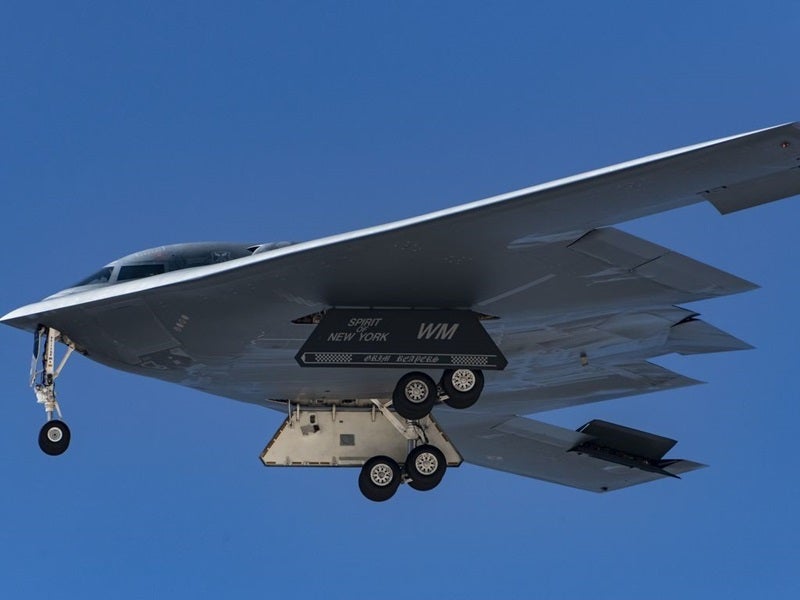
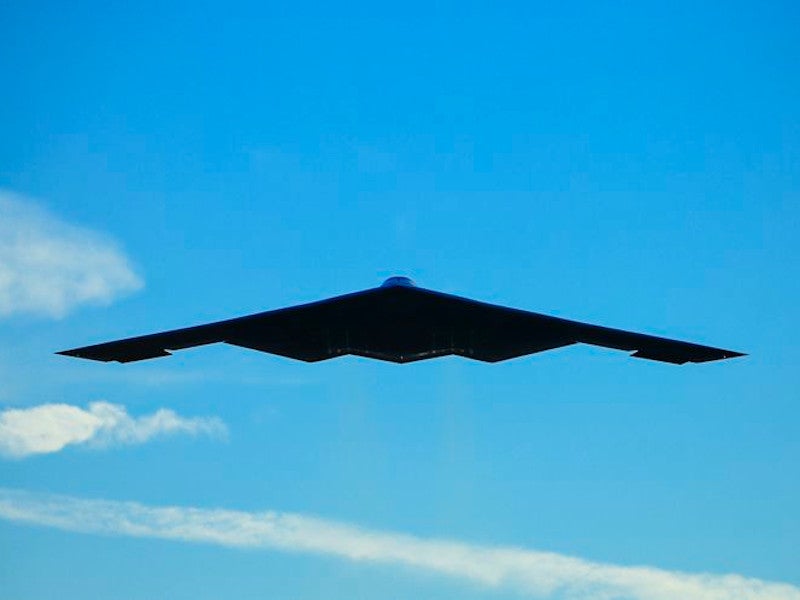
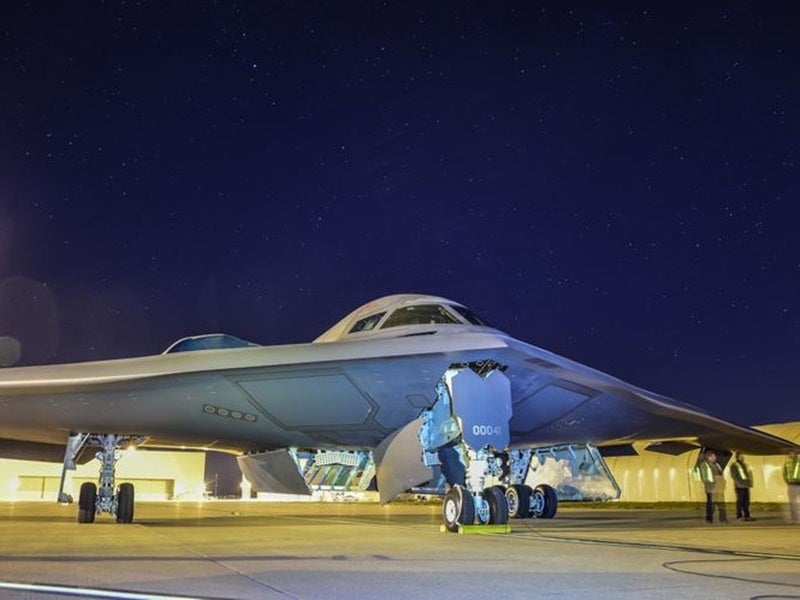
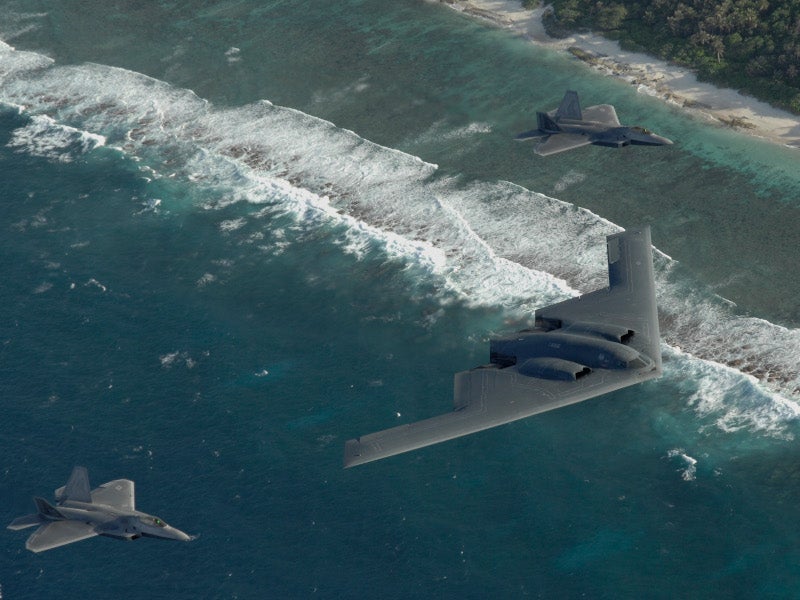
The B-2 Spirit is a low-observable, strategic, long-range, heavy bomber capable of penetrating sophisticated and dense air-defence shields.
It is manufactured at the Northrop Grumman facilities in Pico Rivera and Palmdale in California, US.
Recommended White Papers

Recommended Buyers Guides

In the first three years of service, the operational B-2s achieved a sortie reliability rate of 90%. An assessment published by the US Air Force (USAF) showed that two B-2s armed with precision weaponry can do the role of 75 conventional aircraft.
After ten years of service, the B-2 Spirit achieved full operational capability in December 2003.
In July 2019, B-2 marked 30 years since its first flight. The aircraft has transformed into a highly advanced bomber with improved avionics technology, stealth and armament.
B-2 Spirit design and features
The B-2 Spirit has a wingspan of 172ft and measures 17ft in height, with a total length of 69ft.
The bomber’s distinctive profile comes from the unique ‘flying wing’ construction, where the leading edges of the wings are angled at 33° and the trailing edge has a double-W shape.
In-flight refuelling gear is installed in the top centre line of the aircraft behind the cockpit.
The B-2 Spirit carries a Lockheed Martin radar warning receiver, a Northrop Grumman defensive aids system and the Lockheed Martin AN/APR-50 defensive management system.
AHFM stealth coating
Northrop Grumman developed a radar-absorbent coating to preserve the B-2’s stealth characteristics while drastically reducing maintenance time. The material, known as alternate high-frequency material (AHFM), is sprayed on by four independently controlled robots.
In November 2011, the USAF awarded a $109m contract to Northrop Grumman for producing a redesigned aft deck for the B-2 stealth bomber.
B-2 stealth bomber cockpit
The cockpit accommodates two crew members. It is equipped with a colour, nine-tube, electronic flight instrumentation system, which displays flight, engine and sensor data and avionics systems and weapons status.
The pilot can choose to activate the appropriate selection of flight and mission equipment for take-off mode, go-to-war mode and landing mode by using a simple three-way switch.
Propulsion
The aircraft is powered by four General Electric F118-GE-100 turbofan engines internally mounted in the body of the wings. The engines have an exhaust temperature control system to minimise thermal signature.
The engines, rated at 77 kilonewtons (kN), provide a high subsonic speed and a maximum gross take-off weight of 336,500lb.
Weapons
The aircraft carries all its weapons internally and is fitted with two separate weapons bays in the centre of the aircraft. The B-2 stealth bomber has the capacity to carry up to 40,000lb of weapons, including conventional and nuclear weapons, precision-guided munitions, gravity bombs and a range of maritime weapons.
Each weapons bay is equipped with a rotary launcher and two bomb-rack assemblies. In tests, the B-2 successfully released B-61 and B-83 nuclear and mk84 conventional bombs from the rotary rocket launcher, and mk82 and CBU-87 conventional weapons from the bomb racks.
The B61-11 is an earth-penetrating nuclear bomb for use against deeply buried and hardened targets. The B83 is a strategic free-fall nuclear bomb.
The B-2 bomber can also carry the AGM-129 advanced cruise missile, which is a strategic cruise missile with a range estimated at up to 1,500 miles.
Up to 16 satellite-guided joint direct attack munition (JDAM) missiles can be carried. Northrop Grumman converted the B-2 bomb rack assembly to a new ‘smart’ configuration that increased the number of JDAMs, which can be carried to a maximum of 80. The aircraft was also fitted with the joint stand-off weapon, joint air-to-surface stand-off missiles and the wind-compensated munitions dispenser, and can carry up to 80 115kg small-diameter bombs (SDB).
In June 2007, Northrop Grumman was awarded a contract to integrate the Boeing Massive Ordnance Penetrator (MOP) weapon on the B-2. The MOP is GPS-guided, contains 2,400kg (5,300lb) of explosive and is designed to penetrate hardened, deeply buried targets. The B-2 can carry two MOP weapons, one in each weapons bay.
A generic weapons interface system (GWIS) was fitted as part of the Block 30 upgrade. The GWIS is an integrated digital software package that allows the B-2 to carry different mixes of stand-off weapons and direct attack munitions on a single sortie, enabling the aircraft to attack up to four different types of targets on a single mission.
Under a contract awarded to Northrop Grumman in February 2008, the USAF began a programme to give the B-2 the capability to attack moving targets using precision-guided weapons such as the small diameter bomb II, which involved the upgrade of displays and radar modes.
Radar
The Raytheon AN/APQ-181 covert strike radar, operating at J band (Ku band), is a multi-purpose radar with terrain following and terrain avoidance modes. Testing at Edwards Air Force Base had demonstrated reliable terrain following at altitudes down to 200ft.
In April 2009, Northrop Grumman delivered to the USAF the first operational B-2 stealth bomber to be equipped with newly modernised radar. The aircraft was officially handed off to the air force at Whiteman Air Force Base, the operational home of the B-2 fleet and the 509th Bomb Wing.
The B-2 radar modernisation programme replaced the aircraft’s original radar system with one that incorporated technology improvements that had occurred since the B-2 was originally designed in the early 1980s.
In November 2002, Raytheon was awarded a contract to develop a new Ku-band active electronically scanned array antenna for the B-2 radar to avoid interference with commercial satellite systems after 2007. Flight tests with the new radar began in October 2007 and continued until 2008.
Navigation and communications of B-2 bomber
The B-2’s navigation suite includes a Rockwell Collins TCN-250 tactical air navigation system and a VIR-130A instrument landing system.
The communications equipment is supplied by Rockwell Collins. A Milstar military strategic and tactical relay satellite communications system is installed in Block 30 aircraft. The aircraft has also been upgraded with a Link 16 communications link.
B-2 Spirit deployments
A total of 21 B-2s were delivered to Whiteman Air Force Base in Missouri, with the first in December 1993, which is currently the only operational base for the aircraft.
A transportable hangar system was developed, which allowed the B-2 to be deployed to forward locations overseas. The hangars are 126ft long, 250ft wide and 55ft high. The first of these hangars was erected on Diego Garcia in the Indian Ocean. Prior to this development, B-2s had to return to Whiteman AFB after missions for maintenance of the aircraft’s stealth features.
The B-2 demonstrated its combat capability during Operation Allied Force in 1999, accounting for 33% of Serbian targets destroyed in the opening eight weeks while conducting nonstop round trips between its Missouri home base and Kosovo.
The B-2 completed its first combat deployment during Operation Iraqi Freedom in March/April 2003. In March 2005, a B-2 squadron was deployed for the first time to Andersen Air Force Base in Guam in support of the USAF Pacific Command.
It flew one of its longest missions on record in support of Operation Enduring Freedom, operating from Whiteman to Afghanistan and back.
B-2 Spirit upgrade programme
Northrop Grumman, the B-2’s prime contractor, leads an industry team that is working on modernising the B-2 Spirit. This is being done to ensure that the craft remains fully mission capable against evolving worldwide threats.
In June 2007, Northrop Grumman was awarded a contract to develop an EHF satellite communications capability and computer architecture upgrade for the B-2 bomber. The upgrade included a Lockheed Martin integrated processing unit (IPU). Flight testing with the new systems was completed in July 2009.
The USAF and Northrop Grumman completed the system design review of the software and computing architecture in July 2008. The new architecture allowed the B-2’s new IPU to communicate with the aircraft’s processing applications.
The upgrade provided a high-speed data handling environment required to implement future capabilities such as an EHF satellite communications system and also provides the B-2 the ability to destroy moving targets.
In December 2021, a B‑2 successfully released a Joint Air‑to‑Surface Standoff Missile – Extended Range during a flight test, extending the bomber’s reach and enabling a low‑observable weapon to engage targets at greater distances than the previous variant.
This missile is one of three advanced capabilities that were introduced to modernise the B‑2 fleet as part of integrated functional capability P6.4. The platform has also received crypto modernisation and a Radar Aided Targeting System (RATS).
RATS is central to the B‑2’s ability to employ the B‑61 Mod 12 nuclear bomb in environments where GPS may be degraded or denied. The crypto upgrade strengthens the security of high‑frequency communications and prepares the aircraft to use more advanced communications equipment in contested threat environments.
In August 2023, Northrop Grumman, working with the USAF, demonstrated an Integrated Airborne Mission Transfer (IAMT) with a B-2 Spirit at Whiteman Air Force Base as part of its digital engineering modernisation work.
The IAMT enables the B-2 to receive new missions in flight and transfer them directly into onboard systems via machine-to-machine digital exchange. The demonstration was conducted under Northrop Grumman’s B-2 Collaborative Combat Communication Spiral 1 programme, which upgrades the aircraft’s communications for contemporary operational environments.
In July 2024, the B-2 programme received its first fieldable agile integrated functional capability, known as Spirit Realm 1, or SR 1. SR 1 delivers mission‑critical upgrades to communications and weapons systems through an open mission systems architecture, directly improving combat effectiveness and enabling the fleet to begin a new cadence of agile software releases.
The upgrade includes revised cockpit displays, updated flight hardware and enhancements that strengthen the B-2’s survivability. SR 1 was developed entirely within the B-2 Spirit Realm software factory, a facility created through collaboration between Air Force Global Strike Command and the B-2 Systems Programme Office.
This made the B-2 the first legacy nuclear platform to adopt the Department of Defense’s DevSecOps practices and digital toolsets.
