

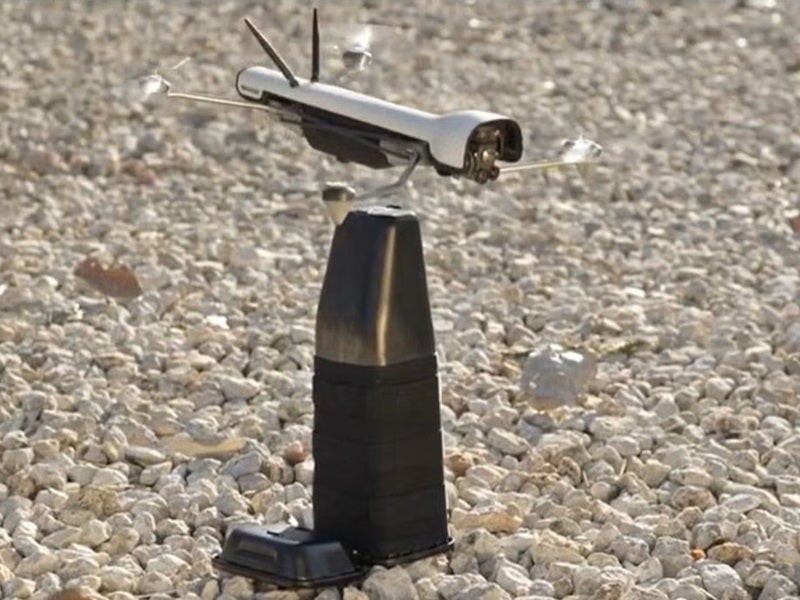
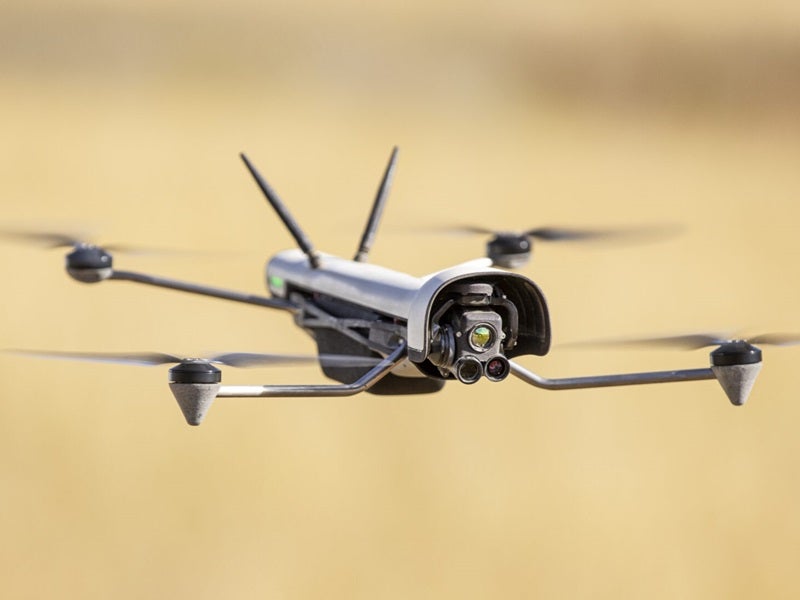
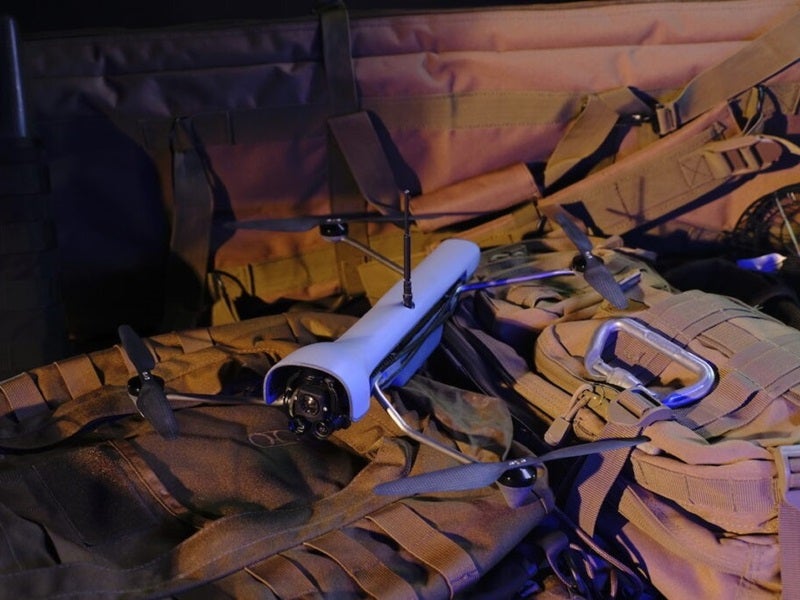
The Vesper unmanned aerial vehicle (UAV) is an intelligence, surveillance and reconnaissance (ISR) drone developed by Vantage Robotics to improve situational awareness of the US defence forces in mission-critical environments.
The system has been developed as a comprehensive airborne reconnaissance platform, addressing the practical challenges faced by personnel who rely on aerial data collection in current operational environments.
Recommended Buyers Guides

The company is extending the capabilities of Vesper to meet the requirements of the US Air Force (USAF).
Vesper was made available to commercial customers in December 2020.
Development background
Vantage Robotics was selected by the US Army for the development of an inexpensive, portable, short-range reconnaissance UAV prototype in April 2019, resulting in the development of the Vesper drone with an investment of $2.5m in October 2019.
Additional funding of $1.4m was allotted for the design and production of 25 Vision Ground Control Stations (GCS) and an additional 25 Vesper units. The drone entered service with the US Army in 2020.
Vantage received a $1m small business innovation research contract from the USAF through AFWERX to develop a new form of low-cost, sensory-augmented ISR UAV for Air Force Special Operations Command, the Air Force Security Forces Centre and the Air Force Civil Engineering Centre in November 2020.
The USAF granted authority to operate certification to the Vesper and Vision GCS. It was supported by the tests conducted by the Department of Defense’s Digital Defence Service and Defence Innovation Unit.
Vesper drone design and features
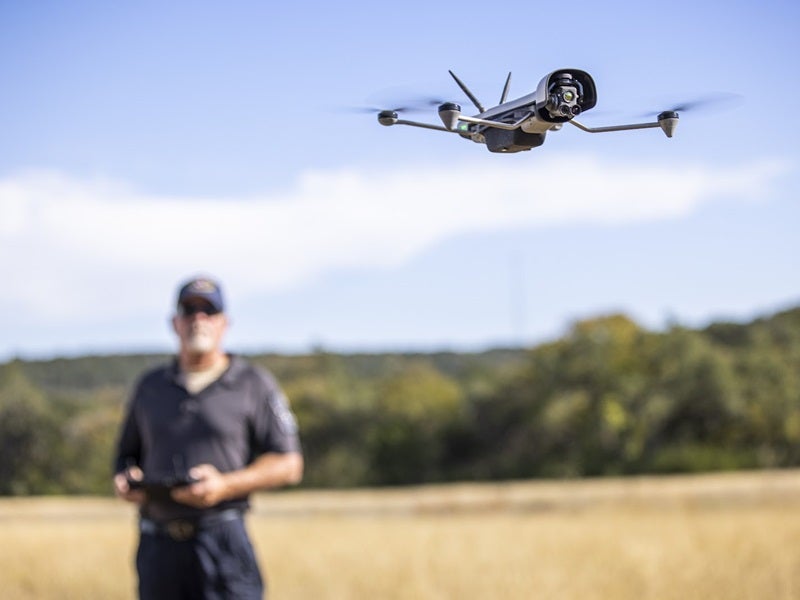
Vesper is a quadcopter drone operated using the Vision GCS. It has an all-up weight of 700 grams (g), is designed to withstand a force of 90kg when stored in its case, and can survive a temperature range of -200C–450C.
Both the drone and the Vision GCS are durable in the air, water and land and can be prepared for flight in less than 90 seconds.
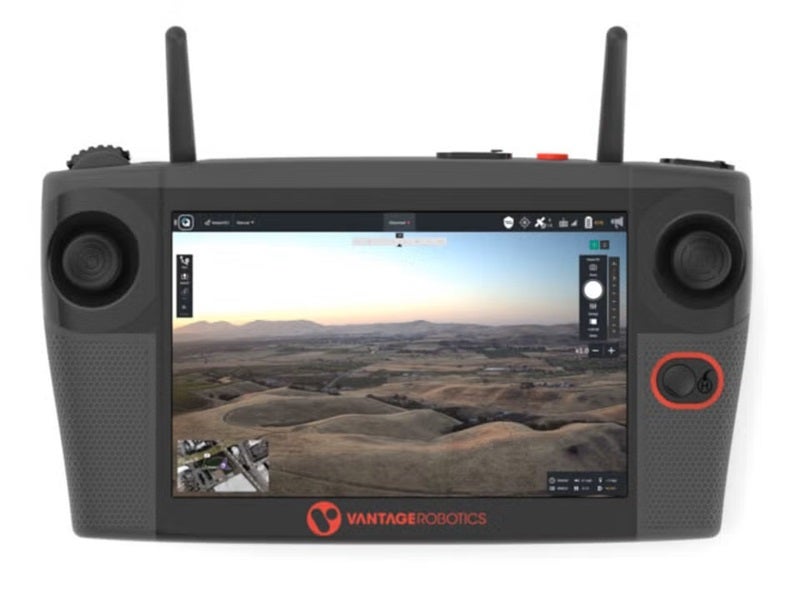
The Vision GCS offers tactile controls with a battery life of four hours, 500GB of storage space and an Intel i-3 processor for real-time 3D mapping.
The modular, photogrammetry-ready, magnetic snap-together architecture of the drone allows rapid transitions among the battery, propellers and rotors, as each can be swapped in less than five seconds.
Payload
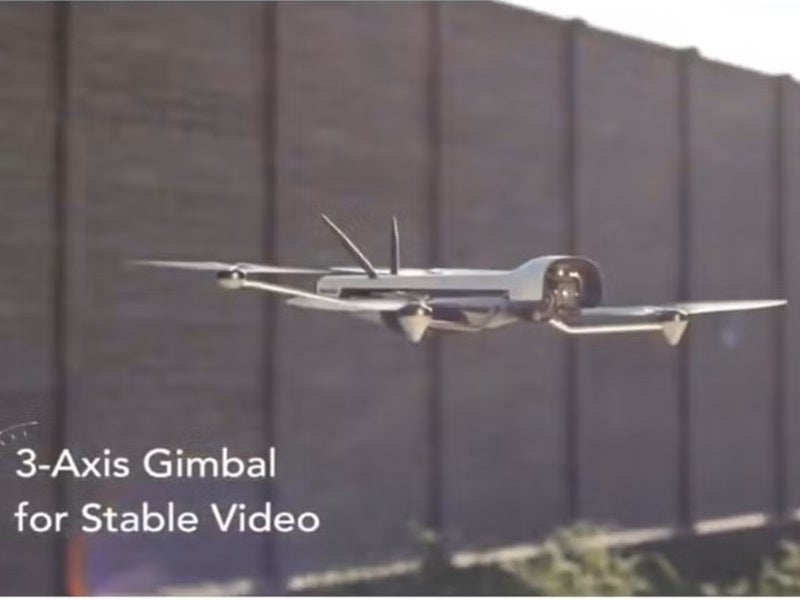
The payload of Vesper comprises two night-vision 4K Sony IMX 334 electro-optical image sensors, mounted on a three-axis stabilised gimbal. The sensors can capture 3,840 x 2,160 pixel (p) x 8 mega-pixel still images.
The drone’s Greenseer gimbal camera with F1.0 optics and highly sensitive large pixels has superior stability for long-exposure times, multi-frame noise reduction and custom-tuned images for optimal performance in low-light conditions of less than 0.01 lux.
The UAV is equipped with 320 x 240p thermal sensors, with the option for 640 x 480p, and 48x combined optical and digital zoom. It can record videos at 1080p or 4K MPEG-4 formats.
Vesper helps to identify threats in any conditions and eliminates the risk of detection. It offers face recognition from a distance of more than 60m with an 18x zoom down to a 30 HOV.
Vesper control and communications
The Vesper UAV features a secure communications suite designed for reliable performance in demanding environments. It supports a maximum link range of up to 6km when used with the standard antenna and employs frequency hopping alongside adaptive modulation to maintain a stable connection in congested or contested airspace.
Operators can select between 1.8 gigahertz (GHz) and 2.4GHz radio configurations, as well as choose either 4 megahertz (MHz) or 8MHz channel bandwidths to match mission and spectrum requirements.
For short-range missions and rapid data offload to the ground control and communications station, the platform also incorporates Wi-Fi connectivity.
Performance
Vesper can reach speeds of up to 72km/h and a maximum range of 45km. The maximum endurance of the UAV is 50 minutes with the recon rotor set and 30 minutes with the shrouded rotor set.
It delivers superior stealth performance with the ability to remain unseen and inaudible at 50m. The drone can maintain noise levels of 37 A-weighted decibels at 25m, which is lower than the detectable thresholds for most conditions.
The Vesper and Vision GCS meet all the security requirements of the US Air Force and Army, including secure user authentication, AES-256 communications and data encryption, a National Defence Authorisation Act-compliant supply chain, and bonded construction to prevent tampering.
Orders and deliveries of Vesper drones
In October 2022, Vantage Robotics received an order from US Customs and Border Protection (CBP) for its Vesper system. The initial contract, worth $540,000, covers the supply of Vesper drones along with associated equipment and training services.
This order follows CBP’s announcement in December 2021 of a blanket purchase arrangement with five drone manufacturers including Vantage Robotics. The Vesper procurement falls within that arrangement, worth up to $90m, over five years.
