


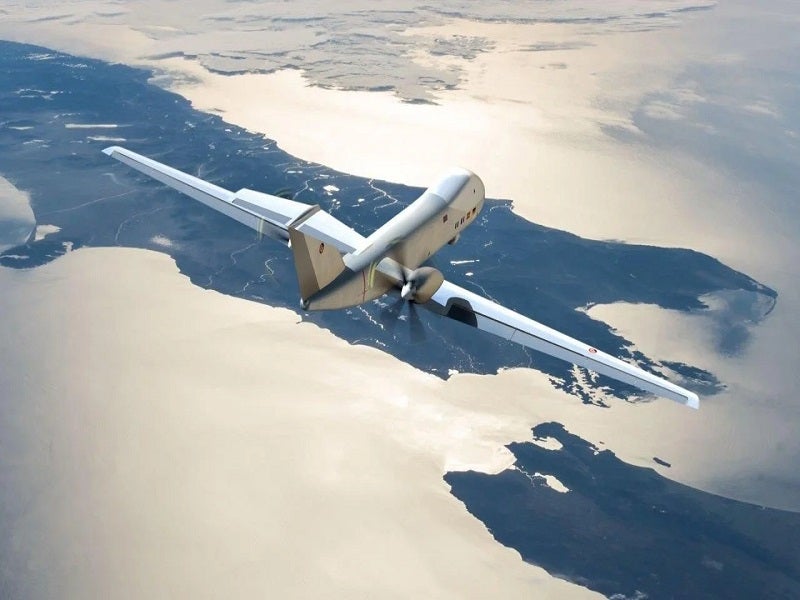
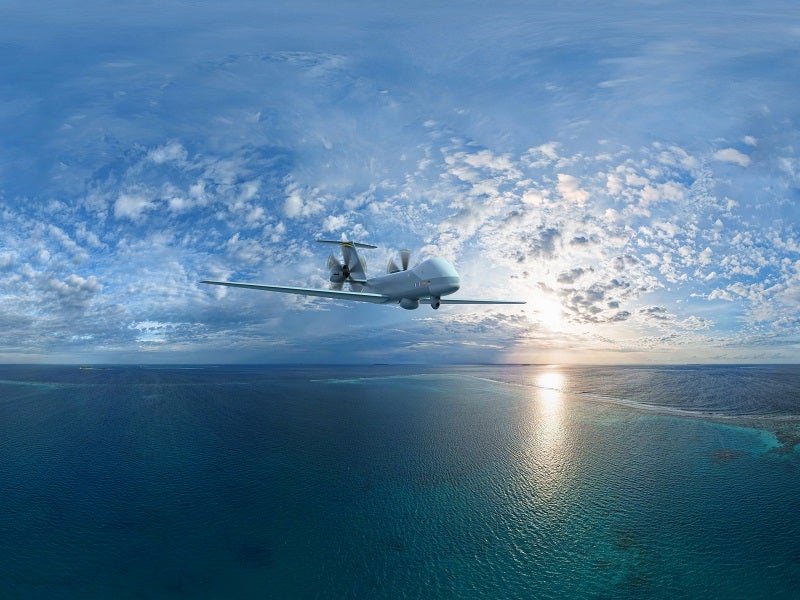
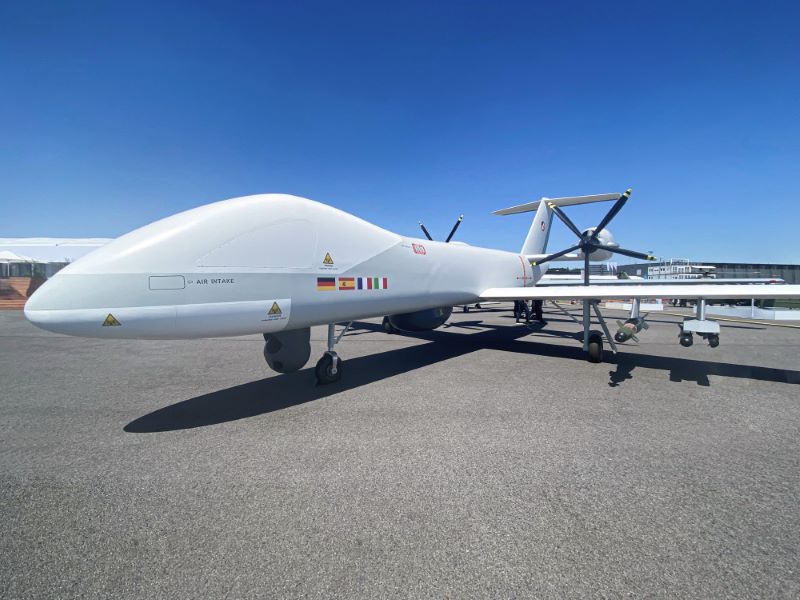
The Eurodrone is a medium altitude long endurance (MALE) remotely piloted aircraft system (RPAS) designed for intelligence, surveillance, target acquisition and reconnaissance missions, as well as homeland security operations.
The unmanned system is designed by Airbus, a European aerospace company, Dassault Aviation, a developer of military aircraft and Leonardo, an aerospace, defence and security company, for use by the armed forces of France, Germany, Italy, and Spain.
Recommended Buyers Guides

The unmanned aerial vehicle (UAV) programme is managed by the Organisation for Joint Armament Cooperation (OCCAR), a European intergovernmental organisation.
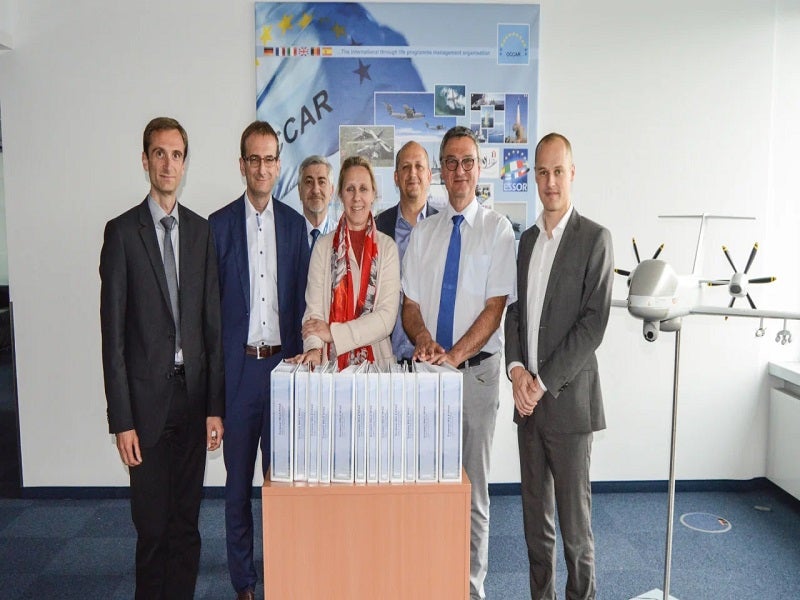
The Eurodrone programme successfully completed the preliminary design review in May 2024.
Airbus and its industrial partners concluded the formal critical design review in October 2025, bringing the design phase to a close and paving the way for prototype manufacturing and ground testing.
The delivery of the first serial items to the programme participating states is scheduled for 2028. The aircraft is set to enter service in 2029.
Eurodrone design and features
The remotely piloted aerial vehicle measures an overall length of 16m, a height of 6m and a wingspan of 26m. The maximum take-off weight of the UAV is 13 tonnes (t) while the maximum payload capacity is up to 2,300kg.
The aircraft can cruise at a maximum speed of up to 500km/h and has a maximum operational altitude of 40,000ft.
The MALE RPAS features all-weather capability, efficient maintenance, 24/7 day and night mission capability, as well as interoperability with the existing and future defence systems.
The maximum flight time of the system ranges between 18 and 40 hours, depending on the mission profile.
The UAV is designed to operate in nonsegregated airspace, boasting mission modularity to ensure operational superiority in wide area and in-theatre intelligence, surveillance and reconnaissance missions.
The Eurodrone’s Line-of-Sight (LoS) Data Links can connect the RPAS with different ground stations to allow decision-making in real-time for military operations.
Operations and data management will rely on a direct link between the air vehicle and the users’ network infrastructure, enabling secure and dedicated transfer, processing and sharing of information.
Mission payload
Eurodrone can carry a wide range of payload according to the needs of the mission, such as Safran Euroflir 610 electro-optical and infrared sensor, Leonardo Gabbiano active electronically scanned array radar, sight and beyond line of sight data links and a Warship Automatic Identification System.
The airframe can incorporate five external hardpoints, one on the centreline and two under each wing, which will accommodate a maximum payload of 650kg in total. Effectors will comply with MIL STD 8591 and MIL STD 1760E interfaces.
Eurodrone development details
The Eurodrone MALE RPAS programme, a key initiative within the European defence industrial development, has been earmarked as a direct award project by the EU Commission.
As part of the European Defence Industrial Development Programme for 2019-2020, the initiative has been allocated €500m ($600m) in funding to foster joint industrial development of defence equipment and technologies.
The programme’s integration into OCCAR in August 2016 marked a significant step in bolstering the European defence technological and industrial base.
In the same month, the definition study contract for stage one was signed with the co-contracting group.
Subsequently, OCCAR MALE RPAS programme division (MRPD) inaugurated a new office in Hallbergmoos in October 2016.
In February 2017, the European Defence Agency committed to providing nine networked procedural trainers to enhance the training capabilities for the European MALE RPAS.
This project aims to deliver hardware simulators, promote harmonisation and interoperability, and provide realistic operational scenarios in collaboration with the European Air Group and the European Union Military Staff.
The programme achieved two significant milestones in stage one, the system requirement review in January and the system preliminary design review in November 2018.
Following these achievements, the invitation to tender for the stage two contract was issued to Airbus Defence and Space (D&S), a division of Airbus, in October 2018.
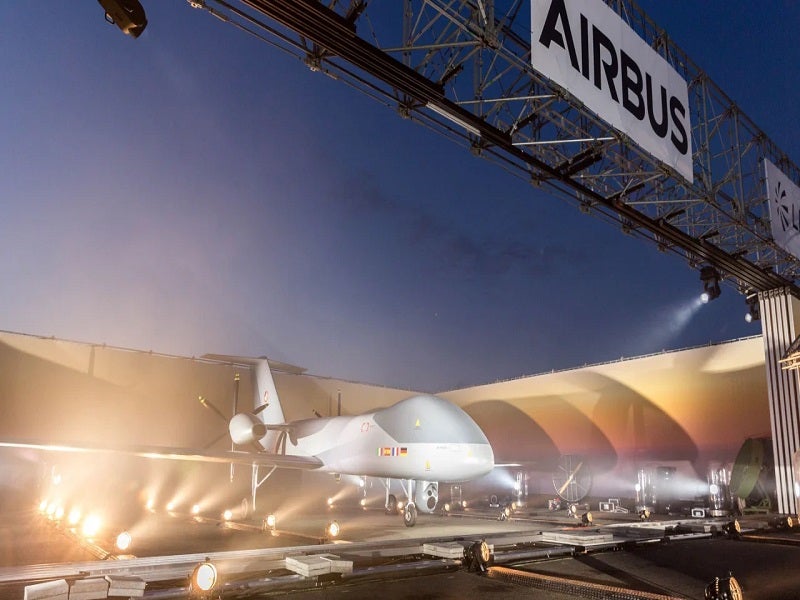
The MALE RPAS full-size mock-up was unveiled at the ILA Air Show held in Berlin, Germany, in April 2018, and further showcased during the Tag der Bundeswehr event at the Bundeswehr Research Institute for Materials, Fuels and Lubricants in June 2019.
Negotiations for the second stage contract between OCCAR and Airbus D&S concluded in November 2020.
This culminated in the signing of a global contract by Airbus with OCCAR in February 2022 for the development and manufacturing of 20 systems, which includes five years of initial in-service support.
Propulsion
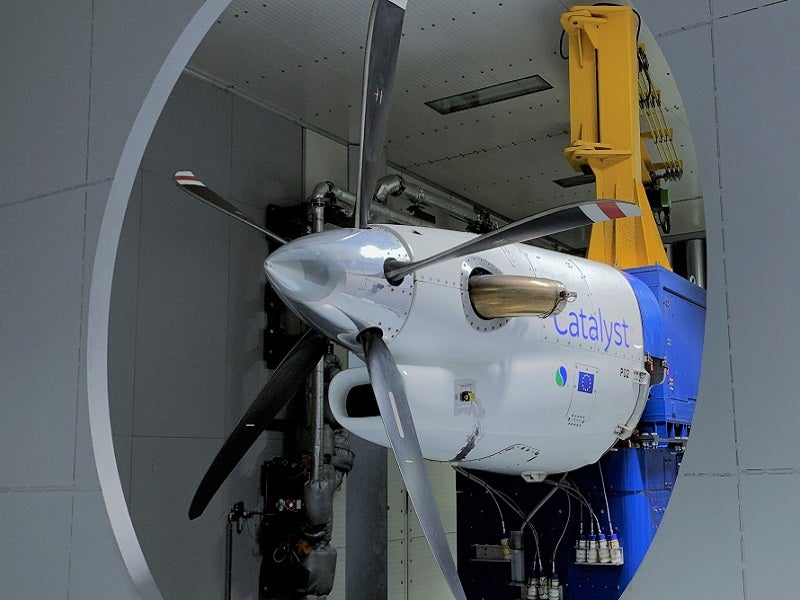
The UAV is powered by an advanced twin-turboprop engine. The Avio Aero’s Catalyst engine boasts 3D-printed components and an overall pressure ratio of 16:1.
It offers a 20% reduction in fuel consumption and a 10% increase in cruising power and payload capacity, thereby extending typical UAV missions by an additional three hours compared to traditional turboprop engines.
The Catalyst’s Full Authority Digital Engine Control streamlines the connection between the propeller and avionics.
Mission capabilities
The Eurodrone is designed with the highest availability and broadest mission coverage, seamlessly integrating into civil airspace.
It can deliver enhanced precision from greater distances and boasts an acoustic footprint that enables it to approach targets three times closer without detection, emitting 67% less noise compared to current MALE platforms.
Equipped with the highest payload capacity, the Eurodrone can incorporate the most advanced sensors, ensuring it is future-ready.
It provides an unmatched Time Over Station, offering more than triple the duration compared to current legacy platforms for the same mission profile.
The system’s flexible and modular architecture allows for significant growth potential. Its adaptability ensures smooth scalability and rapid integration for all future mission scenarios.
Additionally, the Eurodrone can be deployed swiftly and arrives quickly in the theatre, demonstrating its exceptional operational readiness.
It will be certified under NATO STANAG 4671 Edition 3 and relevant civil aviation requirements such as EASA CS-25, which will enable the aircraft to operate freely on optimised routes within non-segregated airspace.
Contractors involved
The Eurodrone MALE RPAS MRPD contracted DFS Aviation Services, a German provider of air traffic management services and solutions, for the preliminary safety assessment of the unmanned system in September 2018.
Avio Aero, a GE Aviation business, was chosen by Airbus to supply the Catalyst engine for the Eurodrone UAS in March 2022.
The propellers were designed and manufactured by MT-Propeller, an aircraft propeller manufacturer based in Germany.
GMV, a Spanish technology company, secured a contract to oversee the design, development, production, and logistical support for the ground flight control computer as part of the Eurodrone Programme in September 2022.
In April 2023, Safran Landing Systems, an aircraft landing gear manufacturer, signed a contract with Airbus D&S to supply the wheels and brakes system for the Eurodrone.
Hensoldt and Sener’s joint Spanish-French team will provide the Wide Band LoS Ku data link for the Eurodrone programme, complete with advanced cybersecurity features.
Grupo Oesia, an aerospace technology company, secured a contract from Airbus D&S to develop, manage, and support the cypher for the flight test instrumentation of the Eurodrone in April 2024.
