

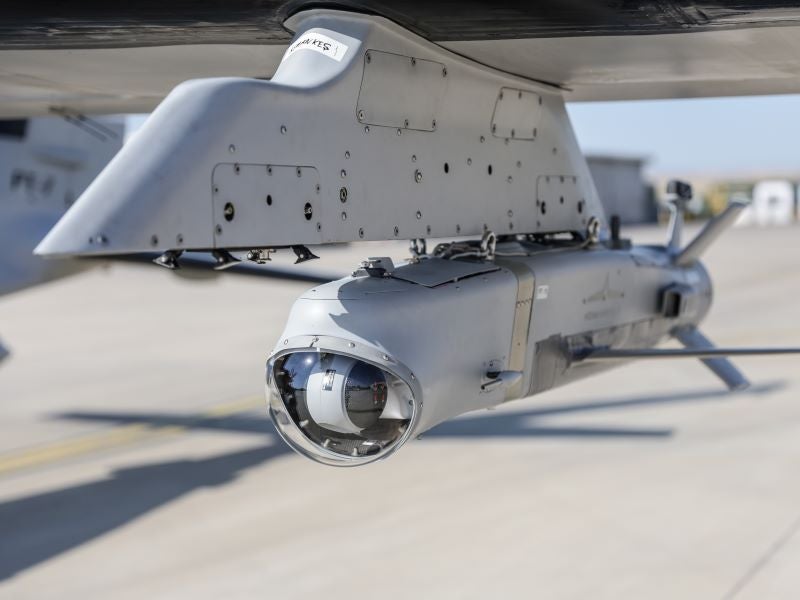
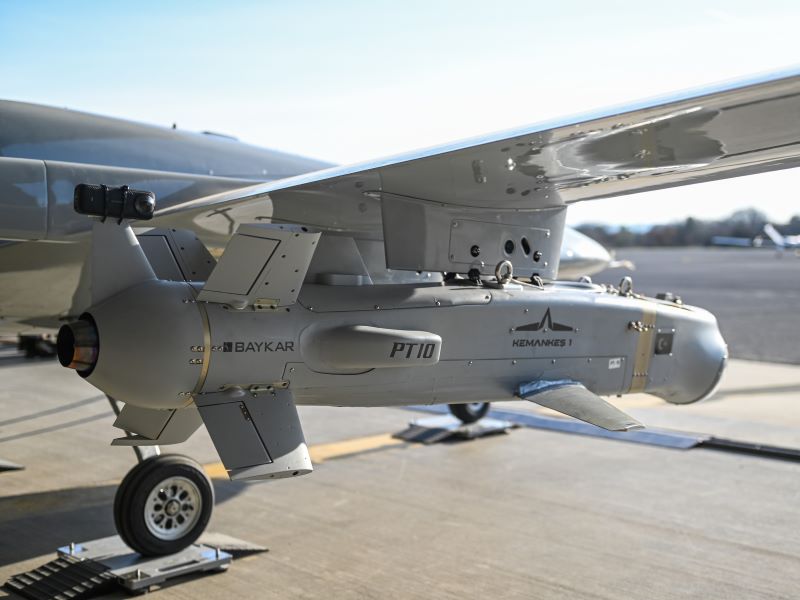
KEMANKES 1 is an air-launched mini cruise missile integrated with AI to support precision strikes against strategic targets.
Developed by Turkiye’s Baykar, the mini smart cruise missile was unveiled for the first time at TEKNOFEST 2023 at Ataturk Airport in Istanbul. Flight testing began in June 2023.
Recommended Buyers Guides

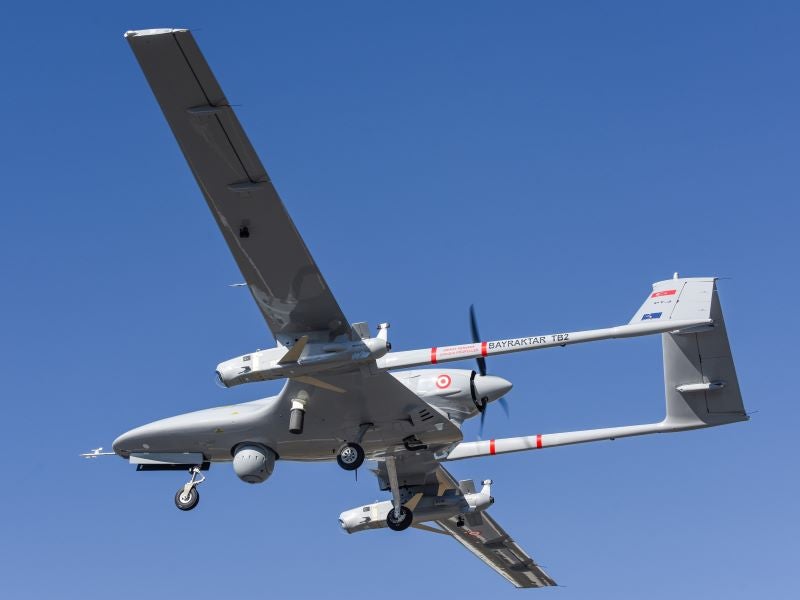
The missile is designed to integrate with Baykar’s indigenously developed unmanned combat aircraft including Bayraktar AKINCI, Bayraktar TB2 and Bayraktar TB3.
Baykar is also currently developing a ground-launched version of the missile, KEMANKES 2, which also features AI technology.
KEMANKES 1 design and features
The KEMANKES 1 mini cruise missile measures 1.73m (5.67ft) in length with a wingspan of 1.14m, and has a height of 0.4m. It has a maximum take-off weight of 45kg and a payload capacity of 10kg.
The missile has a communications range beyond 80km and an operational range of up to 100km. It has a service ceiling of 10,000ft with a mean operational altitude of 7,500ft.
KEMANKES 1 is intended to operate with a high degree of autonomy through an AI-enabled autopilot. It is intended to engage high-value targets in contested conditions through optical recognition and guidance.
KEMANKES 1 is capable of day and night operations and includes anti-jamming measures aimed at reducing the effects of electronic interference. It maintains line-of-sight communications with the launch platform and passes data and imagery via that platform to the ground control station for tracking and monitoring.
Camera system
The camera payload features a two-axis stabilised, full HD daylight sensor offering 1,920 × 1,080 resolution and up to 36x optical zoom. The field of view can be adjusted from 60° down to 2°.
For intelligence, surveillance and reconnaissance (ISR) tasks, it can be equipped with an AI-assisted electro-optical camera, while terminal guidance options include electro-optical and global navigation satellite system-based modes.
KEMANKES 1 engine and propulsion
The propulsion system for KEMANKES 1 is provided by a jet engine, with a stated cruise speed of around 140 knots indicated air speed (KIAS) and a maximum of up to 175 knots.
The missile has an endurance of up to 20 minutes.
KEMANKES 1 mini cruise missile testing and development
Flight test commenced in June 2023, when a Bayraktar TB2 launched the missile from approximately 20km during a trial in Edirne Province. The missile reached the target area and carried out the planned engagement.
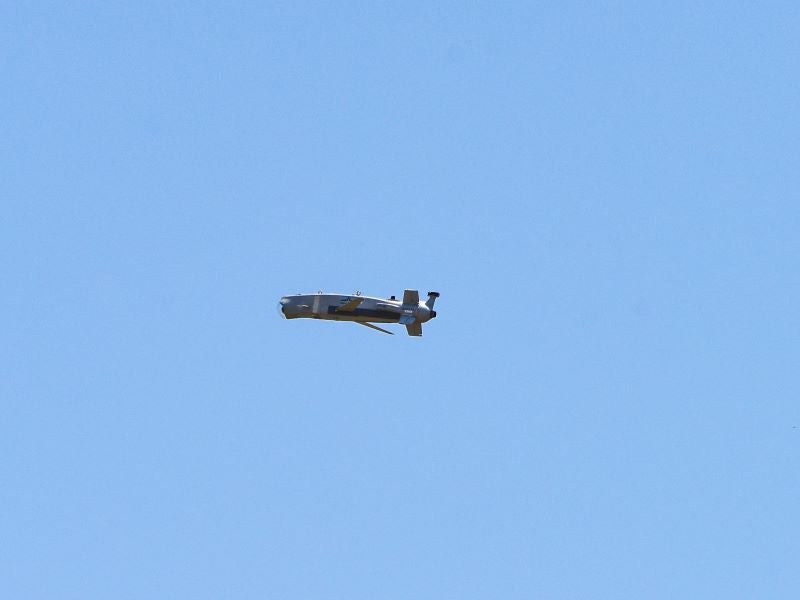
A maximum flight and dive test was carried out in March 2025 at Baykar’s Flight Training and Test Centre in Kesan, Edirne, when two missiles were released from a Bayraktar TB2 at a pre-planned point. The two missiles followed their routes for more than 100km towards the assigned targets, completing the test and safely landing by parachute.
Live-fire activity continued in mid-2025 under coordination involving Baykar’s test and training facilities in Corlu and Kesan. In June 2025, a Bayraktar AKINCI flew with two missiles on underwing pylons, and the sortie evaluated identification, cruise and visual dive engagement modes of the missile.
The missiles were launched against moving airborne targets towed by another drone and scored direct hits using onboard targeting functions. A separate live-fire event in July 2025 again used Bayraktar AKINCI carrying two missiles, this time engaging a ground target and assessing cruise and dive flight profiles before release, with the weapons hitting the target accurately.
