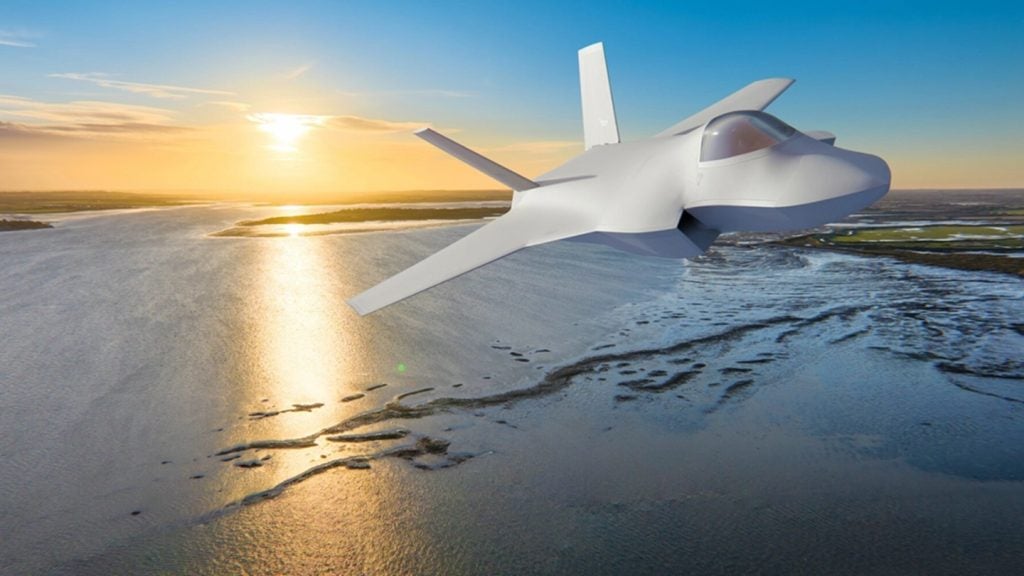
The UK Ministry of Defence (MoD) has revealed the design of the forthcoming Combat Air Flying Demonstrator, a testbed supersonic fighter that will form the basis of the future Global Combat Air Programme (GCAP), which is being developed in collaboration with Italy and Japan.
According to a 16 July release by the Royal Air Force (RAF), the piloted supersonic aircraft – the first of its kind to be developed in the UK in 40 years - is set to fly “within three years”, with the main structure, wings, and tail fins in assembly at BAE Systems’ sites in the UK.
Two-thirds of the weight of the aircraft is now in manufacture, the RAF detailed.
The testbed is being developed by UK industry, including BAE Systems, Rolls-Royce, and MBDA UK to test “a wide range of new technologies”, including “stealth compatible features”.

The RAF stated that its own test pilots, as well as those from BAE Systems and Rolls-Royce, had flown more than 300 hours of the Combat Air Flying Demonstrator in a simulator.
Extensive use of simulator to test flight operations, together with design and manufacturing techniques such as 3D printing, digital twins, and cobotics – effectively the integration of robotics into a human workspace – is intended to reduce platform development time.
GCAP fighter critical to UK's aerospace sector
Given the tight timeframe for introduction of the GCAP fighter, due in UK service by 2035, any delays could have significant consequences for the UK’s ability to sustain air combat operations.
At present, the RAF operates just 107 Tranche 2 and Tranche 3 Eurofighter Typhoons, along with a number of F-35B stealth fighters assigned to 617 Sqn RAF as part of the joint carrier force with the Royal Navy.
With UK’s Typhoon production lines winding down following a failure by the UK government to acquire an additional tranche of aircraft, the imperative for companies like BAE Systems to begin to shift to future programmes like Tempest/GCAP will become ever more paramount.
This case is particularly acute in the country’s aerospace sector, with BAE Systems recently claiming to contribute the equivalent of 0.5% of the UK’s entire economy.