

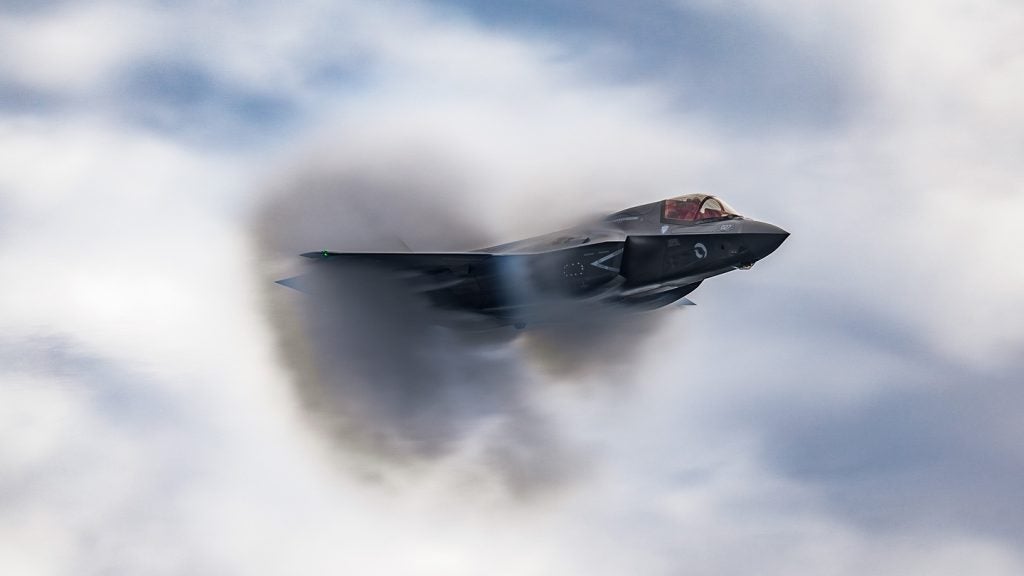
On the eve of a premature declaration by the UK that its F-35 stealth fighter fleet has reached full operating capability (FOC), the systemic difficulties of a programme that is failing to deliver on its promise is a yet another concerning indictment of the country’s multiple military failings.
As it stands, the UK’s F-35 programme is several years away from training the required number of aircraft maintainers and engineers, as slow training times and ongoing recruitment troubles continue to plague the military.
While availability of the fifth-generation fighter fleet, of which the UK currently has 37 aircraft, is a closely kept secret, a recent report by the UK’s Public Accounts Committee (PAC) into the country’s F-35 programme has laid bare some of the difficulties in getting aircraft airborne.
In the report, the PAC stated that the F-35 programme faces an “unacceptable shortage of several types of personnel, including engineers, cyber specialists, pilots, and qualified flying instructors”.
Of the latter shortage, the PAC revealed that in 2025 only five of 16 flying instructor posts were filled for the F-35 programme.
Previous reporting by Airforce Technology highlighted the shortage of fully trained F-35 pilots, with the aircraft-to-pilot at a near 1:1 ratio. This included foreign pilots operating in the UK fleet on secondment.
Continuing, the report said that the Ministry of Defence (MoD) accepted that the shortage of engineers seen across the military had been “exacerbated” by its miscalculation of how many engineers are per F-35 fighter.
The shortfall requires an additional 168 aircraft engineers to be trained, a process that the PAC said would take “several years”.
In response, the UK’s Minister for the Armed Forces Luke Pollard defended the MoD, stating that the department had increased recruitment of engineers “significantly” in the past two years.
“However, training time required for engineers means that it is expected to take three or four years before the programme has the required numbers,” Pollard said.
Availability rates for the F-35 are thought to be dire, with the fleet achieving approximately one-third of the target for the time it was able to fly all its required mission in 2024.
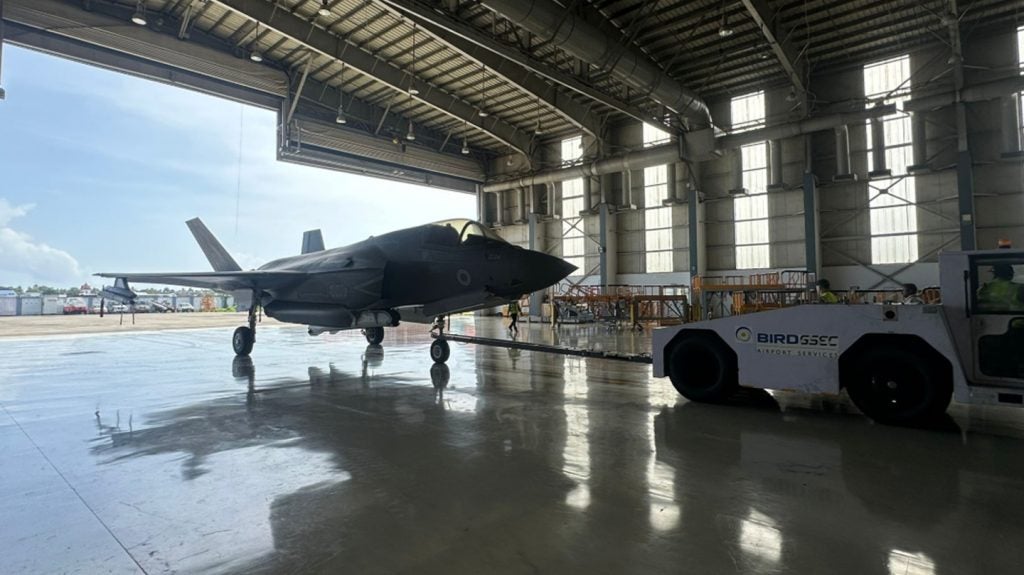
During the 2025 deployment of HMS Prince of Wales into the Indo-Pacific region, a UK F-35 was forced to land in India due to mechanical troubles, where the aircraft sat in plain view on the tarmac for several days with no UK oversight before being taken to a hangar and repaired.
India maintains close ties with Russia, with fears that highly classified elements of the F-35 such as the lift fan, engine nozzle, and stealth coating could have been compromised.
F-35: UK left to count its failures
Although the UK is expected to declare FOC of its F-35 fleet by the end of 2025, the forces also lack a guided standoff air-to-ground capability, with the only munition able to strike ground targets being the GBU-series free fall bombs sourced from the United States.
The integration of the SPEAR 3 air-to-ground missile is not expected until the early 2030s, and possibly significantly later judging from previous UK integration timelines.
It is also expected that F-35 availability will drop even further as aircraft returning from the carrier deployment this year will undergo a maintenance period before being returned to service. The slow acquisition of the F-35 means a lack of spare capacity to meet shortfalls in aircraft numbers.
The UK also recently opted to acquire 12 conventional F35A variant aircraft, which differ significantly to the B version operated currently in being able to take-off and land on the Royal Navy’s aircraft carriers. The F-35A variants – whenever they arrive – will provide additional maintenance challenges to the already stretched sustainment cadre.
In addition, efforts to find short-term savings, such as the delay of aircraft acquisitions, the decision to pause the build of a sovereign facility to manage the stealth coatings, infrastructure delays, and a rising cost package, all contribute to a weakening of the fleet.
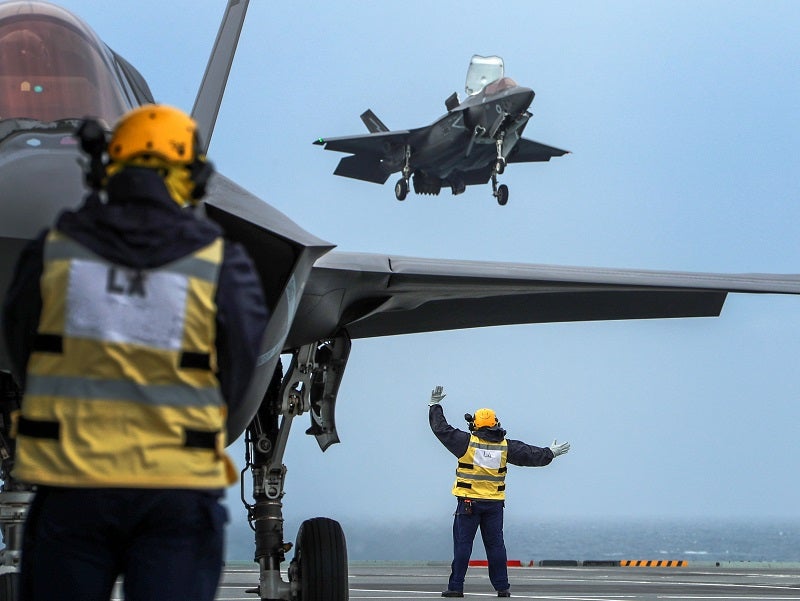
The PAC reported by the MoD “failed for many years” to update the public whole-life cost figure of the F-35 programme, which “hardly increased” from its 2013 estimate of £18.4bn ($24.1bn) to an out of service date of 2048.
This is despite the F-35B fleet’s publicly known out of service date being set at 2069, the same year that the Royal Navy aircraft carriers are due to be decommissioned.
The PAC said that the MoD updated its estimate in 2025 following a National Audit Office (NAO) report to almost £57bn for all 138 planned aircraft, updated now to the 2069. However, this new figure did not include fuel, infrastructure, and personnel, which were included in the NAO’s £71bn estimate.
Too few pilot, engineers, and instructors in a mix of a lack of aircraft numbers in a fleet suffering with poor availability, combined with limited kinetic options, means the UK’s F-35 fleet, as a combat force, is increasingly ineffectual.
While the F-35 aircraft has additional use cases thanks to its data centric development and EW capabilities, as a £71bn strike option, the UK has far cheaper, and more effective, alternatives.