

- Dan Jarvis replaces John Healey as UK Defence Secretary after Healey’s resignation on 11 June
- Jarvis takes over as the MoD braces for major cuts under the upcoming Defence Investment Plan.
- Defence spending claims are disputed, fuelling political backlash
A former Parachute Regiment Major has been appointed the new UK Secretary of State for Defence, following the resignation of John Healey on 11 June over expected governmental cuts to the UK military.
Dan Jarvis, who had been Minister of State at the Home Office and Minister of State at the Cabinet Office, moved to step into the breach left by the departing Healey late on 11 June, as Prime Minister Keir Starmer’s administration lurches from one crisis to another.

Discover B2B Marketing That Performs
Combine business intelligence and editorial excellence to reach engaged professionals across 36 leading media platforms.
In his British Army service, Jarvis attended the Royal Military Academy Sandhurst, the finishing school for prospective officers, and was commissioned into the Parachute Regiment before subsequently deploying to Kosovo, Northern Ireland, Iraq, and Afghanistan.
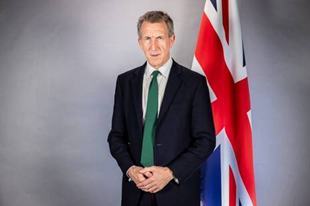
According to a UK Government release, Jarvis served as a Platoon Commander with 1 Para, aide-de-camp to General Sir Mike Jackson – a figure of some legend in the British Army – and Adjutant to 3 Para.
On promotion to major, he worked as a staff planner in the Permanent Joint Headquarters and then at the Army’s Headquarters.
Jarvis also served as a company commander in the Special Forces Support Group, the force that assists UK Special Forces on operations.
Jarvis as UK Defence Secretary: analysis
With the resignation of the now former UK Defence Secretary John Healey and Armed Forces Minister Al Carns on 11 June, the Ministry of Defence was left scrambling amid an impending Defence Investment Plan (DIP) that will require deep cuts in the UK military.
The DIP will reportedly provide between £10-13bn in additional funding spread over four years to the MoD, well short of the £28bn ($37.5bn) required simply to meet existing defence expenditure.
The UK Government claims that the country will see defence spending as a proportion of GDP rise to 2.6% next year, although this figure was revealed to also include the Single Intelligence Account funding, as well as numerous other non-military specific resources.
Posting on X on 11 June, former UK Defence Secretary Ben Wallace said UK defence spending could be as low as 2.13%, barely creeping over the Nato minimum requirement.
Wallace subsequently criticised “twerps and spinners in No 10”, as the Prime Minister’s office moved into damage limitation mode on Thursday evening.
Finding a candidate willing to step up to the plate and push through the DIP, which will be met with horror by rank-and-file military personnel and planners, would have been no easy task.
Current Chief Secretary to the Prime Minister Darren Jones was mooted as being an option, who, as a former staffer at the Treasury, would have had no compunction pushing through the deeply unpopular DIP.
However, as an ardent Starmer loyalist, it is possible that the Prime Minister thought it better to retain some allies close at hand, with the incoming Defence Secretary effectively the first one over the firing line when the DIP is published.
Current UK Minister for Defence Readiness Luke Pollard could also have been a contender, who earlier this year notably decried “journalists and armchair generals” for their criticism of the UK’s military capabilities.
As it is, the appointment of Jarvis will see his first task, potentially, to open a new Defence Uncrewed Systems Centre in Swindon on 12 June. It was previously considered likely that this event would have formed the backdrop for the release of the DIP, allowing Starmer to attend the G7 meeting next week with something, notionally, positive to discuss.
Even the drone centre is not without its controversy, with Army Technology learning recently that some defence SMEs are privately critical of what they consider to be favouritism within the MoD for established defence companies, rather than those seeking to break into the sector.


