

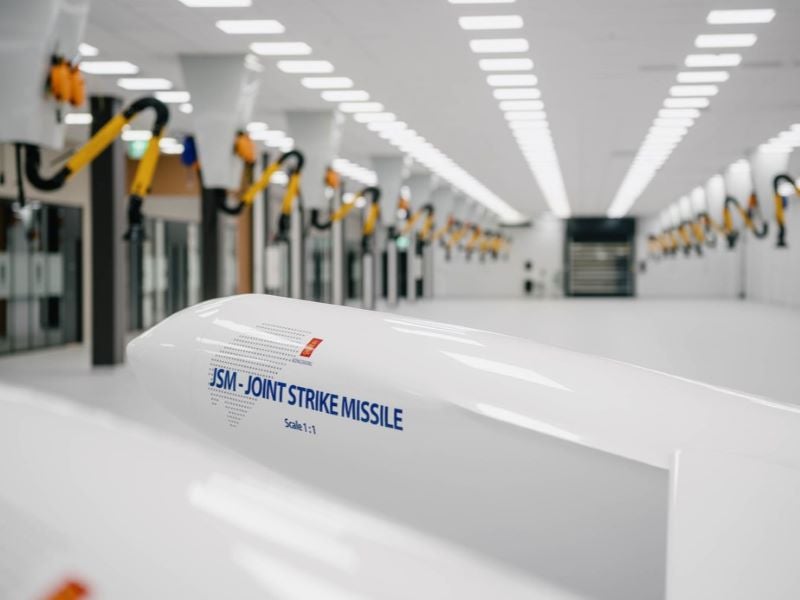
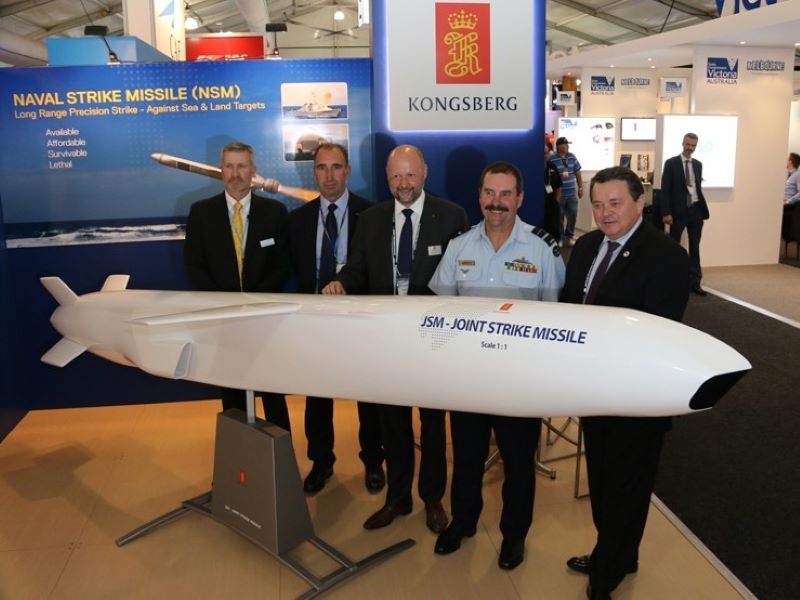
The Joint Strike Missile (JSM) is a fifth-generation, long-range, precision-guided, stand-off missile system designed by Kongsberg Defence Systems for the Norwegian armed forces.
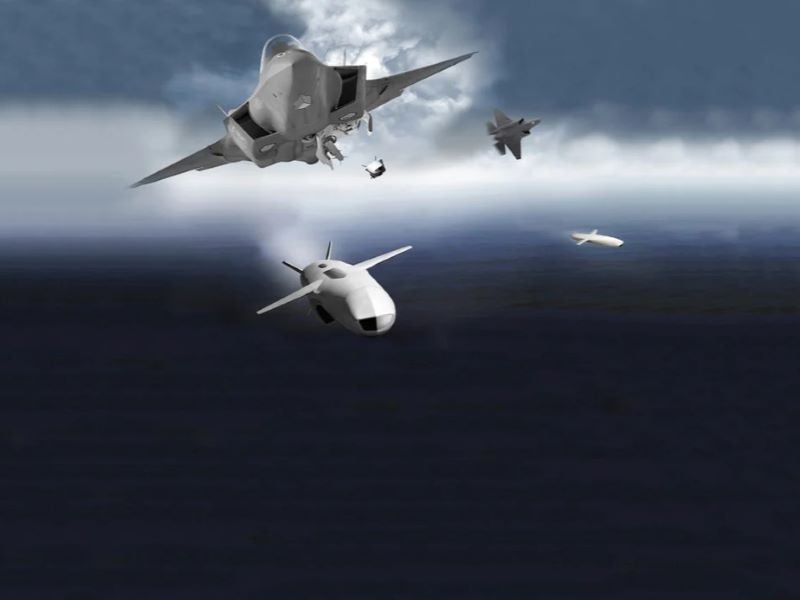
The missile system is primarily designed for integration with fixed-wing aircraft platforms to engage land and naval targets. It can be deployed to conduct anti-surface warfare and naval fire support missions in open sea, over land and littoral environments.
Recommended Buyers Guides
The Norwegian Defence Logistics Organisation (NDLO) and Kongsberg signed a Nkr1.1bn ($178.8m) contract for the third-phase development and integration of the JSM with the F-35 Lightning II Joint Strike Fighter (JSF) aircraft in July 2014.
The development of the JSM was completed in mid-2018 after a series of successful validation tests. In April 2025, the Norwegian armed forces completed the F-35 fleet and received the first JSM.
In December 2025, Kongsberg secured a $240m firm fixed price contract from the US Air Force (USAF), covering Lot Two production of the JSM. The award includes complete operational rounds supplied with containers, along with associated test equipment and other support items. Manufacturing will take place in Norway, with completion scheduled for November 2028.
JSM development
The JSM weapon system was developed by Kongsberg based on the proven Naval Strike Missile.
Development work on the JSM began in 2008, followed by Kongsberg and NDLO signing a Nkr166m first-phase development contract for the JSM in April 2009. NDLO awarded a Nkr535m contract for the second-phase development of the missile in April 2011.
NDLO placed a Nkr543m contract with Kongsberg in June 2011, to continue the phase two development of JSM until 2013. The second phase involved a detailed design and integration check of the JSM for the F-35, F-16 and the F-18 aircraft.
The Norwegian Government and the US agreed to finalise the JSM development and integration on the F-35 fighter aircraft in June 2012. Kongsberg conducted a fit check of the JSM on the external pylons of F-35 JSF aircraft sourced by the US in May 2013.
Kongsberg and Lockheed Martin completed a second fit check of the JSM on the F-35 fighter aircraft’s internal carriage bay in June 2013.
Kongsberg and Boeing completed a JSM fit-check on the external pylons of F/A-18F Super Hornet multi-role fighter aircraft in November 2013.
Kongsberg and NDLO signed a bridging-phase contract worth Nkr480m for the third-phase development in November 2013. Following the bridging agreement, Kongsberg further signed a phase three contract worth Nkr1.1bn with the NDLO in July 2014, taking the overall value of phase three to Nkr1.5bn.
The phase three development involved completion of JSM development and procurement of several missile systems for testing.
In July 2014, Raytheon and Kongsberg signed a teaming agreement aimed at developing new capabilities for the Offensive Anti-Surface Warfare mission. Under the arrangement, the companies had planned to adapt the JSM for air-launched roles linked to this requirement.
The Australian Government Department of Defence and the Norwegian Ministry of Defence announced a cooperation agreement in February 2015 to further develop the JSM to be made available for their future F-35A Joint Strike Fighters.
In April 2017, Kongsberg signed a Nkr150m contract with the Australian Department of Defence to integrate the RF seeker, developed by BAE Systems Australia, into the JSM.
JSM design and features
The JSM incorporates advanced composite materials and employs low signature/stealth technology, thus offering a low radar signature. It offers superior flexibility in target engagement planning.
The missile system is equipped with air intakes, wings and tail fins. It has a length of 4m and a weight of 416kg. The front section of the JSM incorporates an imaging target seeker to discriminate between land and non-targets. The middle section is equipped with a fuel tank and 125kg HE fragmentation warhead.
The high-mobility JSM system is fitted with an accurate navigation system to support flight close to terrain. An advanced engagement planning system is installed to accurately engage targets using geographical information in the area.
The missile offers stand-off launch capability for the detection of land or sea-based targets. It also provides sea control/sea denial over a wide area of operations. The weapon system is also capable of providing naval fire support and strike missions at long distances.
JSM data link
The JSM system is equipped with a data link, which is compatible with the Link 16 network and standard military equipment. The two-way networking data link allows the missile to exchange tactical data with aircraft after launch. It also ensures operators can perform target update, re-targeting, mission abort and bomb hit indication during flight.
Propulsion
Propulsion for the JSM system is provided by a small jet engine fitted at the rear, which provides the missile with high subsonic speeds. The engine provides high manoeuvrability, enabling the missile to intercept a range of targets. The propulsion system ensures the missile reaches a maximum range of more than 350km.
Orders and deliveries
Kongsberg Defence & Aerospace entered a $49.2m (Y7.76bn) deal with Japan to supply the JSM for its fleet of F-35 fighter aircraft in November 2019. The two entities entered a second follow-on supply contract valued at Nkr820m in December 2020. Further follow-on contracts were placed in November 2024 for Nkr1.9bn and in December 2025 for Nkr800m.
In October 2021, Kongsberg secured a Nkr3.9bn contract from the Norwegian Defence Materiel Agency to supply the JSM for Norway’s F-35A Lightning II fighter aircraft fleet.
In September 2024, Kongsberg secured an agreement with the Australian Government to supply the JSM for the Royal Australian Air Force F-35A fleet, with the first order valued at around Nkr1bn (A$147.88m).
Kongsberg received a $70m firm fixed price contract modification from the USAF, linked to a $141m undefinitised contract action awarded in June 2024 for the JSM. This change increases the overall contract value to $208m.
In June 2025, Kongsberg secured a Nkr6.5bn (€580m) contract to supply the JSM to Germany. The deal was arranged as a government-to-government agreement between Norway and Germany, with Norway’s Defence Material Agency serving as the contracting authority.
