

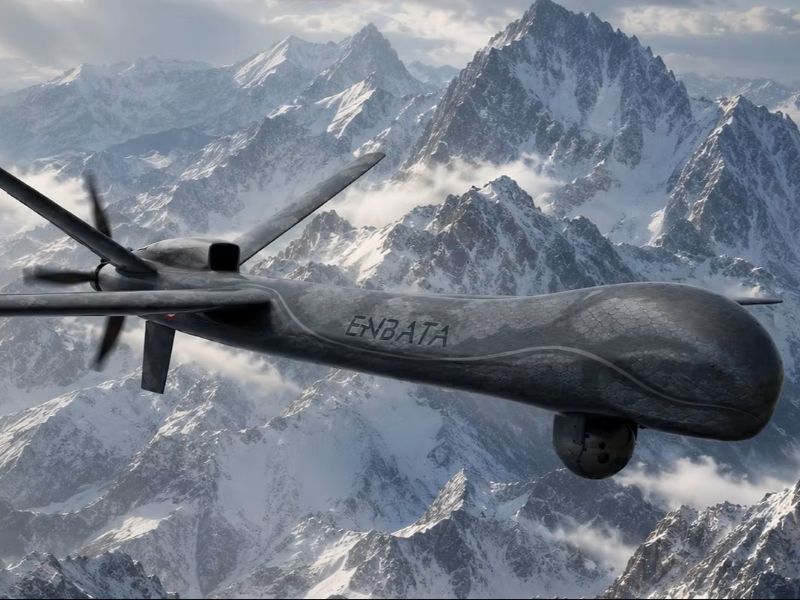
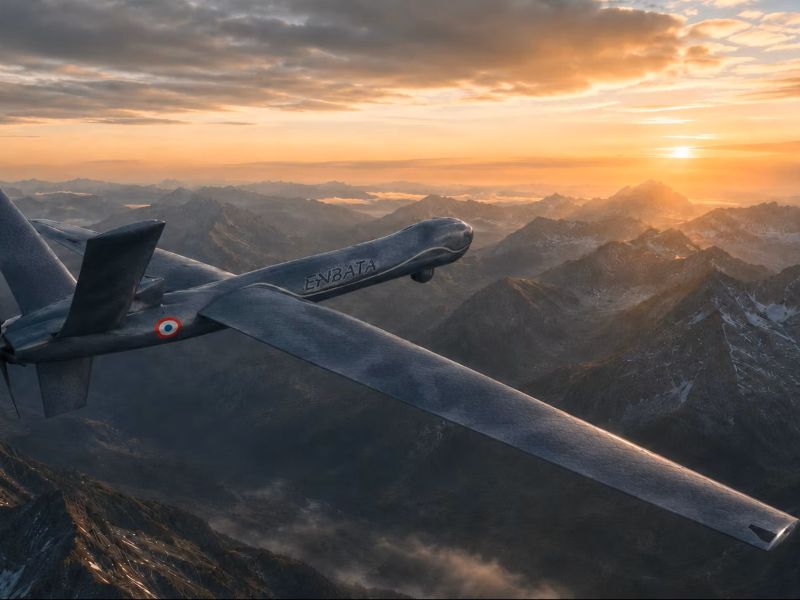
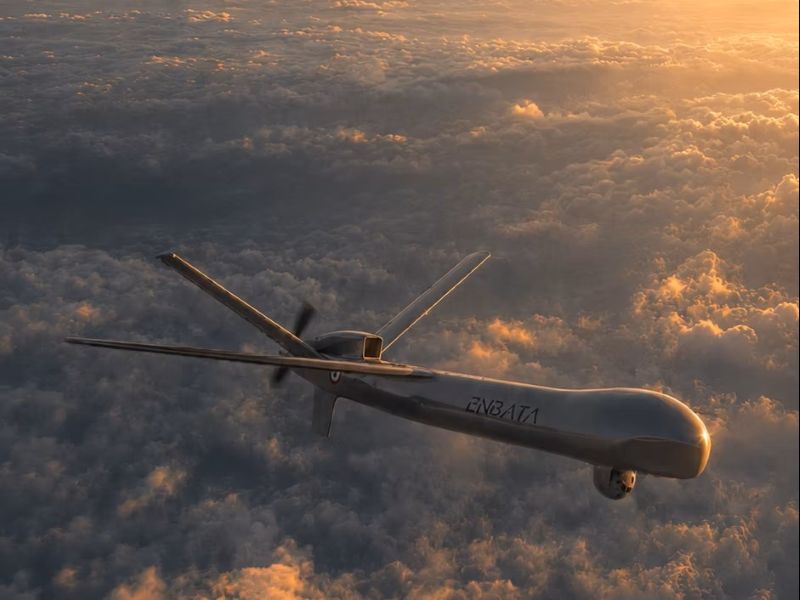
ENBATA is a multi-mission medium-altitude, long-endurance (MALE) drone under development by Aura M, the defence division of Aura Aero.
Aura Aero unveiled the ENBATA platform at the Paris Air Show in June 2025, following a development programme supported by the French Ministry of the Armed Forces and the French Directorate General of Armaments (DGA).
Recommended White Papers

Recommended Buyers Guides

Aura M presented a revised version of the drone at Eurosatory in June 2026. The updated design uses an open digital architecture intended to increase airframe durability, simplify maintenance, and enable the integration of modular sensor packages.
The ENBATA multi-mission MALE drone programme involves several industrial partners. Thales, Safran, Aresia, Soben, and Merio are contributing systems and components to the platform.
ENBATA is scheduled to make its maiden flight in 2026, with orders expected to open from 2028.
ENBATA multi-mission MALE drone design and features
The ENBATA multi-mission MALE drone is 10m (33ft) long and has a wingspan of 17m. Its maximum take-off weight is 2,000kg (4,410lb).
The airframe has a metal fuselage to facilitate production, maintenance, and repair in operational environments. Composite materials are used in the wings, tail surfaces, and nose section to reduce weight, support aerodynamic efficiency, and house mission equipment.
The nose section has been revised from the original concept to improve maintenance access and allow the integration of changing onboard sensor requirements. It incorporates radar and communications equipment using flat antennas designed to reduce space requirements.
ENBATA combines an open architecture with fly-by-wire flight controls. This arrangement is intended to accommodate new software capabilities and AI applications, including functions designed to improve system performance and autonomous decision-making.
The system incorporates fully automatic take-off and landing functions, reducing the requirement for direct pilot input during these flight phases. Its landing gear and low-pressure tyres are intended to support operations from basic or unprepared runways.
The drone can be transported in a 40ft container and deployed to an operational theatre by an A400M aircraft with its dedicated ground station. It is International Traffic in Arms Regulations (ITAR) free and certified for operations in regulated civil airspace.
ENBATA multi-mission MALE drone sensors
ENBATA incorporates the Sphere Awareness System to monitor its flight environment and support operational safety. Unlike conventional uncrewed aircraft, where visual coverage can be limited by the orientation of the primary sensor payload, the system uses intelligent cameras distributed across the airframe to expand situational awareness.
The optical network monitors the surrounding airspace for aircraft or foreign objects entering a pre-configured boundary. When it detects a contact, the system alerts operators, activates a live video feed, tracks the object in real time, and collects imagery for technical assessment. This 360° coverage enables flight crews to concentrate on the primary mission while automated systems monitor the immediate airspace.
Thales’ AirMaster C airborne radar, which uses an active electronically scanned array (AESA) architecture, has been selected for ENBATA. The radar includes onboard AI capabilities intended to assist target classification.
ENBATA’s propulsion and flight performance
ENBATA is powered by a diesel engine coupled with a variable-pitch propeller. It has a fuel capacity of 550kg and a useful load (fuel and payload) of 1,050kg.
The drone has an endurance of 55 hours and a maximum range of approximately 7,620m (4,900nm). It can operate at altitudes of up to 7,620m and has a maximum speed of 160 knots.
Mission management and mission profiles
Operators retain decision-making authority over the platform while intelligent automation enhances operational efficiency, endurance, and responsiveness.
The operators can control the drone through high-level commands and by defining mission objectives, areas of interest, and priorities, while the system supports flight-plan execution, monitoring, and adaptation. This reduces crew workload, optimises personnel allocation, and supports long-duration, complex, and multi-sensor missions.
ENBATA is intended to perform defence tasks across a range of operating environments. For strategic intelligence, surveillance, and reconnaissance (ISR) missions, the aircraft is designed to provide persistent surveillance over extended distances. It can also conduct armed reconnaissance missions, combining observation with strike options.
Additional roles include maritime patrol, communications relay, and electronic warfare. The platform can also support aerial defence missions through integrated counter-uncrewed aerial systems (UAS) capabilities.
