

- There have been reports of a US military build-up in Europe and the Middle East over the weekend
- It is said more than 100 C-17 strategic airlifters have been deployed
- Using flight tracking intelligence, Airforce Technology explores these claims while discovering US military patrols along the Persian Gulf
Observers of open source defence movements were abuzz over the weekend, reporting dozens of US military flights into Europe and the Middle East.
The majority of these, it is said, were heavy lift aircraft. According to one report on Saturday 7 February, as many as 112 C-17 Globemaster III military cargo planes entered the discordant region.

Discover B2B Marketing That Performs
Combine business intelligence and editorial excellence to reach engaged professionals across 36 leading media platforms.
Based on information obtained from the Flightradar24 open source intelligence (OSINT) tool on the morning of 9 February, Airforce Technology determined that there are indeed several US Air Force (USAF) C-17As scattered around airbases across Europe and the Gulf, but could not validate whether there are in excess of 100 American airlifters.
At Al Udeid Air Base in Qatar, where there is usually a heavy USAF presence, there are currently five C-17As, six KC-135 Stratotankers and one RC-135V Rivet Joint on the ground at the time of publishing.
Likewise, there are two MQ-4C Triton uncrewed air systems based at Al Dhafra Air Base in Abu Dhabi, with both having arrived toward the end of last week.
Meanwhile, the largest concentration of aircraft found was at Ramstein Airbase in Germany. There are currently 12 C-17s, seven C-130Js and one C-5M Galaxy. Notably, the 86th Airlift Wing – the force’s “global gateway” unit – is based at Ramstein, which permanently operates C-130s.
However, it is unusual to send a dozen C-17s to the Nato installation, which could indicate a military build up, with Europe as a stopping point.
The move would be seen to back up repeated White House claims of intervention in Iran following the clerical regime’s crackdown on protests throughout the country.
Recent movement over the Persian Gulf
While most US military platforms are on the ground, OSINT indicated evidence of the US military efforts to monitor the Persian Gulf, just south of the the Islamic Republic of Iran.
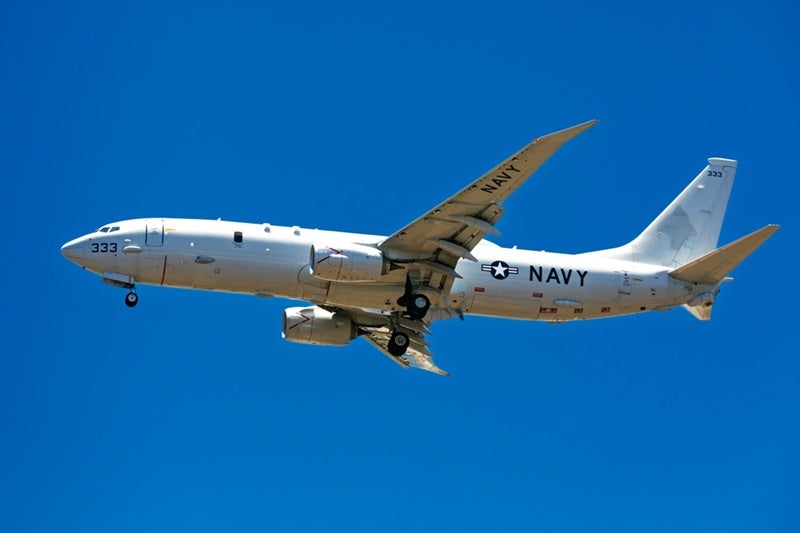
A US Navy P-8A Poseidon was seen flying a repeated route, back and forth, patrolling the maritime space between Bahrain and the United Arab Emirates.
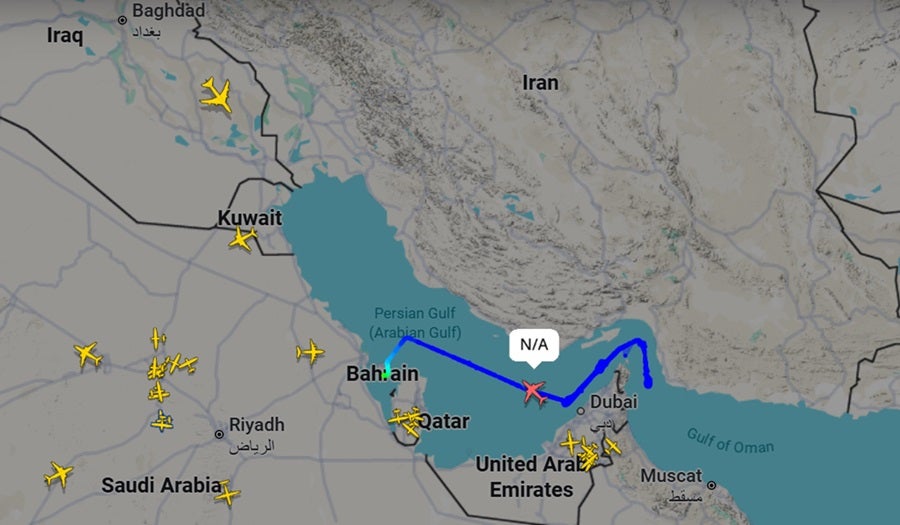
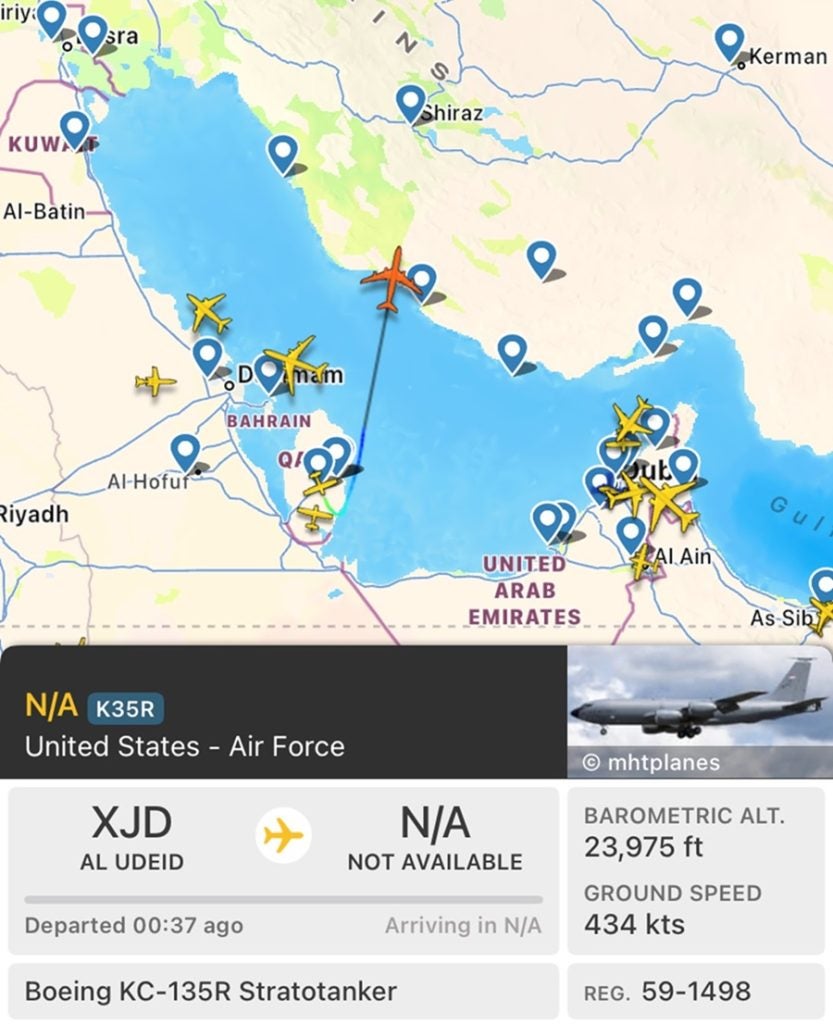
Strangely, a KC-135 was seen briefly flying close to Iran until the application temporarily stopped coverage of the Stratotanker’s peculiar movement, at which point the route recalibrated and depicted a different route altogether.
Another Absolute Resolve?
It is thought that such a vast aerial presence, in tandem with the Abraham Lincoln Carrier Strike Group in the region, constitutes a scale on par with all the assets that combined to execute Operation Absolute Resolve in Venezuela after the New Year.
China, a peer adversary, has peddled this comparison in its state-run Global Times news outlet, which is purportedly backed by satellite imagery obtained at the end of January.
While the enormous build-up is similar to the Caracas raid in scale, there are some marked differences such as the airlift of military resources – presumably land based – to Europe and the Middle East.
But in the end, decoding US intentions over the crisis with Iran can only be better understood by an analysis of the extent and capacity of the ostensible airlift campaign.
Inside the C-17
The build-up of C-17 Globemaster III aircraft represents a considerable airlift mission. Flying so many of them over a few days represents a large scale, international transportation of resources.
As a strategic cargo plane, the aircraft has a payload capacity of 170,900lbs (77,519kg) while its maximum gross take-off weight is 585,000lb (265,352kg).
In context, this means the airlifter can transport a single 69-tonne M1 Abrams main battle tank (stripped down); up to three M3 Bradley infantry fighting vehicles; up to ten armoured Humvees; three medium lift helicopters or one heavy-lift rotorcraft; and it is also designed to airdrop 102 paratroopers with accompanying equipment.
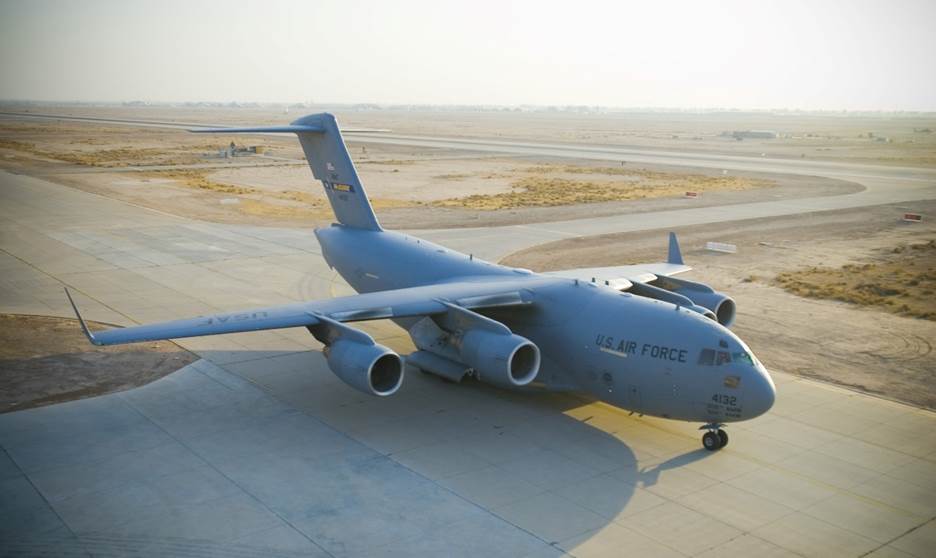
If a brief and targeted mission similar to the Caracas raid is to transpire in Iran (which would, of course, require a very different set of objectives to those in Venezuela, and these should be analysed further if one is to speculate), then the C-17 is certainly capable of delivering the platforms and equipment required.
But the numbers do not add up. The Maudro capture required around ten helicopters compared to the tens of C-17s (or 100+, if other reports are to be believed) currently delivering resources.
However, given the complexity of such a mission, which was only made possible in Venezuela with advanced intelligence and electronic warfare systems, it could be said that the enormous airlift fleet may be necessary to deliver such systems closer to the Middle East for use in a similar endeavour.
P-8A Poseidon
The Poseidon patrol demonstrates the kind of preparatory intelligence, surveillance and reconnaissance (ISR) missions that would typically occur prior to any military operation.
The P-8A Poseidon is the US Navy’s multi-mission maritime patrol and reconnaissance aircraft conducting long-range anti-submarine warfare (ASW), anti-surface warfare and ISR.
With advanced technologies, developed specifically for the Poseidon, such as synthetic aperture radar, an electro and optical infrared sensor turret, and increased acoustic capability, the aircraft conducts concurrent passive and active processing of field data.
At the same time, however, maritime patrols are a frequent occurrence around the world. Even today (9 February) over the Black Sea, a UK Royal Air Force RC-135 Rivet joint aircraft, similarly designed for signals intelligence, was spotted, possibly observing Russian military movements. It does not indicate an impending operation with any certainty.


