
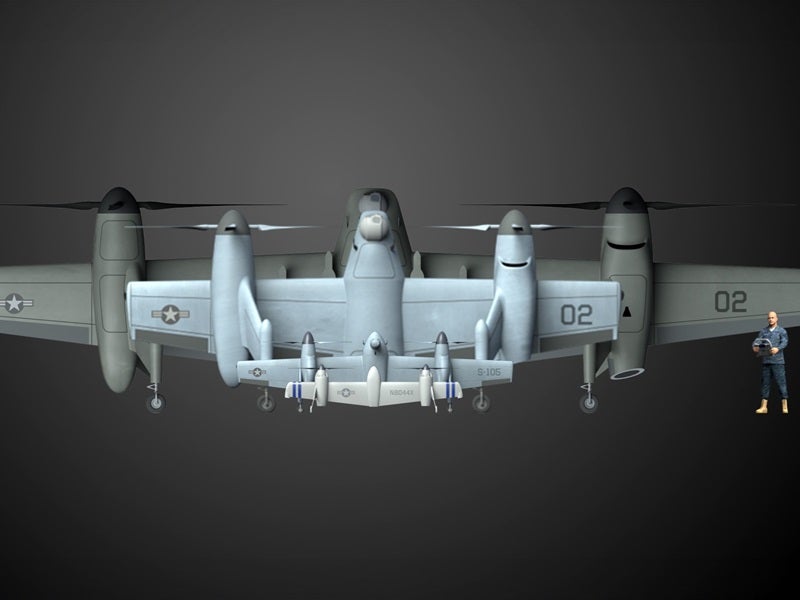
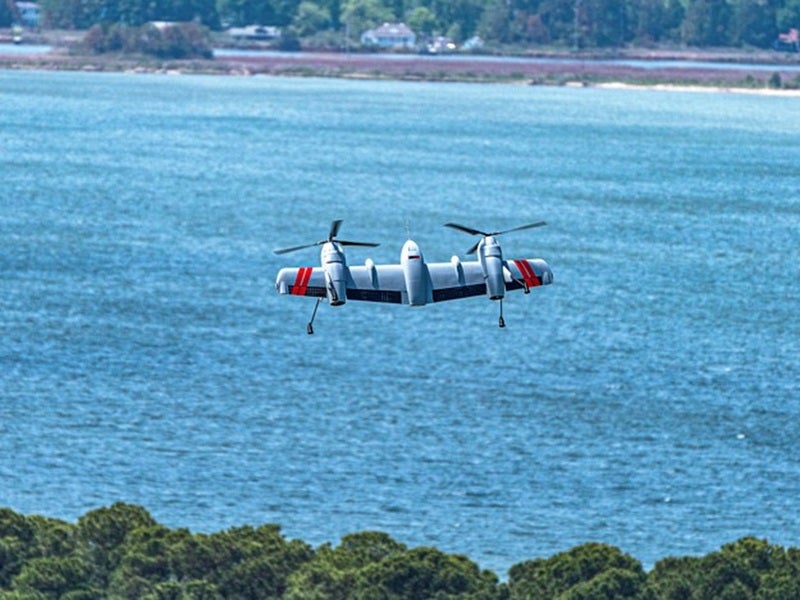
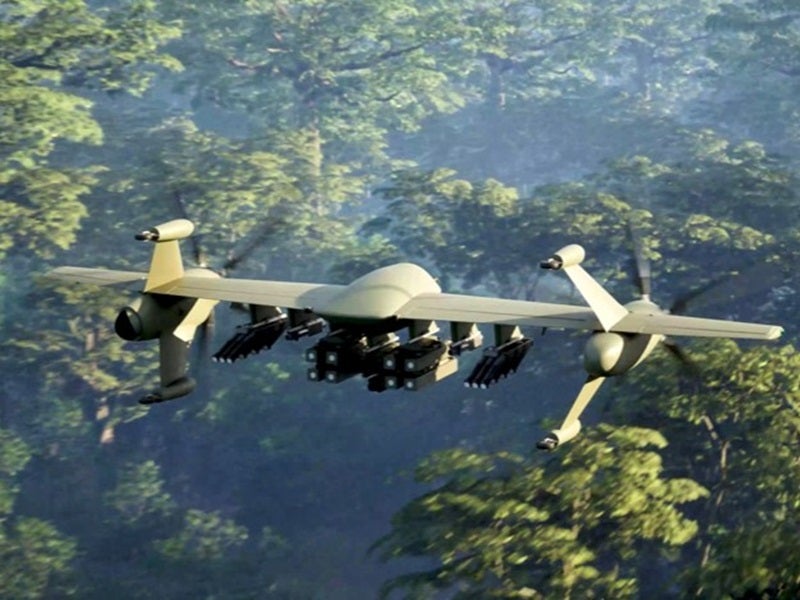
The Nomad™ series is a new range of vertical take-off and landing (VTOL) uncrewed aerial systems (UAS) developed by Sikorsky, a Lockheed Martin company.
The UAS is designed to support reconnaissance and light attack missions, among other roles. It is intended for operations in confined, rugged or otherwise austere settings including urban areas, maritime environments and locations without prepared runways.
Recommended White Papers
Recommended Buyers Guides

It can act as a force multiplier and carry out missions for various defence forces. Potential users include the US Department of Defense, homeland security bodies, forestry agencies and a broad spectrum of civilian operators.
The Nomad family was revealed in October 2025. Sikorsky is now assembling the Nomad 100, a Group 3 variant with an 18ft wingspan, with initial flight trials expected to commence in the near future.
Nomad development background
Sikorsky Innovations, Sikorsky’s rapid prototyping unit, is leading the development of the rotor‑blown wing configuration.
Since 2024, the team has progressed from early design and modelling to both tethered and untethered flight tests, building a detailed picture of the aircraft’s aerodynamics, handling and flight control behaviour.
A key milestone was achieved in January 2025 with a demonstrator based on the Nomad 50, featuring a 10.3ft composite wing, which completed more than 40 vertical take-offs and landings.
The demonstrator carried out 30 transitions between helicopter and fixed‑wing modes, proving the most demanding manoeuvre in the concept of operations. In forward‑flight mode, the demonstrator reached a top cruise speed of 86 knots.
In parallel, Sikorsky conducted full‑scale wind tunnel trials using a 1:1 model, allowing engineers to confirm newly developed control laws by comparing predicted performance with measured data.
By March 2025, Sikorsky had validated advanced control laws enabling a rotor‑blown wing UAS to operate effectively in both vertical‑lift and fixed‑wing regimes.
The battery‑powered prototype, weighing around 52kg and using twin prop‑rotors, delivered stable, controllable flight across its operating envelope, indicating that the VTOL configuration can be scaled up to larger aircraft that will require hybrid‑electric propulsion.
Nomad design and features
The Nomad series is designed to cover multiple weight classes, starting with Group 3 platforms from 56 pounds (lb) up to 1,320lb and extending into larger Group 4 and Group 5 systems above that threshold. This approach provides a scalable solution that can be matched to specific mission demands.
The UAS combines the aerodynamic efficiency of a fixed-wing aircraft with the manoeuvrability of a helicopter. It can lift off vertically, hover and land without a runway, while cruising on the wing for extended periods to maximise endurance.
Most Nomad variants are expected to use hybrid‑electric propulsion, while the largest models are likely to employ more conventional powertrains.
Nomad platforms are compatible with MATRIX™ technology, an open‑architecture autonomy suite developed by Sikorsky Innovations with the US Defense Advanced Research Projects Agency (DARPA).
MATRIX technology details
MATRIX technology underpins DARPA’s Aircrew Labour In‑cockpit Automation System, a long‑running collaboration between Sikorsky and the US defence research agency. It is intended to improve safety, reliability and mission effectiveness for both helicopters and fixed‑wing aircraft.
The technology enables optionally piloted operations, allowing aircraft to fly with or without aircrew depending on mission needs. It supports complex low‑level missions in cluttered airspace and in degraded or uncertain conditions where obstacles and operational hazards are more acute.
Its architecture incorporates layered contingency management to improve system reliability. It is designed to reduce through‑life costs, including operating expenditure per flight hour.
The platform‑agnostic design enables the system to be integrated across a variety of airframes, giving operators the flexibility to adapt mission profiles using different aircraft types.
MATRIX has already been demonstrated in roles such as aerial firefighting, logistics missions and emerging advanced air mobility operations.
Nomad combat capabilities
The Nomad UAS provides a highly adaptable platform suitable for a diverse range of missions.
It can deliver intelligence, surveillance and reconnaissance with integrated targeting capabilities and can support contested logistics by transporting essential supplies into difficult or hostile areas.
The system can be configured for light attack tasks and adapted to assist with search and rescue. It is also suitable for maritime patrol and can act as a communications relay to sustain connectivity across dispersed forces.
