

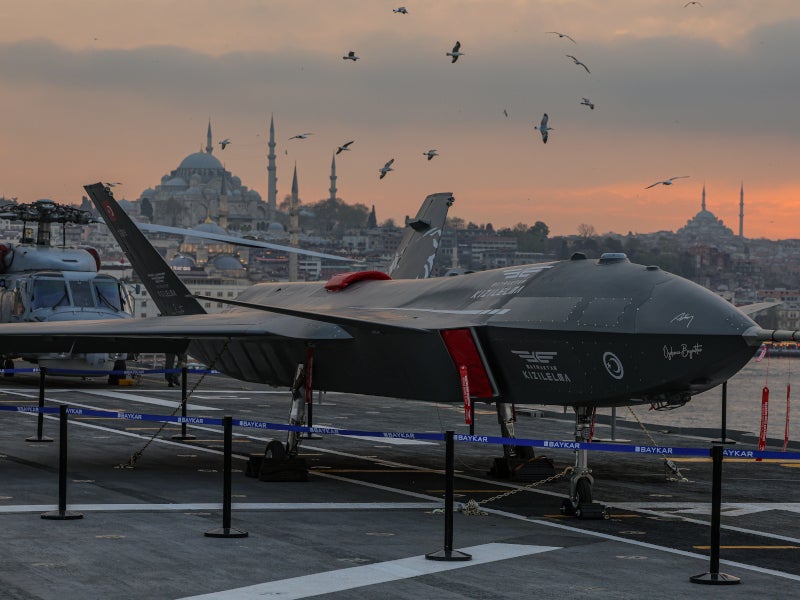
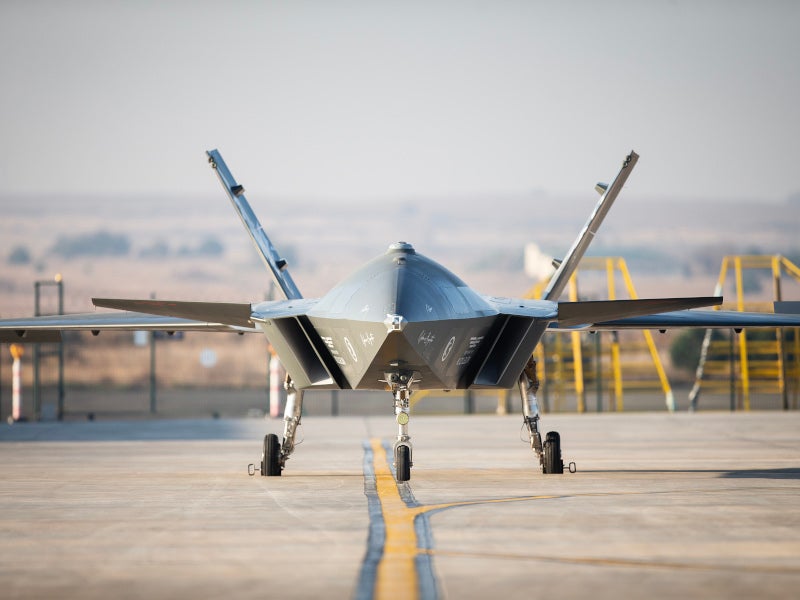
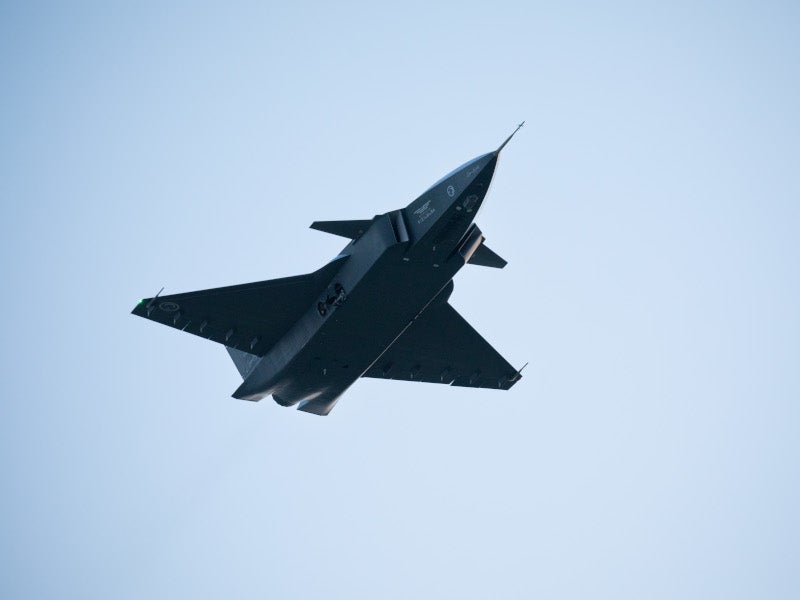
Bayraktar Kizilelma is an uncrewed aerial vehicle (UAV) designed to conduct take-off and landing operations on short-runway aircraft carriers, as well as perform missions using internally carried munitions.
Developed by Turkish defence company Baykar Technologies, the fighter UAV will be able to operate from short-runway aircraft carriers such as the Anadolu, Turkey’s landing helicopter dock (LHD)-type amphibious assault ship.
Recommended Buyers Guides

The Bayraktar Kizilelma UAV can also autonomously perform missions and collaborate with piloted aircraft.
The indigenous, uncrewed fighter jet is designed to execute a range of military operations, including strategic offensives, close air support, missile strikes, suppression of enemy air defences and enemy air defence destruction.
In May 2026, Baykar signed an agreement with Indonesia’s Republikorp Group at the SAHA 2026 event in Istanbul to collaborate on the development of Kizilelma. Working with PT Republik Aero Dirgantara, the partners aim to support Indonesia’s uncrewed combat aerial vehicle (UCAV) capability development from 2028.
The agreement covers technology transfer and workforce development, alongside plans for maintenance, repair and overhaul (MRO) facilities, local manufacturing and integration centres, expert certification, and longer-term research into strategic technologies.
Bayraktar Kizilelma fighter UAV design and features
The Bayraktar Kizilelma UAV has a length of 14.5m (47.5ft), a height of 3.5m, and a wingspan of 10m. It has a maximum take-off weight of 8.5 tonnes (t) and a payload capacity of 1,500kg (3,306.93lb).
The UAV has an operational altitude of 25,000ft and a combat radius of 500 nautical miles. It has an endurance of five hours, a cruising speed of Mach 0.6 and a maximum speed of Mach 0.9.
It features a low radar cross-section, high manoeuvrability, line-of-sight (LOS) and beyond line-of-sight (BLOS) capabilities, and enhanced situational awareness facilitated by an active electronically scanned array radar from Turkish defence company Aselsan.
Propulsion details of Bayraktar Kizilelma
The fighter UAV is powered by an AI-322F turbofan engine manufactured by Ivchenko-Progress, a Ukrainian state design bureau that specialises in aircraft engine drafts and plans. The engine contract was signed in November 2021.
The AI-322F turbofan engine was co-developed by Ivchenko Progress and Motor Sich, a Ukrainian aircraft engine manufacturer.
The engine has a 624mm diameter fan, a length of 3,138mm, and a dry weight not exceeding 560kg. The engine offers a maximum thrust of 4,200 kilogram-force when equipped with an afterburner.
Armament details of Bayraktar Kizilelma
The Bayraktar Kizilelma fighter UAV is capable of firing Bozdogan and Gokdogan air-to-air missiles. It can also be equipped to launch SOM-J cruise missiles, which have a range exceeding 250km, as well as Mini Akilli Mühimmat (MAM) family-guided bombs.
MAM bombs are produced by Turkish defence company Roketsan and tailored for small attack missions.
Bayraktar Kizilelma development details
Baykar initiated the development of the Bayraktar Kizilelma as a national UCAV in 2013, with the conceptual design images unveiled in July 2021.
The company announced the start of prototype production in March 2022 and conducted the first engine integration test for the uncrewed jet in September 2022.
Subsequent tests included taxi and ground driving trials in November 2022, followed by the maiden flight test at Corlu Airport in December 2022. During the first flight test, the drone flew for 18 minutes before returning to the same airport and landing safely.
In January 2023, the Bayraktar Kizilelma completed its system identification test on its second flight. Plans to develop a supersonic version of the UAV were also announced.
The aircraft reached a significant achievement with eight flights, four of which were conducted in April 2023. The flights included successful tests of system identification and manoeuvring at high speeds with the landing gear retracted.
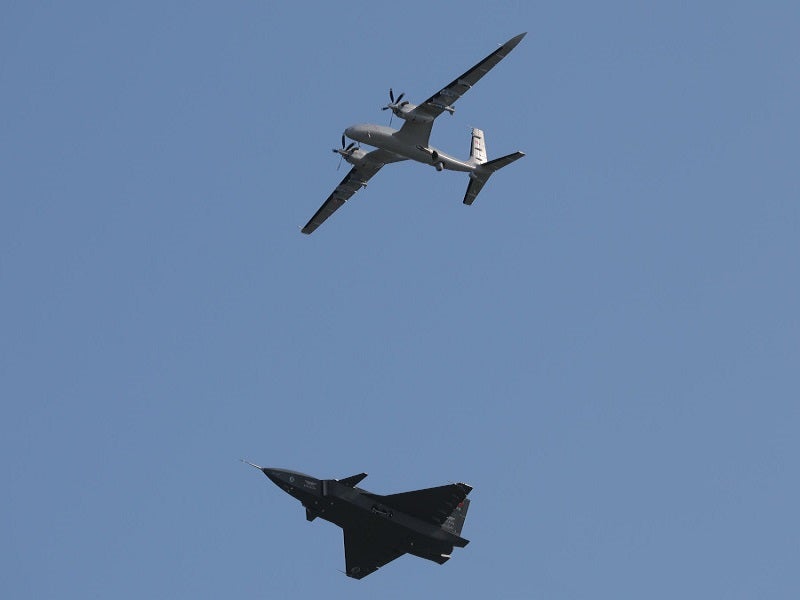
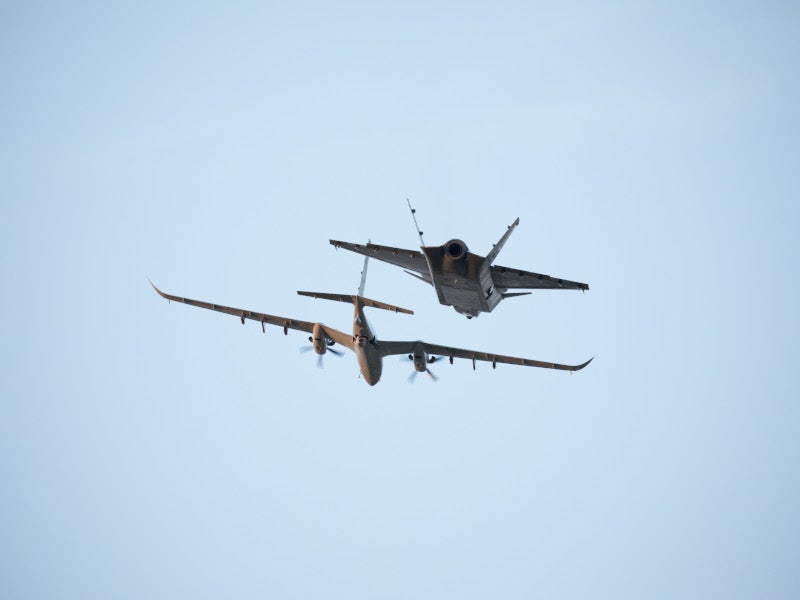
In the same month, the Bayraktar Kizilelma and Bayraktar Akinci UCAVs performed a formation flight during the ninth and tenth flight tests.
The Bayraktar Kizilelma UAV completed its fifth system identification test, along with all other manoeuvre tests, at the flight training and test centre in Corlu district, located in the northwestern province of Tekirdag.
The third production prototype, Kizilelma PT-3, completed its maiden flight in September 2024, followed by another flight test in January 2025, during which the aircraft also conducted system identification activities. The aerodynamic system identification test continued in February and was completed in March in accordance with its test schedule.
In the same month, the UAV completed the afterburner-assisted manoeuvring system identification test, during which it carried out a series of system identification procedures and sharp manoeuvres.
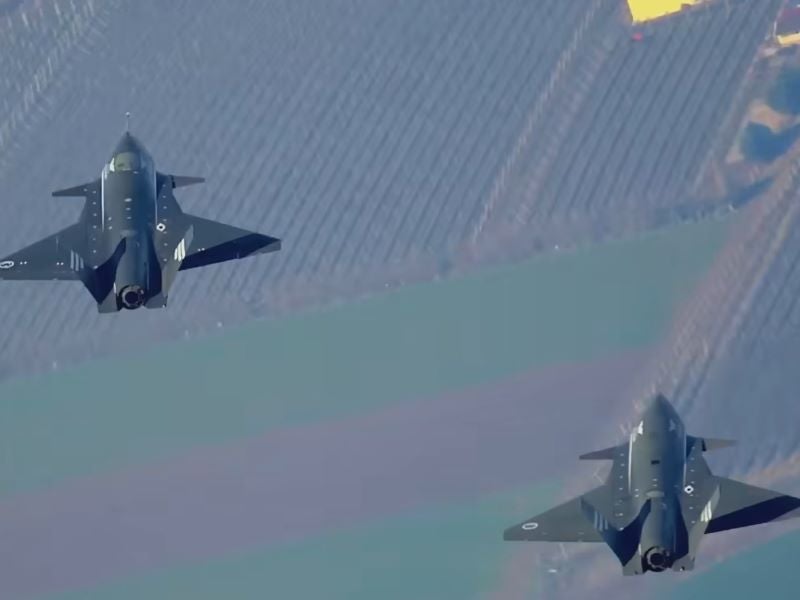
In December 2025, the PT3 and PT5 prototypes completed a close formation flight using an autonomous combat pilot, supported by smart fleet algorithms. This marked the first recorded instance worldwide of two uncrewed fighter aircraft flying in tight formation without direct human control. The aircraft also conducted a combat air patrol (CAP) mission during the flight test.
Live fire test details
Kizilelma PT-3 completed the first live fire test in October 2025 using TOLUN and TEBER-82 munitions in two sorties during which the UAV successfully hit both targets.
The TOYGUN electro-optical targeting system (EOTS) developed indigenously by ASELSAN was successfully integrated on the platform in November 2025.
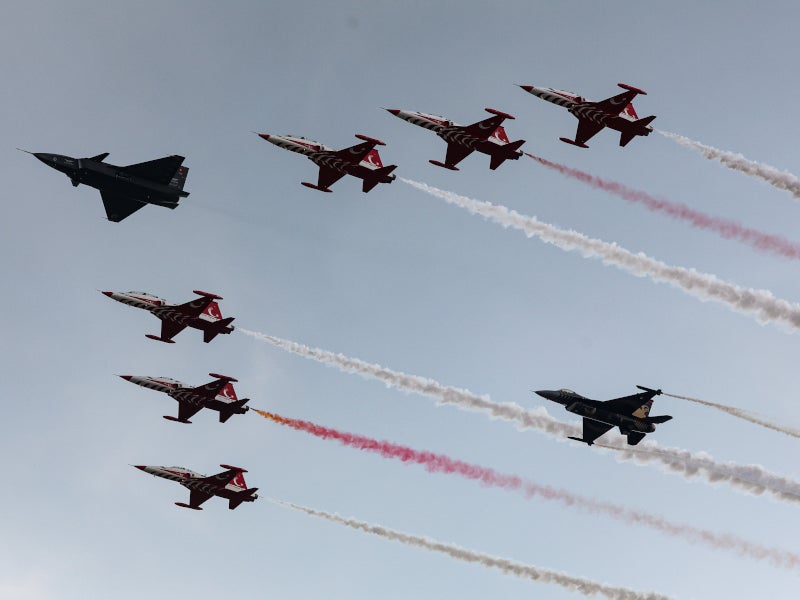
During the same month, Kizilelma completed a test flight alongside F-16s in formation, confirming the integration of national radar and munitions. The one-hour and 45-minute sortie was flown at an average altitude of 15,000ft.
During the trial, Kizilelma used the national AESA Radar MURAD to lock onto an F-16 and recorded a direct hit in a simulated firing with the national air-to-air missile GÖKDOĞAN.
The UAV also successfully struck a jet-powered aerial target using GÖKDOĞAN in a separate test, marking the first for an uncrewed fighter jet.
