


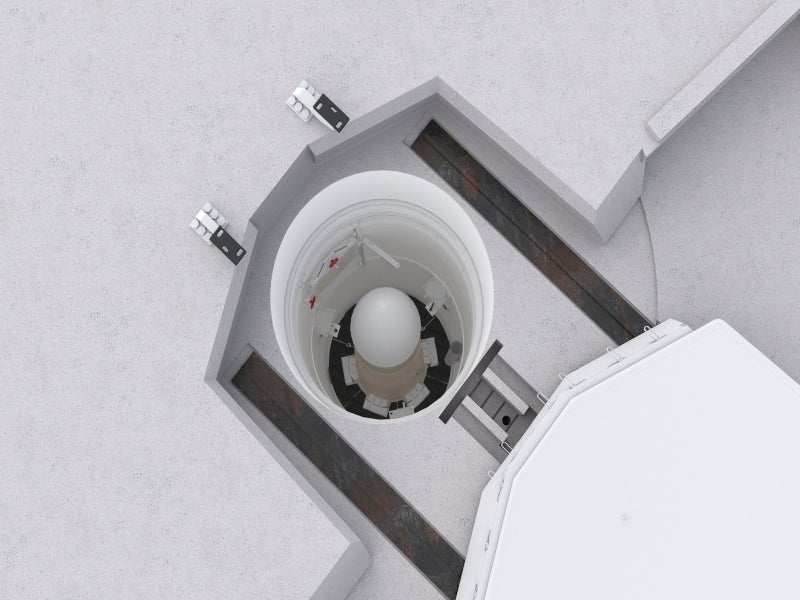


The LGM-35A Sentinel, formerly called the Ground Based Strategic Deterrent (GBSD), is an intercontinental ballistic missile (ICBM) being developed by Northrop Grumman, in cooperation with Air Force Global Strike Command, for the US Air Force (USAF).
The new ICBM will replace the 400 five-decade-old LGM-30 Minuteman III ICBMs, which have been in service with the USAF since the 1970s.
Recommended Buyers Guides

The development programme will deploy 400 new missiles, update 450 launch silos and modernise more than 600 facilities across approximately 40,000 square miles in the US territory, covering six states, three operational wings and a test location.
The programme will modernise the ground-based leg of the nation’s nuclear triad, extending its capabilities until 2075 to support the country’s nuclear deterrence missions. The US maintains the ICBM systems on high alert round the clock to enable their prompt launch at any time.
In October 2025, Northrop Grumman, working with the USAF, completed a critical design review for the Sentinel Launch Support System, enabling the programme to move into construction, testing and qualification phases. The system will be built at Roy before being fielded at Vandenberg Space Force Base.LGM-35A Sentinel is expected to enter service with the USAF by 2029.
LGM-35A Sentinel development background
The LGM-35A Sentinel development programme began in 2014.
The USAF awarded a $13.3bn contract for the engineering and manufacturing development (EMD) phase of the Sentinel programme to Northrop Grumman in September 2020. The LGM-35A Sentinel project, which is part of a broader $1.5tn US nuclear weapons modernisation project, is estimated to require a capital expenditure of up to $264bn over its life cycle.
The project involves either the modernisation or replacement of the existing launch facilities, missile alert facilities, communication systems, infrastructure, and technologies of the Minuteman III ICBMs to support the LGM-35A Sentinel system. It will be followed by the decommissioning of the Minuteman III ICBMs.
The entire ICBM infrastructure is being rebuilt with upgradeable and secure technologies.
The new ICBMs will be based at the existing USAF missile sites at the FE Warren Air Force Base (AFB) in Wyoming, Minot AFB in North Dakota, and Malmstrom AFB in Montana.
Some of the activities of the programme, such as maintenance, storage, training, testing and support, will take place at Hill AFB and Utah Test and Training Range in Utah, as well as Camp Navajo in Arizona and Camp Guernsey in Wyoming.
Northrop Grumman conducted a series of wind tunnel tests on the LGM-35A in February 2023.
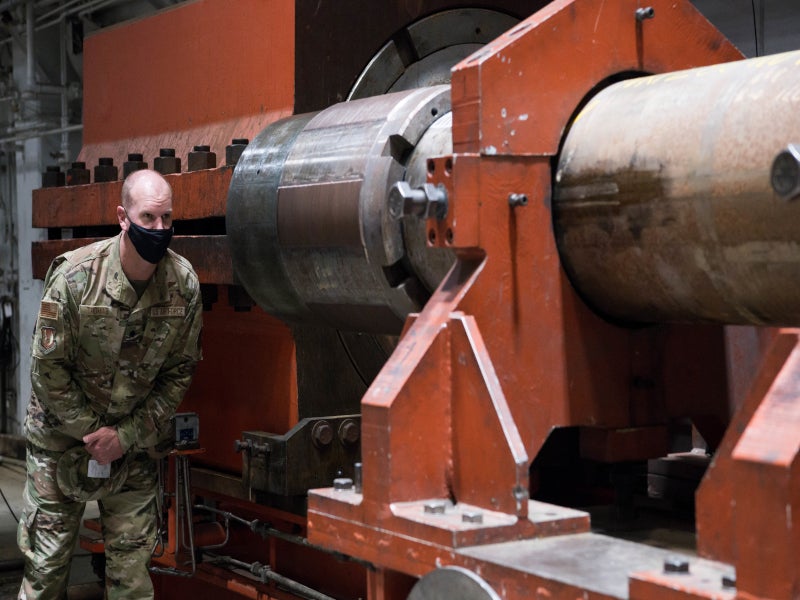
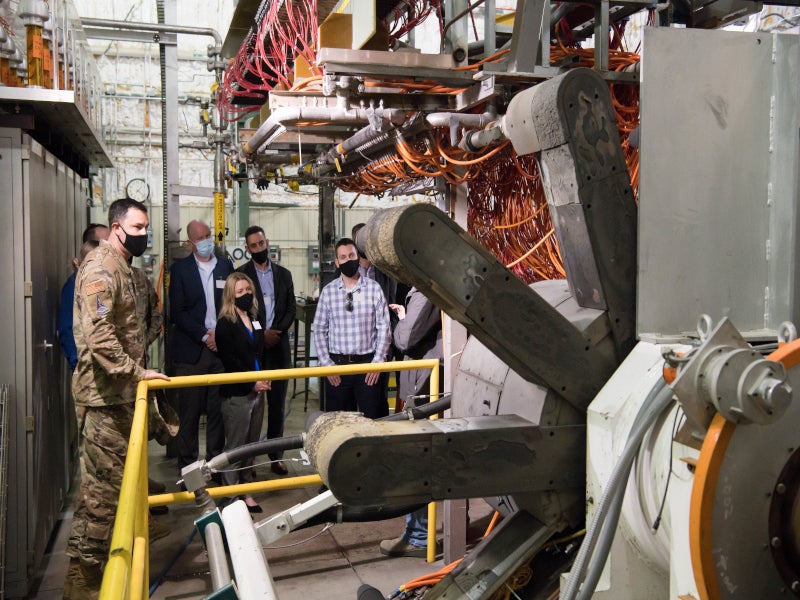
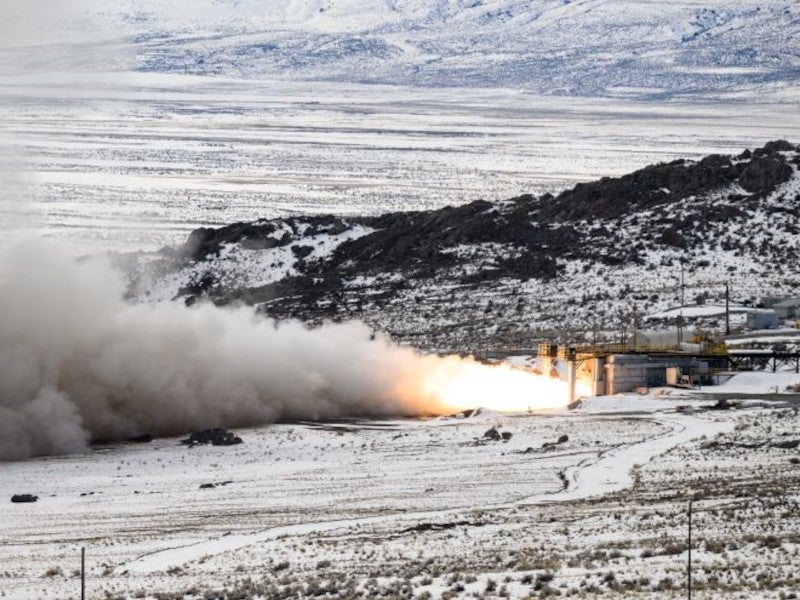
The first full-scale static test fire of the Sentinel stage-one solid rocket motor was completed in March 2023, while the live, static-fire test of the Sentinel stage-two solid rocket motor was conducted in January 2024.
The USAF and Northrop Grumman successfully carried out a full‑scale qualification static fire test of the stage‑one solid rocket motor for the Sentinel in March 2025 at Northrop Grumman’s Promontory facility in Utah.
The first qualification test of a stage-two solid rocket motor for the Sentinel ICBM was completed in July 2025 at the Air Force Arnold Engineering Development Complex. The test was conducted in a vacuum chamber simulating flight conditions, allowing evaluation of the thrust vector control system, which steers the missile.
LGM-35A Sentinel design and features
The LGM-35A Sentinel will incorporate digital engineering technologies and employ a modular open system architecture, which will provide interoperability and reduce life-cycle costs. The modular design will also make the system adaptable to evolving threat environments.
The next-generation missile system will feature fully integrated launch, flight and infrastructure systems, as well as modern command and control technology and ground equipment.
The new missile will be launched from silos, whose doors can remain closed during warhead maintenance, eliminating any security threat.
It is expected to have a range exceeding 5,500km and can reach any target across the world in just 30 minutes post-launch, following a parabolic trajectory toward its target.
The ICBM releases a warhead in the middle of its flight, which then continues to the target. The missile is powered by three solid-fuel rocket motors.
The secure ground control stations will be connected to space to enable quick connection to ICBMs for their engagement during an unexpected attack. This will allow the advanced command and control system to cut down the notification time for the higher authorities to take rapid action in case of an attack.
Warhead details of the LGM-35A Sentinel
The LGM-35A Sentinel will be equipped with a W87-1 thermonuclear missile warhead.
The warhead will be built with a capital expenditure of at least $12bn in addition to the estimated $95bn procurement cost of the LGM-35A Sentinel. It will replace the W78 warhead currently deployed with the Minuteman III.
The Mk21A reentry vehicle is proposed to be used to carry the warhead into space.
Contractors involved
Bechtel will provide the design and construction of the ICBM launch infrastructure as part of the EMD phase of the project.
L3Harris, a US-based technology company, was contracted to design and field new missile systems training capabilities for the project. The contractual scope includes providing support for operations, maintenance, and security forces training.
Aerojet Rocketdyne, an aerospace and defence company, will supply the three-stage solid rocket motor and post-boost propulsion system for the project.
General Dynamics, an aerospace and defence company, will supply command and control systems, aerospace vehicle equipment, and a digital engineering environment, while Collins Aerospace will provide command and control and training systems.
Collins Aerospace will deliver the secondary launch platform-airborne nuclear command and control solution for the project.
Canadian technology company CAE is responsible for providing training systems for the project.
The transportation systems will be supplied by HDT Global and Kratos Defense and Security Solutions. Kratos was contracted to provide engineering services and manufacture specialised ground support systems such as missile transporters and payload transporters.
Honeywell will provide guidance and control instruments and booster control.
Lockheed Martin will provide payload support, while Textron Systems, a Textron company, will supply the reentry system.
In October 2023, Lockheed Martin was awarded a $996.2m contract to undertake the engineering, manufacturing, and design of the MK21A reentry vehicle.
Clark Construction, a US-based civil construction company, is responsible for the infrastructure programme management.
