

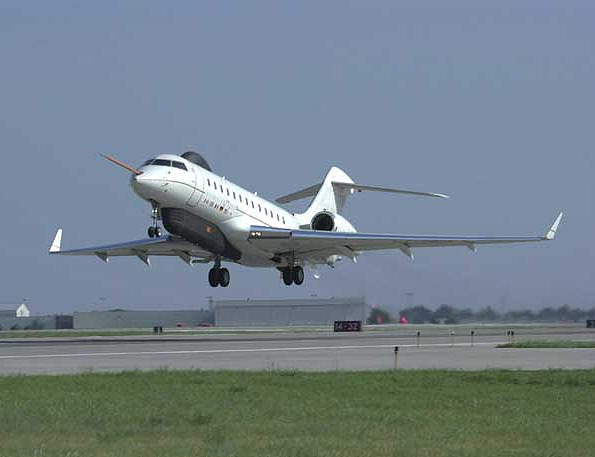
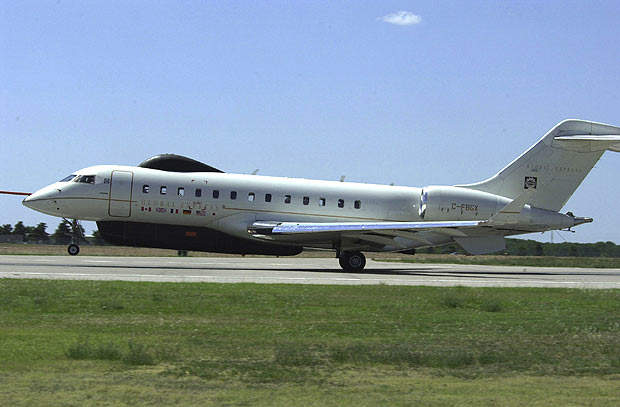

In December 1999, Raytheon Systems Ltd was awarded an $860m contract for the development of the UK Ministry of Defence airborne stand-off radar (ASTOR). The system, which includes five Bombadier Global Express business jet aircraft fitted with a derivative of the Raytheon ASARS-2 radar, is an airborne battlefield or ground surveillance radar system for operation with the Royal Air Force and the British Army.
Recommended White Papers

Recommended Buyers Guides

Sentinel R1 surveillance aircraft development
The ASTOR is to be known as Sentinel R1 in RAF service. The first production aircraft was delivered to Raytheon in February 2002 for integration of the ASTOR system.
The first ground station vehicle was delivered in October 2002. The first ASTOR Sentinel aircraft made its maiden flight in May 2004, the second in July 2005.
Three Sentinel aircraft took part in formal flight testing in Greeneville, Texas. The first Sentinel R1 aircraft was delivered to the RAF in June 2007, the second in November 2007. fifth and last aircraft was delivered to the UK Royal Air Force in February 2009.
ASTOR entered service with the RAF in December 2008. Initial operating capability (IOC) testing was completed in July 2008. The main ASTOR operating centre is based at RAF Waddington in the UK.
Raytheon Systems Limited, UK, is the prime contractor. The team includes: Bombardier Aerospace, responsible for the Global Express Jet; L-3 Communications, the Ground Station; Lucas Aerospace, the electrical systems; Messier Dowty, the landing gear; AgustaWestland, the doors; and Rolls-Royce, the engines.
ASTOR airborne stand-off radar system
The radar is an upgrade of the Raytheon ASARS-2 side looking airborne radar used on the U-2. The radar operates at high altitude and in all weathers to provide high-resolution images. The antenna systems are supplied by BAE Systems, Edinburgh. ASARS-2 has been reported to provide images of the battlefield at ranges of 160km, at altitudes up to 47,000ft.
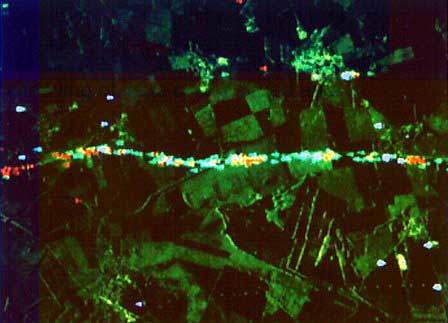
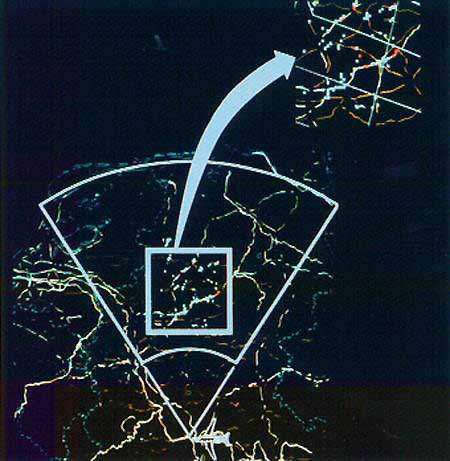
The ASARS-2 derivative has an active scanned array and includes a synthetic aperture radar (SAR) which provides photographic quality images of the area being surveyed and a moving target indicator (MTI radar) which tracks moving vehicles over wide ranges.
The SAR operates in spot mode to identify and track specific targets or can be switched to swath mode which provides a large number of strips of pictures which join to form a detailed image of the battlefield.
Operation
The SAR/MTI radar identifies the location of hostile forces and their quantity, direction and speed. Additional imagery can be provided by optional optical equipment. The image data is transmitted in real time via secure data links to ground-based processing stations.
The radar signal processors develop the data into visual images which can be displayed and exploited by the airborne mission crew, transmitted to image exploitation equipment on the ground, or transmitted to other areas via secure data links, satellite communications and ground networks.
Countermeasures
The aircraft is equipped with the Defensive Aids Group (DAG) integrated electronic warfare suite from BAE Systems Information & Electronic Warfare Systems (IEWS) of Nashua, New Hampshire. DAG is based on the defensive aids subsystem (DASS) developed by BAE for the UK’s Replacement Maritime Patrol Aircraft, Nimrod MRA4. DAG includes missile warning system, radar warning receiver, towed radar decoy and chaff and flare dispensers.
Aircraft
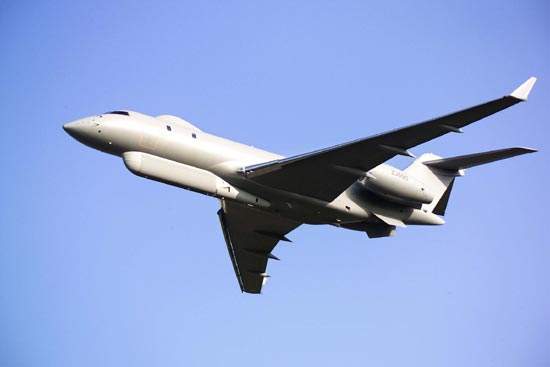
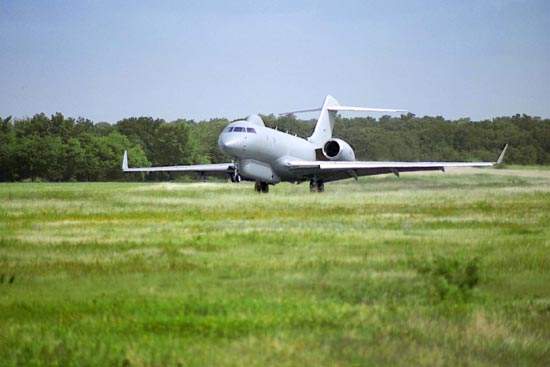
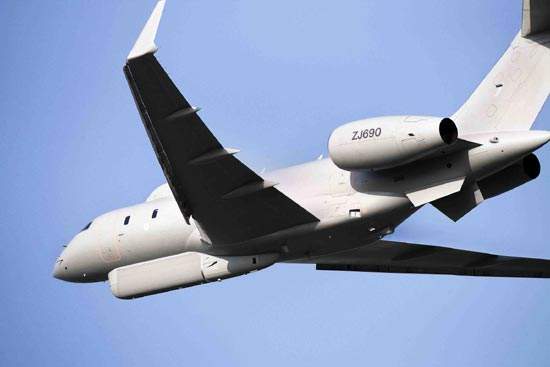
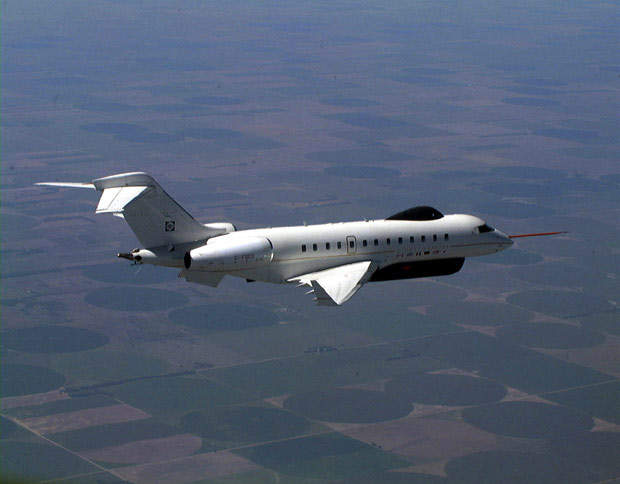
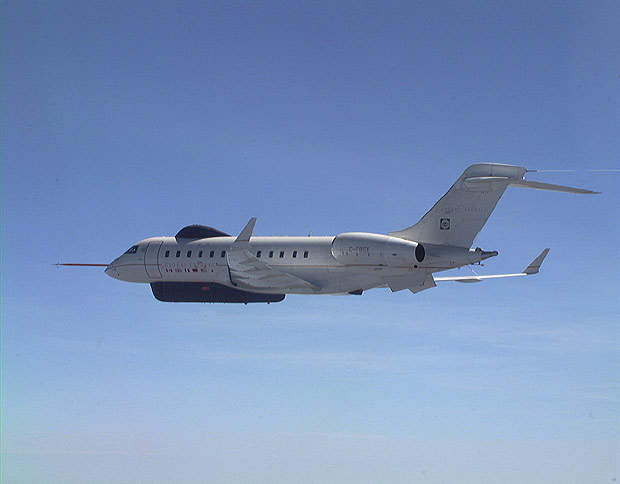
The aircraft is flown by two flight deck crew and three mission crew. The Bombardier Aerospace-Short Brothers Global Express aircraft is an ultra-long range business jet and was modified to accommodate the radars and communications systems required by ASTOR.
The modifications include a canoe-shaped radome under the forward fuselage to house the radar antenna, a radome on the upper fuselage to house the SATCOM antenna, a “bullet-fairing” extension on the vertical stabiliser and delta fins under the aft fuselage. Aircraft modification, systems integration and flight testing is carried out by Raytheon Systems at Broughton, North Wales.
Engine
The engines for the ASTOR aircraft are the same as those deployed on the UK RAF Nimrod MRA4 aircraft. Each Rolls-Royce BR710 two-shaft turbofan engine produces 14,000lbf to 17,000lbf (63kN to 76kN) flat rated take-off thrust.
The engine configuration consists of a 48in wide-chord-fan with 24 solid titanium blades, ten-stage high compressor, annular axial flow combustion chamber, two-stage high-pressure turbine and two-stage low-pressure turbine with dual lane full authority digital engine control (FADEC).
Performance
The maximum speed of the Sentinel aircraft is 918km/h. It can fly at an altitude of 15,000m. The range and service ceiling of the aircraft are 12,045km and 12,200m respectively. The mission endurance is 14 hours. The aircraft weighs around 24,000kg and the gross weight is 42,400kg.
Ground station
High-speed data links transfer the data from aircraft to ground stations in near real time. The system has directional and broadcast data links which are interoperable with existing U-2Rs, JSTARS and command and control networks.
The tactical and operational level ground stations have been developed by L-3 Communications Integrated Systems, Raytheon Systems and Marshall Specialist Vehicles.
The tactical ground stations are installed in 10ft shelters mounted on 6×6 improved medium mobility Steyr Pinzgauer 718K trucks. 20ft transportable shelters are provided for operational level ground stations.
Ultra Electronics and Cubic Defense Systems are providing the narrowband datalink subsystem (NDLS) which will transmit the radar sensor data between the aircraft and the ground stations. L3 Communications is supplying the wideband data link based on a common data link (CDL).
