

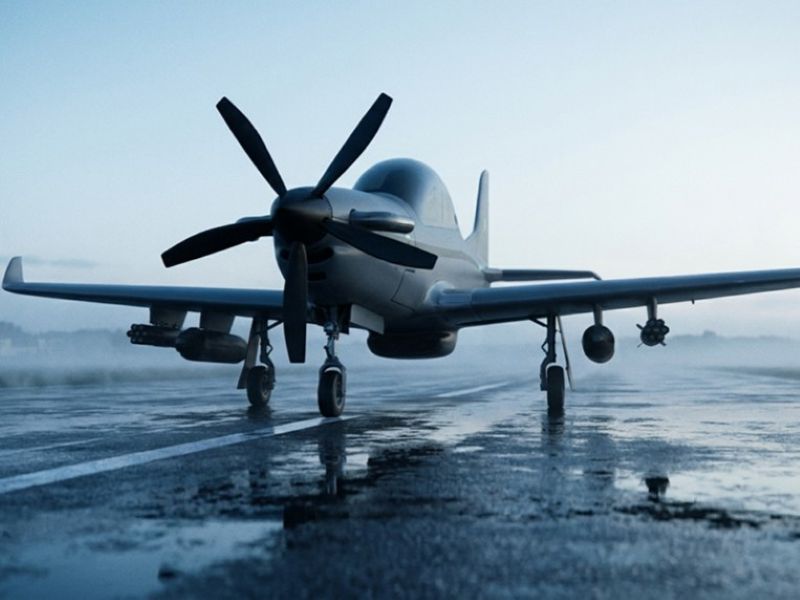
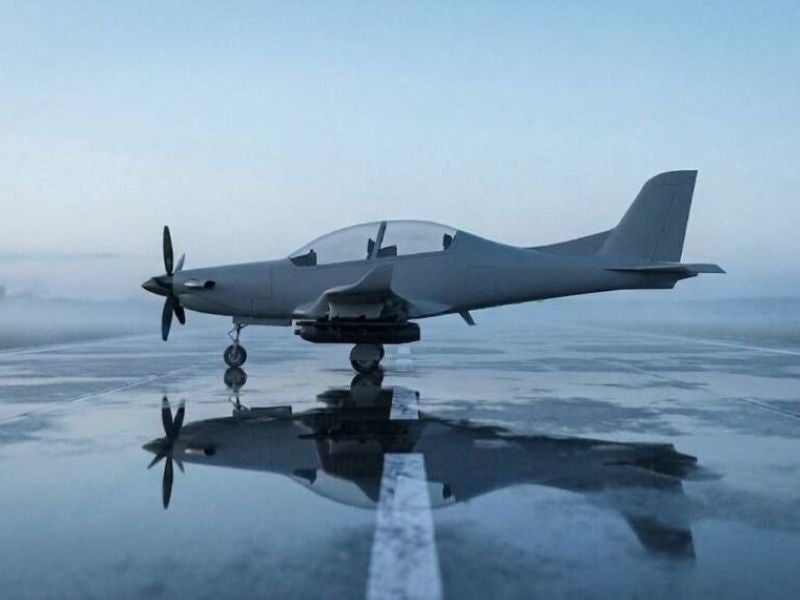
PULSE P19 is a new multi-role aircraft from Quantum Systems, designed to deliver higher speed, a more competitive cost profile, integrated counter-drone capabilities and increased payload capacity.
Developed and manufactured in Germany, the optionally piloted aircraft marks the company’s entry into the medium-altitude multi-role segment and is its first platform intended to operate in both crewed and uncrewed configurations.
Recommended Buyers Guides

Quantum Systems presented the PULSE P19 at the ILA Berlin Air Show in June 2026.
The aircraft is intended to support a wider mix of tasks including intelligence, surveillance and reconnaissance (ISR), training and counter-drone sorties.
PULSE P19 design and features
The PULSE P19 aircraft’s modular open architecture system and composite airframe are intended to provide an unlimited lifetime while reducing maintenance demands and life cycle costs.
The aircraft has a maximum take-off weight of 2,500kg (5,512lb) in aerobatic configuration, 3,200kg in utility configuration and 4,200kg in military configuration. Its basic empty mass, excluding ejection seats, is 1,700kg, and total payload combining internal and external carriage is 2,500kg.
Featuring hands-on throttle-and-stick controls, the platform is designed to remain operational in global navigation satellite system-denied environments, supporting deployment across varied operating areas. It is equipped with ruggedised landing gear intended for unpaved runways and a de-icing system.
PULSE P19 blends human decision-making with automated mission management. Its resilient mission autopilot lightens the pilot’s workload in high-intensity scenarios, allowing the team to concentrate on tactical choices and effective delivery of the mission.
In both manned and semi-autonomous modes, the platform is designed to deploy and operate interceptor drones, ISR unmanned aerial vehicles (UAVs), ground and maritime systems, and loitering munitions, extending sensing and engagement beyond the aircraft itself.
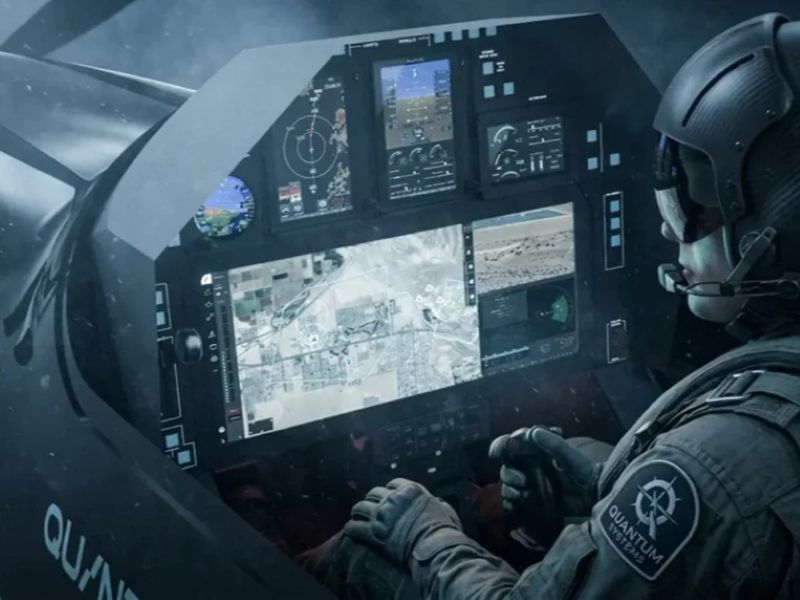
The aircraft’s sensors, flight control, AI and effector systems are integrated through Quantum Systems’ MOSAIC UXS command-and-control software, enabling the intercept chain from detection to effector release to be managed either by the pilot or via remote operations.
High-capacity satellite communication and line-of-sight data links support real-time participation in synchronised operations, allow coordinated command of unmanned platforms and provide a common cross-domain tactical picture via MOSAIC UXS.
Cockpit design
The PULSE P19 uses a military-specification tandem cockpit arrangement with strong forward and downward visibility from both positions. It combines Instrument Flight Rules-certified avionics with a large-area mission display to support mission management and is compatible with night-vision equipment.
Both cockpits are air-conditioned with heating and cooling that can be operated before flight. Optional equipment includes cabin pressurisation, ejection seats and light armour protection.
PULSE P19 payload layout
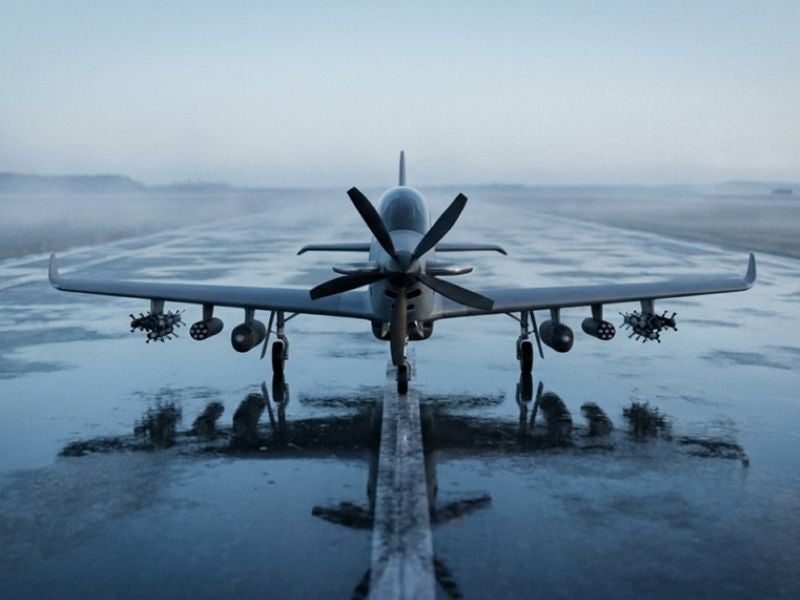
The payload layout features six underwing stations, each rated at 250kg, two wingtip stations, a 22in retractable electro-optical and infrared (EO/IR) gimbal, and two belly-mounted stations intended for radar or camera installations.
Compatible payloads include a machine gun pod, counter-drone systems, laser-guided missiles, loitering munitions, an electronically steered array radar, an EO/IR package and a standard fuel tank.
The platform is also intended to accommodate new precision munition types as they become available and extended-range fuel tanks depending on operational requirements.
Performance
The PULSE P19 has a maximum cruise speed of 537km/h (290 knots) at 6,100m under maximum continuous power. The maximum permissible operating speed is 556km/h from 0m to 4,000m, while the maximum Mach number is Mach 0.58 between 4,000m and 8,000m.
It has a service ceiling of 7,620m (25,000ft) and is designed to take off in under 550m and land on a 450m runway strip, supporting operations from austere locations.
Fuel capacity is 1,400 litres (370gal) internally, increasing to 2,300 litres with internal plus external fuel.
PULSE P19 has an endurance of more than 11 hours on internal fuel and more than 18 hours with external fuel. It offers an operational range of more than 2,200km on internal fuel, increasing to more than 3,700km with the addition of external fuel.
PULSE P19 mission capabilities
The PULSE P19 can support six mission profiles including ISR, signals intelligence (SIGINT), counter-UxS, light attack and maritime patrol.
In an ISR configuration, it is designed to provide persistent coverage using long-range radar, high-power EO/IR sensors, and SIGINT and electronic intelligence (ELINT) payloads, with the aim of detecting, identifying and tracking air and ground targets by day, night and in all-weather conditions.
In SIGINT and electronic warfare roles, it can support collection and emitter geolocation using SIGINT and ELINT payloads, with additional electronic effects enabled through flexible payload integration and an open-system approach.
For counter-UxS tasks, the aircraft is intended to detect, track and defeat asymmetric airborne threats by combining onboard radar and EO/IR with interceptor drones and other precision effectors integrated into the mission workflow.
In light attack and manned-unmanned teaming scenarios, PULSE P19 is positioned to coordinate crewed and uncrewed assets during execution, including interceptor drones, ISR UAVs, ground and maritime systems, and loitering munitions.
For maritime patrol and border security, it serves as a long-endurance option for monitoring maritime areas and borders to maintain situational awareness and support rapid response across wide operating areas.
As a training platform, the aircraft can be deployed for basic, advanced and operational flying training, supported by cockpit ergonomics, avionics, augmented reality training options, active flight controls, integrated simulation and fly-by-wire training capability.
