

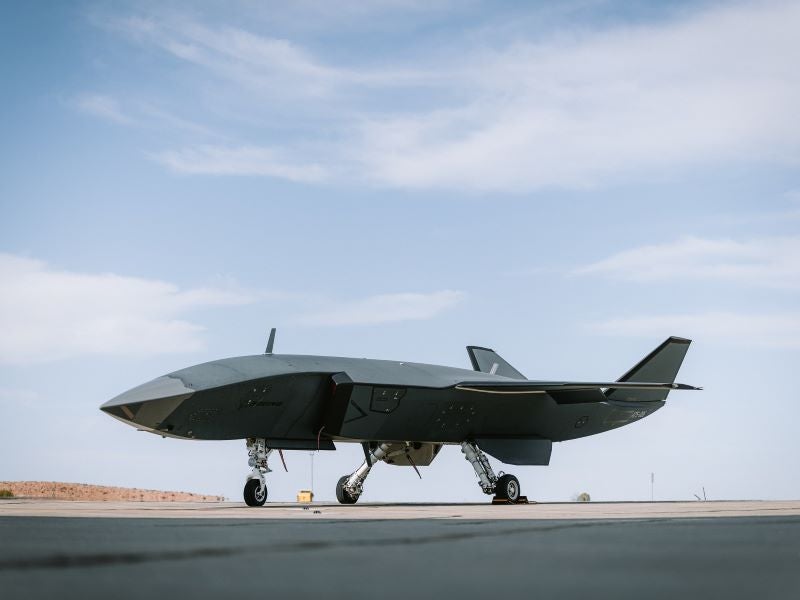
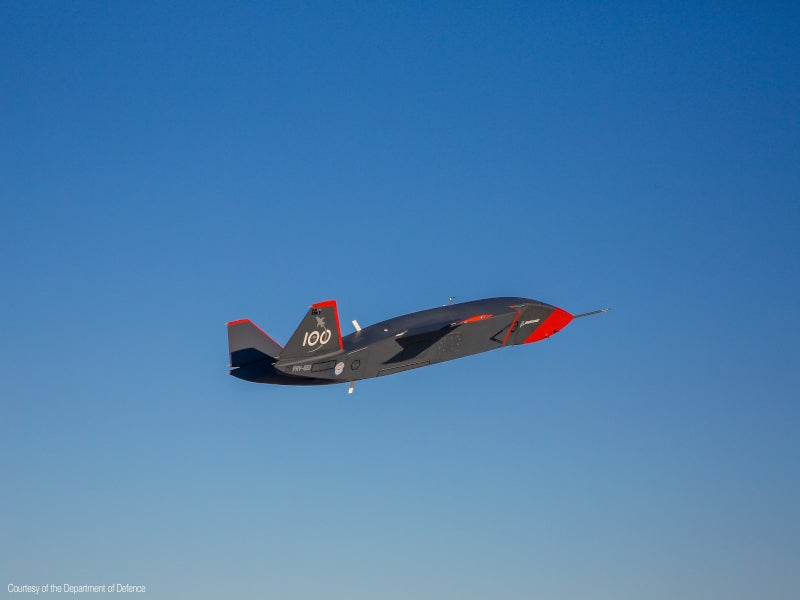
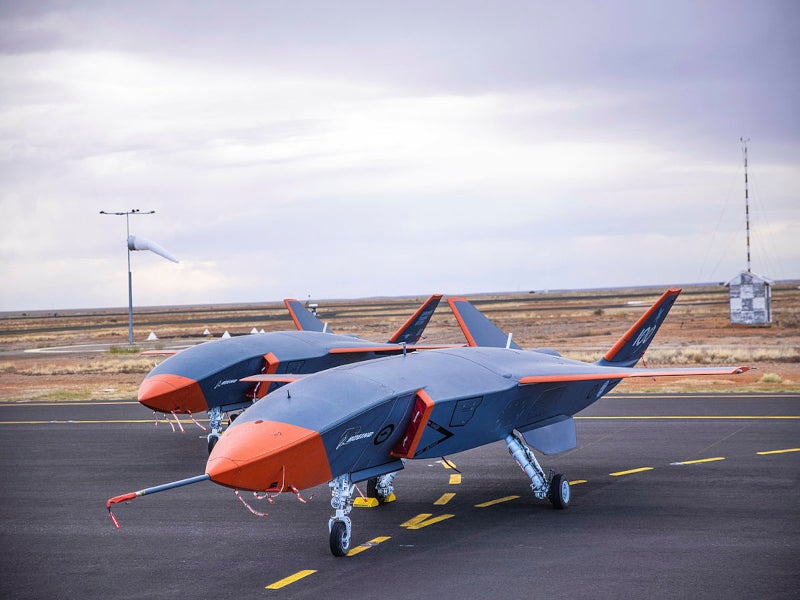
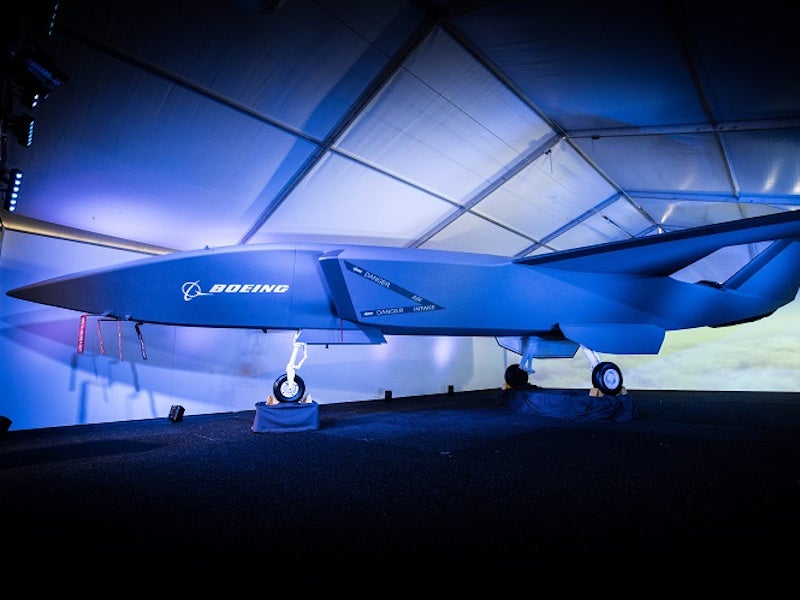
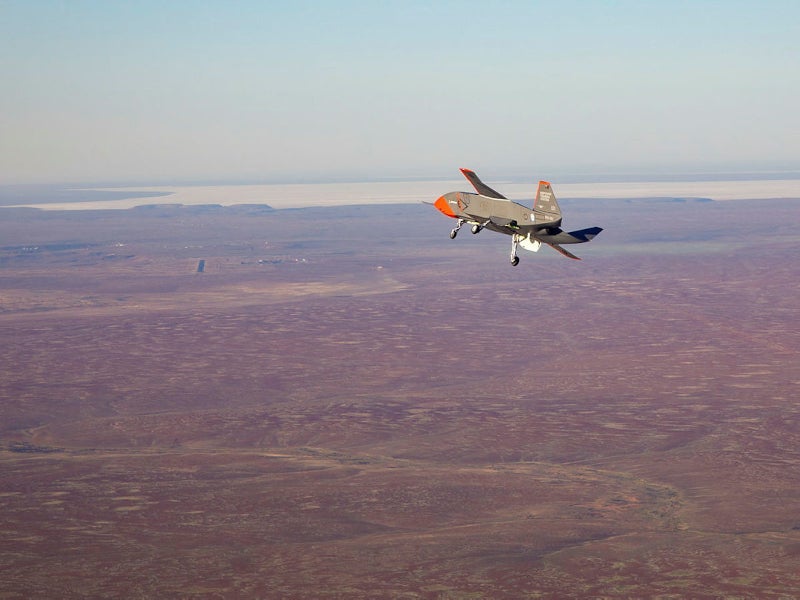
The MQ-28A Ghost Bat, initially developed under the title Loyal Wingman, is an unmanned uncrewed Collaborative Combat Aircraft by Boeing Australia in collaboration with the Royal Australian Air Force (RAAF).
The uncrewed aircraft was formerly known as the Boeing Airpower Teaming System (ATS). It was officially named the MQ-28A Ghost Bat in March 2022.
Recommended Buyers Guides

The MQ-28 is also Boeing’s largest investment in a new unmanned aircraft programme outside the US.
The first MQ-28 Ghost Bat was publicly displayed at the Avalon Air Show in 2023 and the production of Block 2 commenced in the same year.
In June 2026, Boeing presented expanded combat-related developments for the MQ-28 Ghost Bat at the ILA Berlin Air Show in Germany. Introduced as part of the MQ-28 technology road map, the upgrades are aimed at enhancing the aircraft’s flexibility, range and capacity.
MQ-28A Ghost Bat design and features
The MQ-28A Ghost Bat has a length of 11.7m and a wingspan of 7.3m. The unmanned aerial vehicle (UAV) has the capability to fly at a subsonic speed and attain a range of more than 2,000 nautical miles (nm) to achieve fighter-like performance.
The fuselage is made of composite materials using an advanced resin-infusion process, resulting in a lighter and more durable platform.
The advanced unmanned system can fly alongside the existing manned aircraft and uses AI to conduct teaming missions. It integrates sensor packages, which allow intelligence, surveillance and reconnaissance, tactical early warning missions, and various other operations.
The nose section of the aircraft can be quickly reconfigured with different sensor payloads to perform suitable missions rapidly. It is 2.5m long and offers a storage volume of more than 1.5m³.
The unmanned aircraft system features sensors in swappable modules. It allows a manned aircraft to simultaneously carry out surveillance, navigation and tactical operations with the help of modular ATS payloads aboard multiple drones.
The aircraft is runway independent and powered by a commercial turbofan engine.
MQ-28 Ghost Bat upgrades
The new features of the unmanned aircraft include a maximum take-off weight increase from 10,000lb (4,535kg) to 12,000lb, a 25% larger wing and a useful load of up to 4,500lb. The larger wingspan allows it to carry an extra 2,000lb of fuel, stores and mission payloads.
The aircraft also features internal carriage options for two AMRAAM missiles or four small diameter bombs, with provision for three external weapons stations to improve mission flexibility. It also features a modular missionised nose to expand payload choices and enable third-party capability insertion.
Beyond Line of Sight communications are also added, enabling operation from a crewed aircraft, a ground station or a naval vessel at unlimited standoff distances.
Additional changes include substantial software updates aligned with Government Reference Architecture open standards. These are intended to support configurable weapons, payloads, command and control, and mission autonomy.
MQ-28A Ghost Bat development details
As a first-of-its-kind platform, the MQ-28 is being used in Australia to help shape the development of Collaborative Combat Aircraft. Boeing is working with the RAAF to build the supporting framework needed for Collaborative Combat Aircraft to complement crewed aircraft and provide interoperable, interchangeable capabilities.
The UAV is intended for safeguarding and supporting Australia’s most valuable combat aircraft such as Joint Strike Fighters, Super Hornets and Growlers, and their pilots. It also enhances the agility and capability of the Australian Defence Force.
The unmanned aircraft was developed as a concept demonstrator of the Airpower Teaming System (ATS) by Boeing Australia and is Boeing’s first defence platform to be designed and built in Australia in more than 50 years.
Boeing introduced the UAV at the Australian International Airshow in Avalon in February 2019. The company unveiled the first MQ-28A Ghost Bat aircraft to the RAAF in May 2020.
The major fuselage structural assembly of the unmanned aircraft was completed in February 2020. The aircraft stood on its landing gear and its electrical system was powered for the first time in April 2020.
Consequently, the unmanned aircraft moved to the next stage for the installation of systems and functional testing.
In February 2021, the aircraft’s inaugural flight was conducted, and since then, the programme has progressively expanded the aircraft’s flight envelope to adapt and evolve.
The Australian Government announced in March 2021 that it plans to co-develop three more Loyal Wingman aircraft with Boeing. The contract was valued at $89.2m (A$115m) over three years and increases the MQ-28A Ghost Bat production capability to six for the RAAF.
In May 2022, the federal government announced an additional A$454m investment to acquire seven more aircraft, bringing the total count of Loyal Wingman being purchased for the RAAF to 13. The government previously invested up to A$40m to develop the Loyal Wingman aircraft.
In March 2023, Rheinmetall and Boeing Australia agreed a strategic partnership to propose the MQ-28 Ghost Bat as a mature option for the Bundeswehr’s collaborative combat aircraft procurement in Germany by 2029.
Under the agreement, Rheinmetall is expected to act as the MQ-28 system manager in Germany. The company would lead integration with the Bundeswehr’s current and future command and weapon systems, tailor the platform to national requirements, and provide operational, maintenance and logistical support.
In 2024, the Australian Government invested A$399m in Block 2 developments and the Capability Demonstration 2025 programme.
In December 2025, the Australian Government awarded Boeing Defence Australia a contract worth A$754m to deliver, develop and support a third tranche of MQ-28 Ghost Bat aircraft over three years, under the AIR6015 Autonomous Collaborative Platforms Air Program.
Boeing will provide additional Block 2 and Block 3 aircraft. The work is intended to support the development of an operational capability by 2028. The contract also covers the delivery of the capability system and supporting infrastructure for the RAAF. This is aimed at integrating Collaborative Combat Aircraft alongside the existing crewed fleet.
This follows a development effort that produced eight MQ-28 Ghost Bats and multiple mission payload modules.
Testing programme details
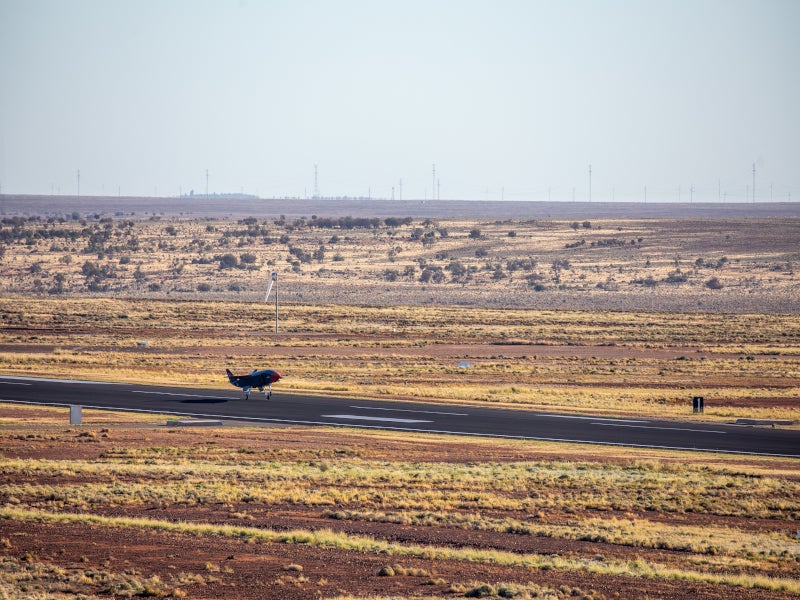
The first Loyal Wingman aircraft successfully completed its maiden test flight at the Woomera Range Complex in South Australia in March 2021.
The aircraft initially underwent a series of taxi tests to assess ground handling, pilot interface navigation and control. Following these tests, the aircraft accomplished a successful take-off using its own power.
It then proceeded to fly along a predetermined route at varying speeds and altitudes to validate the performance of the aircraft design and its systems.
In November 2021, two aircraft successfully completed flight missions at the Woomera Range Complex. The first aircraft showed various critical capabilities to continue the expansion of the flight envelope, including its first raising and engagement of landing gear. The second aircraft completed its first flight successfully.
A digital twin of the aircraft successfully demonstrated multiple payloads, crewed-uncrewed teaming capabilities and semi-autonomous behaviours in an all-digital environment in December 2021.
The testing involved multiple aircraft in a threat environment, performing mission tasks while operating in a teaming arrangement with crewed aircraft.
In June 2025, Boeing and the RAAF carried out a first-of-its-kind demonstration in which an airborne target was engaged using two in-flight MQ-28 Ghost Bat aircraft supported by a third digital aircraft, with all three controlled from an airborne E-7A Wedgetail.
The Capability Demonstration 2025 missions concluded in early June, four months ahead of schedule. They confirmed autonomous behaviours and mission execution, as well as multi-ship operations designed to create combat mass.
By September 2025, the two organisations had also completed a separate set of demonstrations intended to confirm the operational viability of the MQ-28 Ghost Bat Collaborative Combat Aircraft.
These RAAF-defined activities required the MQ-28 to conduct operationally relevant mission profiles designed to complement existing crewed aircraft.
In December 2025, Boeing and the RAAF carried out a joint exercise in which an MQ-28 operated with a RAAF E-7A Wedgetail and an F/A-18F Super Hornet. During the event, the MQ-28 autonomously launched an AMRAAM missile and destroyed an airborne fighter-class target.
The capabilities assessed in 2025 are being incorporated into the Block 2 aircraft.
Contractors involved
Defence and security company BAE Systems Australia is responsible for supplying management solutions and simulation capability for the unmanned aircraft. It also provides flight control computers and navigation equipment for the drone.
Boeing selected the defence manufacturing company Ferra Engineering to deliver precision machine components and sub-assemblies for the aircraft.
Australia-based electronic engineering company Micro Electronic Technologies is responsible for delivering wiring looms for the UAV, while aerospace engineering company RUAG Australia supplies the landing gear system for the Loyal Wingman programme.
Electrical wiring manufacturer AME Systems was contracted to supply wiring looms to support the vehicle while Allied Data Systems was selected to provide the solid-state power control for the aircraft.
Other contractors involved in the project are Australian defence manufacturing company Rosebank Engineering, aerospace and defence precision machine components manufacturer Lovitt Technologies Australia, and precision-engineered solutions provider Marand Precision Engineering, including SRC Australia, SAAB Australia B&R Enclosures and Coastal Aviation.
