
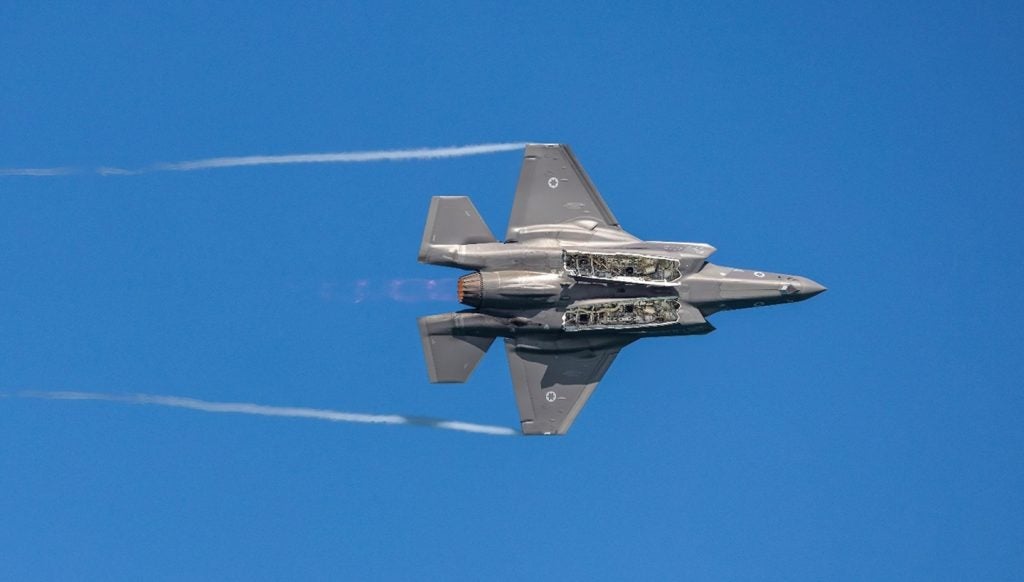
Despite pressure at home, the UK Ministry of Defence determined that the government will not suspend British-made components used in the F-35 Lightning II aircraft from supporting Israeli fighter jets.
In a parliamentary written statement on 29 September, Luke Pollard, the UK’s defence procurement minister, still maintained the UK’s reproach against Israel’s ongoing campaign in Gaza. He pointed to the revocation of 30 out of a total of 350 export licences from the Israel Defence Forces on humanitarian grounds this time last year.
After conducting their own investigation into Israeli military operations in the Gaza Strip in the wake of the Hamas-led attacks in southern Israel on 7 October 2023, Amnesty International, a global human rights organisation, concluded that the country is committing genocide against Palestinians in the contested region.
Their assessment went further in another statement made two weeks ago; the watchdog stated that 15 global companies – including Lockheed Martin, the original equipment manufacturer of the F-35 – are complicit in sustaining “mass atrocities.”
“We are clear that Israel must stop its military operations in Gaza and immediately lift restrictions on humanitarian aid entering Gaza,” Pollard advocated in his statement.
However, curbing specialised components of the world’s stealthiest multirole fighter, which can conduct electronic warfare missions to the suppression of enemy air defences, would have “serious implications” for Nato and global security, the minister contended.
Airforce Technology contacted the UK MoD about these perceived implications but the government did not respond before publication.
Run down: export licences to Israel
The 30 licences revoked last year included important components which go into military aircraft, including fighter aircraft, helicopters, and drones as well as items which facilitate ground targeting, that would be used in Gaza.
However, there are now 347 non-suspended extant licences for Israel as of 31 July 2025, down from 352 non-suspended licences from 6 December 2024. Of these 347 licences, there are 167 extant military licences.
Likewise, 55 of these have Israel as the end-user or a potential end-user. These cover parts for trainer aircraft, missile defence systems, or components for submarines – which the UK government did not assess to have combat utility in current military operations in Gaza.
These also include licences for exports to the global F-35 programme (where Israel is a potential end user – not covering direct exports of F-35 components to Israel, which are suspended).
UK and the F-35 ecosystem
According to UK government figures, British companies build and supply up to 15% of the critical components that go into all F-35 aircraft around the world. However, the influential British trade union Unite contests this data point, arguing that only 3% is realistically manufactured in the UK.
There are 20 global participants in the F-35 Joint Program Office, including Israel, which operate 45 F-35A units, with more than 1,185 aircraft deliveries globally.
British manufacturing and equipment support for the global fleet of F-35s include more than 100 UK-based Tier 1 suppliers and it has created in excess of 20,000 jobs in the country. Such components include the rear fuselage, crew escape systems, the fuel system, and targeting lasers.
Notably, L3Harris UK makes the weapon release cables for the F-35. This means that the system will likely have been used to enable Israeli F-35s to conduct a strike on the Al-Mawasi humanitarian zone, according to reports last year, which resulted in significant civilian casualties.
Likewise, the United Nations have determined that the use of GBU-31s and GBU-39s in densely populated areas – including a regular market in a refugee camp in the middle of the day, in the centre of densely populated residential neighbourhoods – makes the severe destruction and high numbers killed and injured “entirely foreseeable.”