
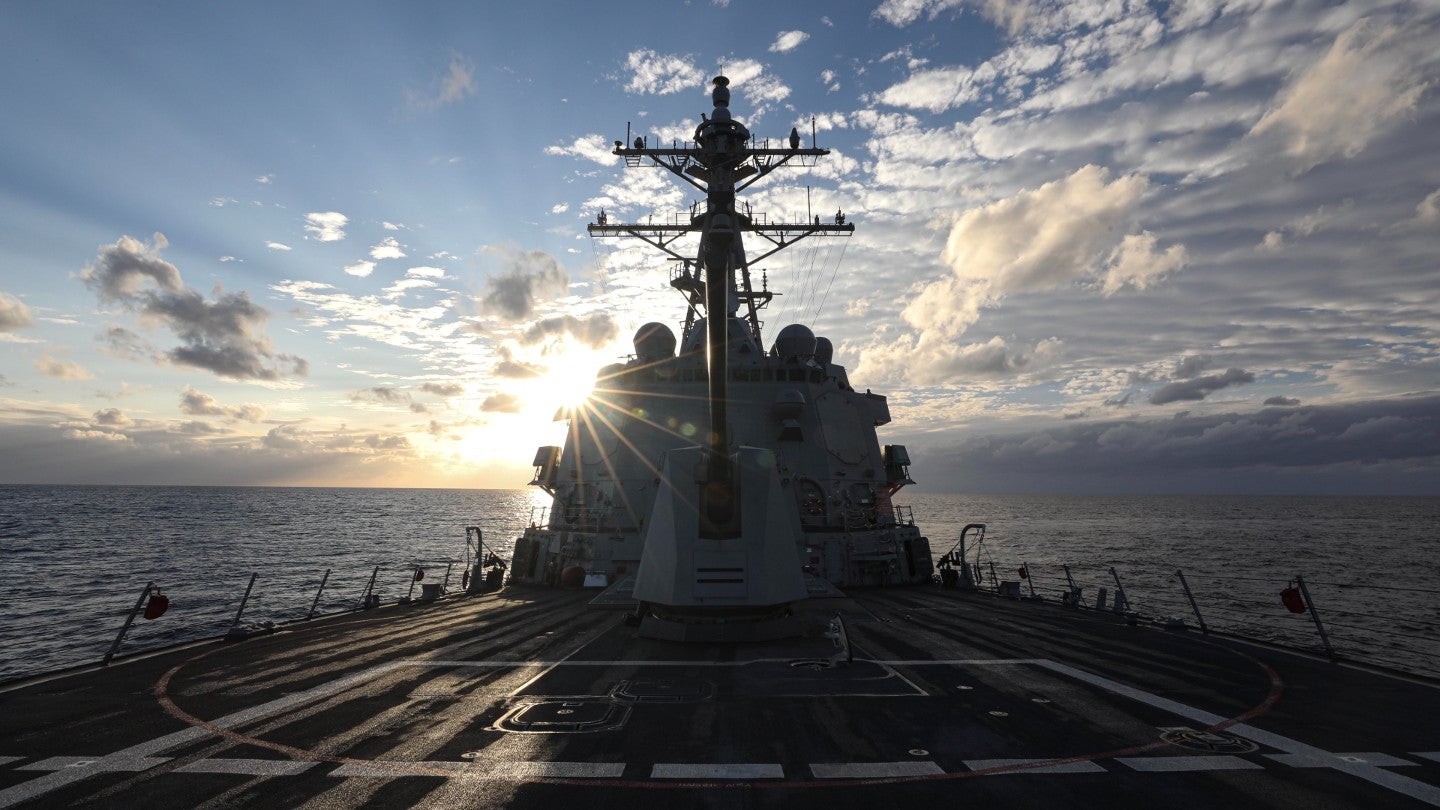
The US and Philippines are conducting joint military patrols over the fiercely disputed South China Sea, as Beijing intensifies military activity in the area and reasserts its claim over the sovereignty of Taiwan.
The patrols, which include squadrons from both countries’ air and naval forces, began on Tuesday (21 November) and will run through today (23 November).
Go deeper with GlobalData


Discover B2B Marketing That Performs
Combine business intelligence and editorial excellence to reach engaged professionals across 36 leading media platforms.
It comes just days after the President of the Philippines, Ferdinand Marcos Jr, said the situation in the South China Sea had become “dire”.
Last month, Chinese coastguard vessels rammed a Philippines’ vessel en route to a Filipino outpost in the Second Thomas Shoal. The altercation prompted US President Joe Biden to reiterate that the US would defend the Philippines if China attacks.
What do the patrols entail?
The joint air force drills focus on Batanes, the northernmost province of the Philippines, which is only around 200km from Taiwan, a self-governed island since 1949.
Alongside Filipino vessels, the US deployed the Arleigh Burke-class guided missile destroyer USS Dewey to the South China Sea. This comes as reports indicate China’s expenditure on destroyers is expected to grow at a CAGR of 5.2% between 2023 and 2033.
Marines from the Philippines, US and Japan – which does not have territorial claims over the South China Sea – also carried out “combined convoy ops” in Ilocos Norte, in north-western Philippines.
Marcos Jr added that he was “confident that this collaboration will contribute to a more secure and stable environment for our people”.
Framed by Washington-Beijing relations
In February, the Philippines gave the US access to four new military sites under their Enhanced Defence Cooperation Agreement (EDCA), which China strongly opposed.
Talks between Presidents Joe Biden and Xi Jinping in California last week saw cooperation on issues such as tackling fentanyl production, but the Taiwan Strait remained a disputed point.
During the meeting, Xi urged the US to stop sending weapons to Taiwan and support “reunification” with China, according to Chinese state media, while Biden reportedly asked China to respect Taiwan’s electoral process.
Constructive dialogue was dampened by Biden’s insistence on referring to Xi as a “dictator”.
US Secretary of State Antony Blinken, who has spent the past year attempting to rekindle communications with China, was seen reacting frustratedly.
Our signals coverage is powered by GlobalData’s Thematic Engine, which tags millions of data items across six alternative datasets – patents, jobs, deals, company filings, social media mentions and news – to themes, sectors and companies. These signals enhance our predictive capabilities, helping us to identify the most disruptive threats across each of the sectors we cover and the companies best placed to succeed.


