
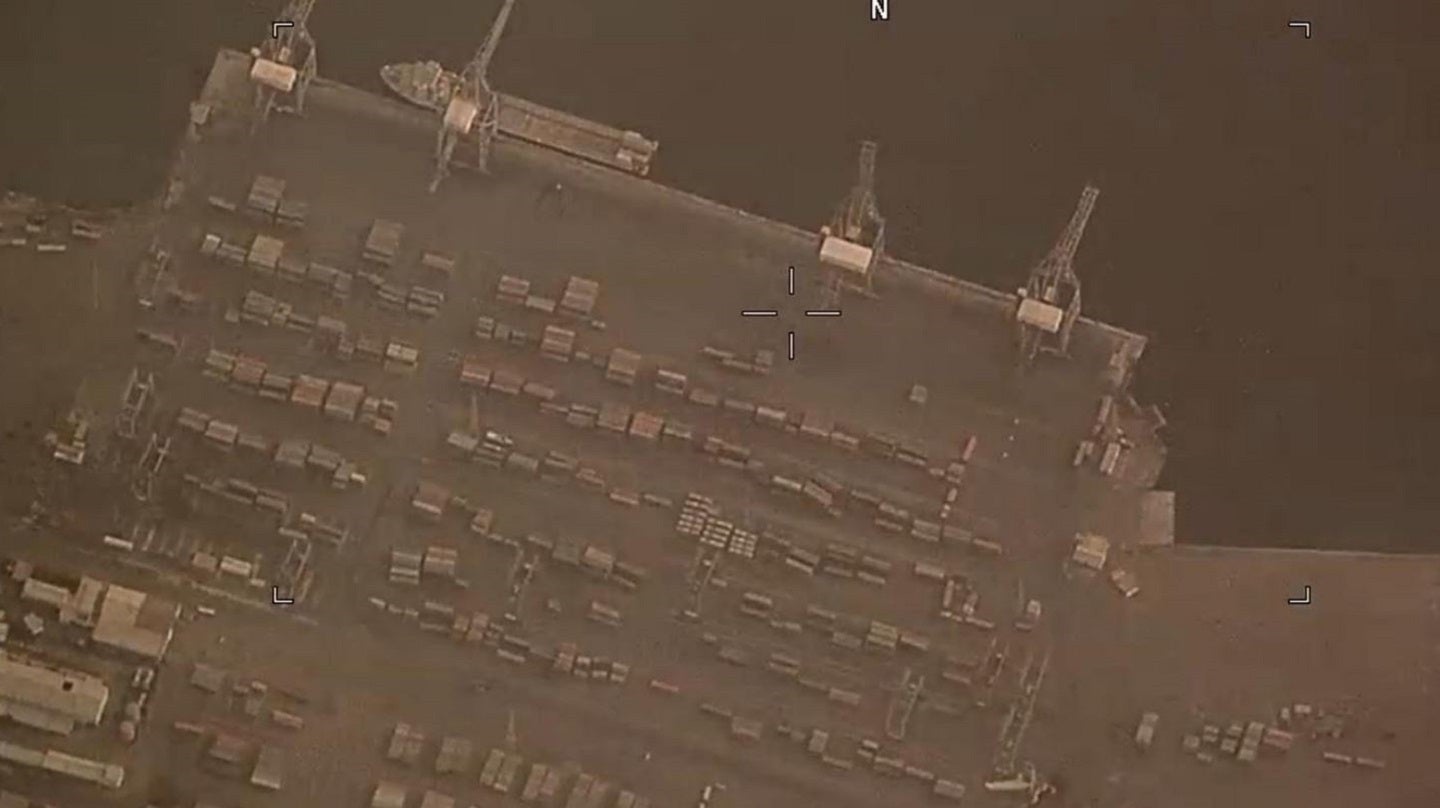
A tri-service UK endeavour has evacuated thousands of UK and overseas nationals from the civil strife in Sudan in recent days, with a UK Royal Air Force (RAF) MQ-9 Reaper UAV providing real-time intelligence of key locations in the country to help secure processing centres.
The MQ-9 UAV provided enduring imagery support of evacuation areas in Sudan, as personnel from the Type 23 frigate HMS Lancaster, which is alongside in Port Sudan, the FCDO, and Border Force processed evacuees.
Go deeper with GlobalData


Discover B2B Marketing That Performs
Combine business intelligence and editorial excellence to reach engaged professionals across 36 leading media platforms.
According to the UK Ministry of Defence (MoD), high-definition imagery and video feed provided by the MQ-9 was used to assist with patterns of life and threat assessments and supporting personnel on the ground.
Much of the UK’s operations in the Port Sudan in aiding evacuees of the nascent conflict have been conducted at the Coral Hotel, with people from the UK and US processed for safe onward travel, according to the MoD.

The UK’s MQ-9 Reaper fleet is being replaced by the Protector platform from US uncrewed aerial systems OEM General Atomics Aeronautical Systems, although the arrival of the 16-strong fleet has been delayed by a number of years.
Sudan evacuations
On 2 May the UK MoD confirmed it had handed back operations at Wadi Seidna airfield to Sudanese authorities at after a military evacuation operation concluded at the site, with more than 20 flights airlifting UK and other nationals to safety, after fighting broke out between Sudan’s administration and rival forces.
The airfield, located to the north of Khartoum, had been the UK’s primary location for evacuating UK nationals and their dependents, with further flights continuing on 1 May from Port Sudan.
While the final UK flight from Wadi Seidna departed on 29 April, members of the three services of the UK Armed Forces remained on site into 30 April. By the evening of 1 May, 2,197 people had been airlifted from Wadi Seidna airfield by UK forces.
The UK said on 1 May that it was “no longer running evacuation flights from Wadi Seidna airfield because of a significant decline in the number of British nationals coming forward and an increasingly volatile situation on the ground.”
In addition to British nationals, the UK has also helped evacuate 1,087 people from other nations, including the US, Ireland, Netherlands, Canada, Germany, and Australia.
Unique satellite imagery analysis, published by Naval Technology, has provided an insight into the evacuation operations of the Indian Navy from Port Sudan, which moved quickly to help Indian nationals fleeing the fighting in Khartoum.



