

- India’s defence minister Rajnath Singh visited the Gas Turbine Research Establishment (GTRE), an arm of the government’s Defence Research and Development Organisation (DRDO)
- Singh warned that India has five to seven years to develop a sovereign engine
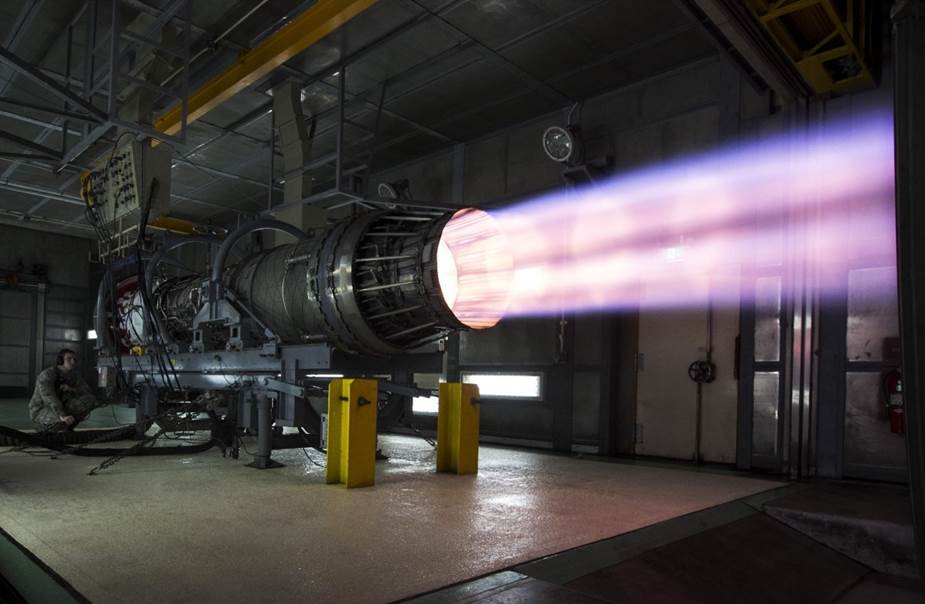
- During the exhibition, Singh observed a full afterburner engine test – a critical stepping stone that will increase the thrust of the Kaveri aero engine.
India’s Aatmanirbharta, or self-reliance, campaign has been on an upward trajectory according to analytics company GlobalData, but the largest setback to indigenous production has been the pursuit of sovereign aircraft propulsion.
Notwithstanding, the government still aim to build a next-generation aero engine, which Singh learned takes decades to deliver.
Go deeper with GlobalData


Discover B2B Marketing That Performs
Combine business intelligence and editorial excellence to reach engaged professionals across 36 leading media platforms.
“We must assume that 20 years have already passed and we now have only five to seven years left,” he noted, challenging industry players in an ambitious call to action.
Yet there was reason for cautious optimism during the minister’s visit to the GTRE in Bengaluru on 16 February, when Singh witnessed the full afterburner engine test of the Kaveri engine.
Kaveri engine finally gets a boost
The Kaveri is the most advanced aero engine developed for the Air Force. It is an indigenous legacy programme that did not deliver the thrust needed for a fully operational fighter, such as the Tejas light combat aircraft. However, the effort has seeded crucial design and manufacturing knowledge that is being reused for lower-risk thrust classes.
Foremost among these is the Kaveri Derivative Engine (KDE), a non-afterburning (or ‘dry’) variant in the 48-52kN range; it has completed substantial ground and altitude testing and is positioned to support platforms such as DRDO’s Ghatak uncrewed combat air vehicle.

US Tariffs are shifting - will you react or anticipate?
Don’t let policy changes catch you off guard. Stay proactive with real-time data and expert analysis.
By GlobalDataHowever, India is still working to evolve the dry Kaveri into an afterburning variant, often dubbed ‘Kaveri 2.0’, aimed at approximately the 80–85kN thrust class needed to power a fighter jet. The recent testing activity around an updated afterburner module is a significant milestone toward that configuration.
Not just fifth, but sixth generation
The current status of Kaveri, which is said to have performed a full afterburner engine test this week, according to the DRDO, puts Singh’s true level of ambition into context.
“We cannot limit ourselves to only fifth-generation engines. We must begin the development of the sixth generation,” he said, addressing scientists and officials at the exhibition.
The use of afterburners first emerged in second-generation aircraft. The engine component allowed the F-104 Starfighter – operational during the Vietnam War – to reach twice the speed of sound, or more than 1,500 miles per hour.
Afterburners inject fuel directly into the turbine exhaust stream, burning it to create a significant temporary boost in thrust. It is required to deliver greater propulsion for short-duration and high-demand flying scenarios, including take-off and urgent combat manoeuvres.
“Achieving true fifth/sixth-gen performance requires major advances in hot-section materials and coatings, turbine cooling, power density, durability, and a far deeper test and validation ecosystem,” said GlobalData defence analyst Harshavardhan Dabbiru.
For the sixth generation, in particular, it implies more adaptive performance and tighter thermal and electrical integration.
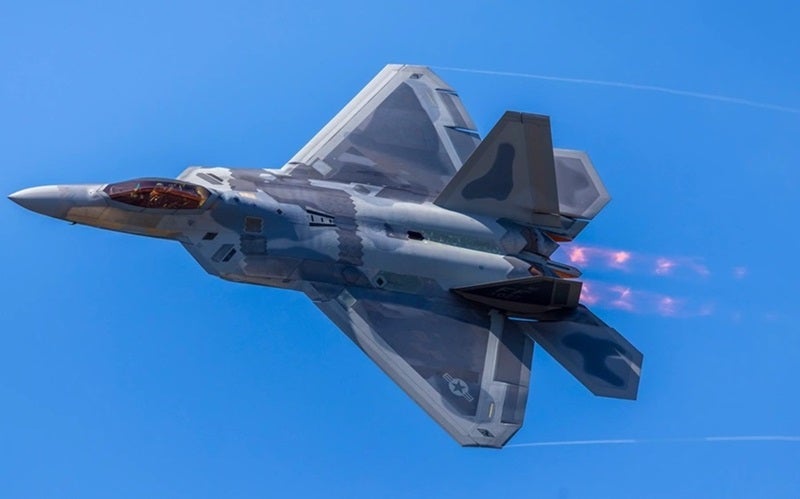
Currently, the US, China and Russia each have fully operational indigenous fifth-generation fighter aircraft with domestic engines (F-22/F-35, J-20/J-35A, Su-57 in that order). Turkey and South Korea are also developing fifth-generation fighters of their own. However, both are using American-made engines for early versions, though they aim to field indigenous engines in the next decade.
Dabbiru considered: “India is moving in the right direction with the initiatives towards selective foreign collaboration, but building the needed materials base, infrastructure, and supply chain maturity largely at home is the long pole, and that typically takes longer than a single development cycle.”
Why are advanced engines a strategic capability?
In his speech, Singh emphasised that fifth- and sixth-generation aero engines are a strategic capability as far as the Indian Government is concerned.
Despite the country’s Self-Reliance initiative, India still relies on the West to power its indigenous combat aircraft.
The DRDO imports General Electric F404 engines for Tejas Mk1 and 1A aircraft, but sourcing these engines has led to severe delays in the development of the 1A due to global supply chain vulnerabilities. In October 2025, French aerospace company Safran opened another maintenance, repair and overhaul workshop for M88 engines, which India uses to power its Dassault Aviation Rafale fighters.
Likewise, India has its eyes set on a sovereign fifth-generation fighter jet known as the Advanced Medium Combat Aircraft (AMCA). While the country cannot develop the engine for the future fighter alone, the government did manage to obtain intellectual property for a 120kN engine, which will be built off the back of technologies used in the M88. Safran will support the GTRE to build such an engine.
The strategic value is also informed by the growing competition for critical minerals. Reliance on foreign partners will continue to hamper efforts to obtain world-leading defence capabilities. This has sparked an ongoing trade war between China and the US, between whom India and other nations are cultivating their own strategic autonomy.
To this end, the Indian Ministry of Defence established a titanium and superalloy materials plant in Lucknow in October 2025. At the time, Singh urged that “India must produce rare materials used in defence and aerospace to become a technology creator and safeguard its technological sovereignty”.
Notably, the plant is one of the first private sector manufacturing units tasked to build aero engine components.
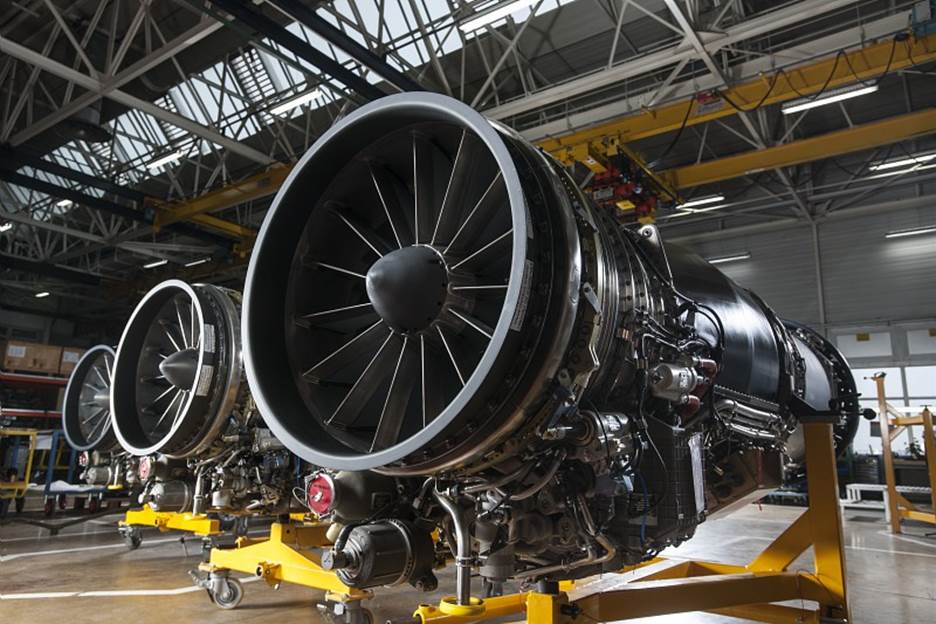
Today, the largest single application of titanium is its use in gas turbine aircraft engines. Titanium’s strength-to-weight ratio, excellent high temperature characteristics and corrosion resistance naturally lend this metal to aircraft engine applications.
Titanium-based alloys represent 20-30% of the dry weight of an engine, primarily in the compressor.



