

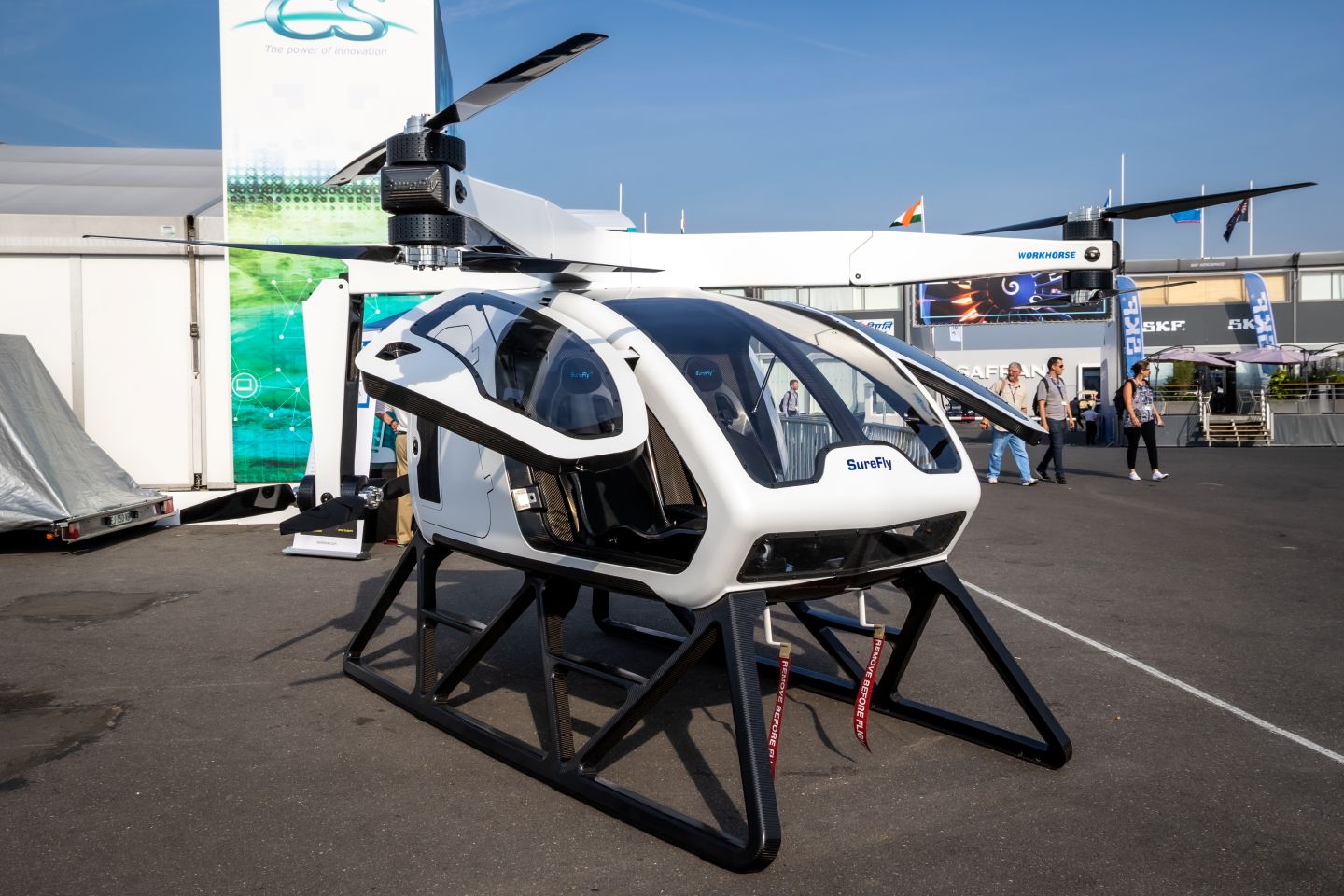
An electric vertical take-off and landing (eVTOL) aircraft utilises electric power to take off, fly and hover, with its movement of flight being comparable to a helicopter. The use of eVTOL aircraft to operate air taxi services has seen a growing demand since the beginning of the decade. This has been made possible by advances in battery technology, with energy density improvements now allowing an eVTOL aircraft to sustain a journey of between 32km to 80km.
The emerging eVTOL air taxi sector has grown at pace. In March 2025, Virgin Atlantic announced a partnership with Joby Aviation, with the intention of provide air taxi connections between regional cities and hubs at Heathrow Airport and Manchester Airport. This would be followed in August when Joby Aviation carried out the first eVTOL air taxi flight in US Federal Aviation Authority (FAA) controlled airspace between Marina and Monterey airports in California. In December, Vertical Aerospace announced its intention to launch the United Kingdom’s first eVTOL air taxi service during 2029. Proposed routes between Canary Wharf, London, include Heathrow and Gatwick airports, as well as Oxford and Cambridge.
Go deeper with GlobalData

Access deeper industry intelligence
Experience unmatched clarity with a single platform that combines unique data, AI, and human expertise.
Major airlines are the key driver for this demand, on account of linking major airports such as London Heathrow, New York JFK and Paris Charles de Gaulle to nearby regional cities. This demand has been catalysed by urban congestion in major population centres, which in turn has resulted in increased attractiveness for point-to-point travel that air taxis offer. In addition to Joby Aviation, the key eVTOL players at present include Archer Aviation and Vertical Aerospace.
The key advantage of utilising eVTOLs for airport transfer services is the far shorter journey times when compared to road or rail transport. As an example, journeys between Heathrow and central London would take approximately eight minutes as opposed to the approximately 80 minutes by car dependant on traffic or approximately 50 minutes by public transport.
The regulatory framework surrounding eVTOL aircraft will continue to evolve. As a case in point, in September 2025, the UK Civil Aviation Authority published the eVTOL Delivery Model. It is intended that a regulatory framework for the use of eVTOLs be established by 2028. To do so, the UK CAA has identified four objectives, an agreed type classification, the creation of new and amending of existing legislation in areas, including flight operations, pilot licensing and airworthiness, the creation of new guidance and updates to current CAA systems to ensure that licence applications and safety reports are accurately processed.
In the near term, eVTOL air taxi services are to remain the purview of high-net-worth customers, and the challenge of affordability for the public will remain. As such, in the near term, any future success of eVTOL air taxi services is likely to be to the detriment of charter flight providers and executive jet manufacturers. In contrast to these, eVTOLs have significantly less carbon emissions in addition to much reduced operating costs. Additionally, while full autonomy of the aircraft has been discussed as a potential technological development, it is highly likely that this will remain unpalatable for the foreseeable future given safety concerns.

US Tariffs are shifting - will you react or anticipate?
Don’t let policy changes catch you off guard. Stay proactive with real-time data and expert analysis.
By GlobalData
Beyond air taxi services, eVTOL aircraft have clear potential in the provision of emergency services. The use of hoverbike-type eVTOLs would be particularly useful with their ability to reach otherwise inaccessible areas and observe traffic from a high vantage point.
See GlobalData’s recently published report on thematic predictions for 2026 for more information on anticipated technological developments.

