

- Nato partner nations coordinated a withdrawal of troops and equipment from Iraq
- The combat advisory Nato Mission Iraq will continue operations from Naples in a move that play to Iran’s benefit
- The German Government elaborated on the nature of withdrawal, which saw several A400M aircraft operate under “risky conditions”
Members of the Nato military alliance have withdrawn troops and personnel from Iraq amid the ongoing US and Israeli campaign against Iran, which continues to spill across the Middle East.
General Alexus Grynkewich, Nato Supreme Allied Commander Europe, initially confirmed the withdrawal of the final personnel participating in Nato Mission Iraq (NMI) on 20 March.
Go deeper with GlobalData

Discover B2B Marketing That Performs
Combine business intelligence and editorial excellence to reach engaged professionals across 36 leading media platforms.
NMI was first launched in July 2018 and includes a broad coalition of more than 70 countries, tasked with supporting the Iraqi security forces and preventing the resurgence of Islamic State.
This non-combat advisory and capability-building group will continue operating from Joint Force Command Naples in Italy.
German participation
On the same day, the German Bundeswehr noted its support of the withdrawal of troops and equipment using several A400M Atlas transport aircraft.
After a stopover in Jordan, the returning soldiers flew back to Germany… landing safely in Wunstorf on the evening of 19 March.
Defence Minister Boris Pistorius elaborated on the German involvement of the successful departure of Nato troops from Baghdad, noting the operation took place under “very risky conditions.”
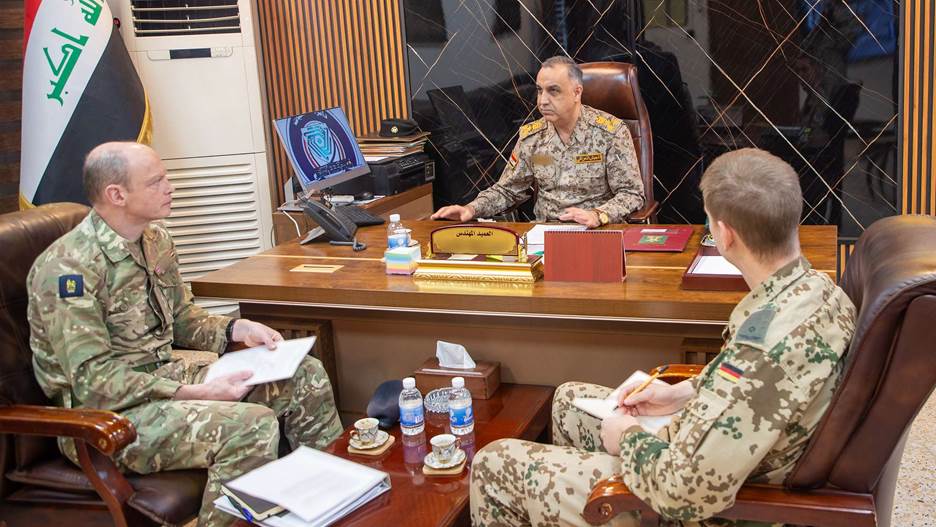
At the end of January, the Bundestag decided to extend its mandate to deploy up to 500 soldiers in NMI until 2027. At the time, the Government asserted its goal to develop a long term and sustainable Iraqi security architecture in the country “is far from being fully achieved.”
Forced to move its centre of operations to southern Europe – more than 1,750 miles away as the crow flies – the move proves a success for the Iranian regime.
Firstly, as it isolates the US military in its ongoing campaign, which risks dividing transatlantic ties even further. Secondly, the Tehran’s strategy is most effective against weaker neighbours, as seen in Syria, Lebanon and Iraq more than a decade ago.
‘Risky conditions’
The Bundeswehr did not recount the risky conditions of the withdrawal to which Pistorius referred.
However, a spokesperson for the Bundeswehr Joint Force Command told Airforce Technology that in recent weeks, due to the increasing tensions in the region, the German military have already taken precautionary measures to reduce personnel “not urgently required” for the mission.
“Further adjustments cannot be ruled out and will be guided by developments of the situation on the ground,” they added with no reference to future adjustments under consideration.


