


Space launches used to be rare, memorable milestones of global significance. Today, rockets carrying multiple satellites into orbit are surging, as are the number of launches. Space-based technologies are already deeply integrated into our everyday lives and underpin everything from global connectivity, navigation, climate monitoring, the energy transition and financial transactions.

The world is witnessing an unprecedented boom and demand is increasing, with about 10 times more satellites now active compared to a decade ago, mostly operating in Low Earth Orbit (LEO), between 400km and 2000km above the Earth’s surface. This trend is, if anything, speeding up.
The consultancy Novaspace expects 18,500 small satellites – those weighing less than 500 kg – to launch between 2022 and 2031, compared with 4,600 in the previous decade. At the same time, the European Space Agency, ESA, estimates that as many as 100,000 satellites could be in orbit by 2030, underscoring how quickly orbital activity is accelerating.
The flywheel: cheaper access, more players, more data, more value
A new space race is emerging as its potential for modern business and industry is rapidly gaining attention. The data generated from earth observation is becoming strategic advantage when used for business intelligence.
In addition, many countries view space as a strategic domain for national defence. Investments are increasing in military satellites, space defense systems, and space surveillance capabilities.
According to the World Economic Forum, the space economy could be worth $1.8tri by 2035, up from $630bn in 2023.
“Three forces are accelerating the market simultaneously: increased investments and a surge of commercial entrants on a mission to revolutionize access to space, technological progress and reduced costs for launches and satellite production, and geopolitics. Together, these forces are expanding the addressable customer base,” says Carina Aspenberg, SvP and Head of Communications at SSC Space, a leading global provider of advanced space services.
Source: SSC Space
Formerly known as Swedish Space Corporation, the company, which has its origins in the early 1960s, has recently unified its growing global operations under one brand: SSC Space.
Getting access to space as complexity in the operating landscape grows
SSC Space are involved in some of the most important European space missions such as Galileo and the Columbus laboratory on the European section of the International Space Station (ISS), as well as numerous other ESA earth observation and scientific programs.
Another example is the Copernicus earth observation programme, which has been instrumental for global climate and crisis management, such as during the wildfires that tore through Los Angeles in 2025. The Copernicus Atmosphere Monitoring Service (CAMS) used data from its Sentinel-3 satellite constellation to provide crucial, near-real-information on fire intensity, the trajectory of smoke plumes and the resulting air quality impact to support first responders and public health.
“We are a global business with customers from all over the world and across the space value chain. We work closely with the many of the world’s leading institutional space organizations, NASA, the European Space Agency (ESA), the Japanese Aerospace Exploration Agency (JAXA), DLR, CNES and others by providing science, launch, ground station services and mission operation support for some of their key space initiatives,” emphasises Carina Aspenberg.
Source: SSC Space
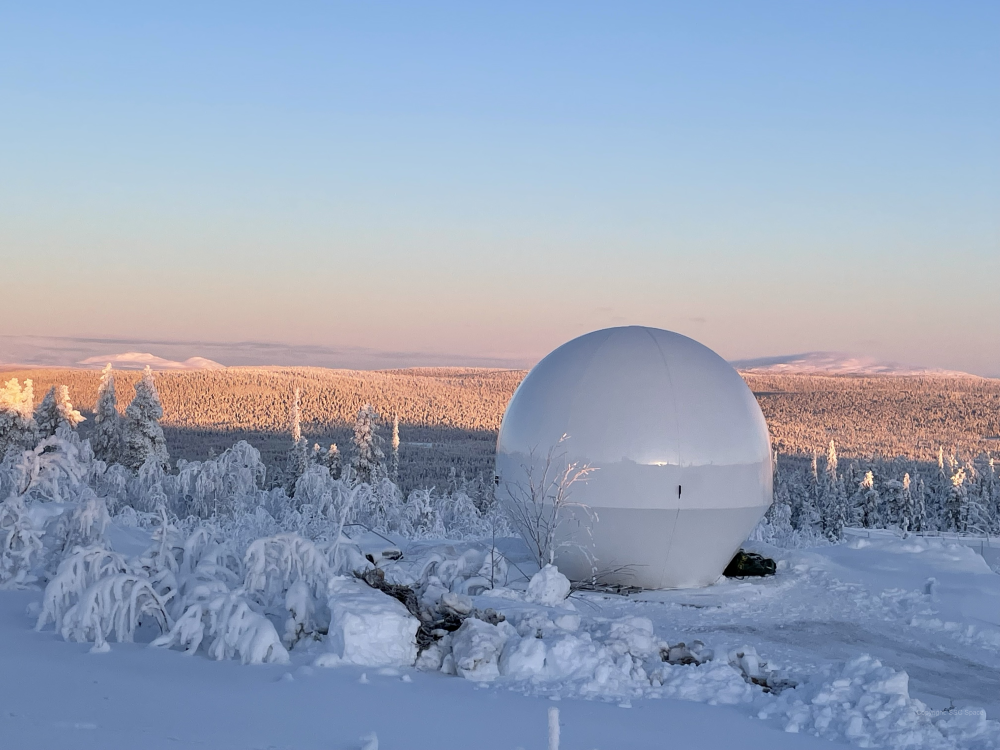
SSC Space also runs one of the world’s largest commercial ground networks of 21 sites across 10 countries – allowing NASA and many more customers to communicate with missions in low-earth orbits, to bespoke journeys to the Moon, Mars and beyond.
As missions push ever deeper into space, ground capability becomes ever more important. SSC Space supported Firefly Aerospace’s historic Blue Ghost Mission 1 as a sole communications provider, helping track, communicate with, and downlink data from a spacecraft operating at lunar distances, where signal demands and antenna requirements become far more complex.
The rise of satellite constellations and an increasing demand for low latency requires ground stations to offer global coverage, handle higher data volumes, and ensure faster data delivery.
“So, this is an area where we have probably the best infrastructure and most trusted services in the world. If a satellite is sending data to Earth, there’s a good chance SSC Space is part of that link,” says Carina Aspenberg.
Aspenberg says: “So, this is an area where we have probably the best infrastructure and most trusted services in the world. If a satellite is sending data to earth, there’s a good chance SSC Space is part of that link.”
A new spaceport in northern Sweden
But that’s not all. With growing demand for satellite launches and a looming bottleneck in the space‑infrastructure supply chain, SSC Space is working to establish full orbital launch capability at its Esrange Space Center.
Mainland Europe does not yet have its own capability for orbital launches. Only a few locations worldwide (around 12) have this capability today. A few European locations are currently developing orbital launch capability, including SSC Space at its Esrange Space Center in northern Sweden.
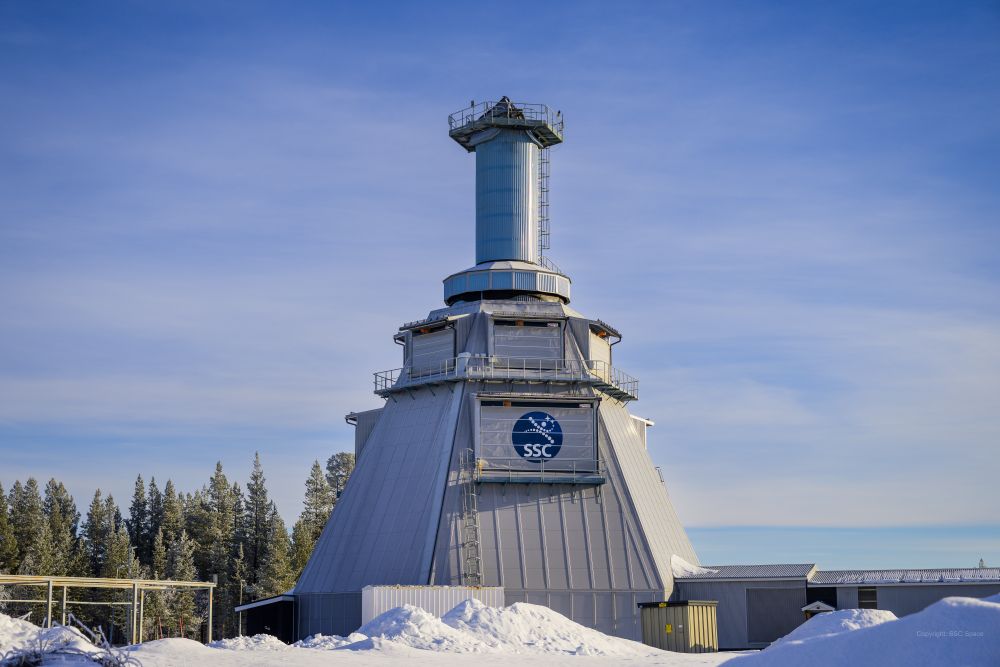
With deep heritage in sounding rockets and stratospheric balloons, Esrange is now aiming to take on the strategic role as a mainland spaceport for Europe.
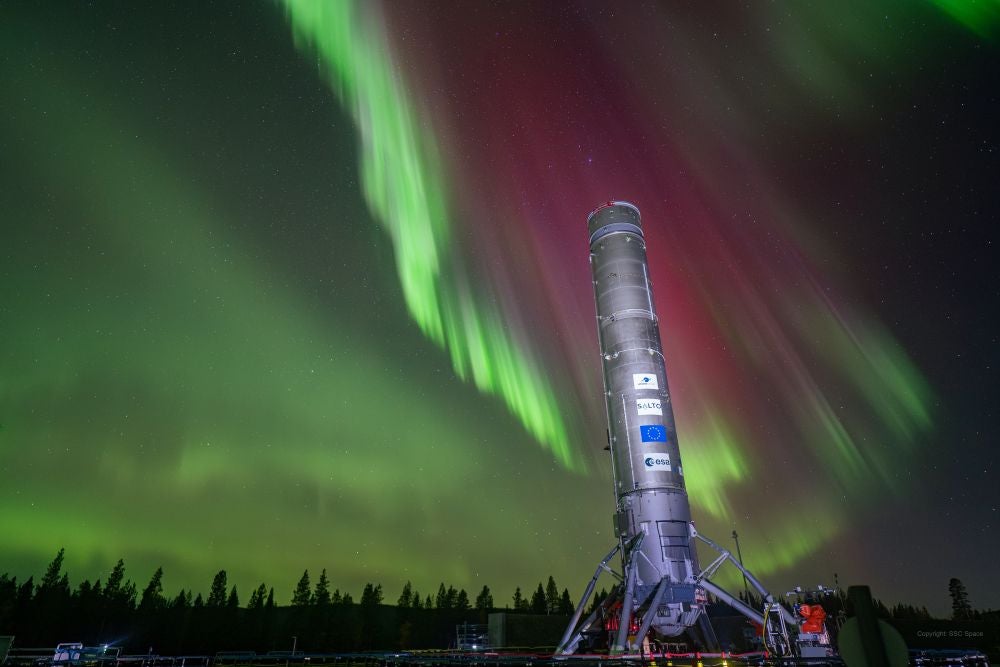
SSC Space is confident that this facility will be fully operational in the next few years – ready to offer a new European pathway for small satellite missions and, crucially, strengthen Europe’s capabilities and secure access to space. The location of Esrange Space Center is part of its competitive edge.
“At Esrange, we have access to a vast, unpopulated impact and recovery area as well as facilities for satellite launches and rocket engine testing and good logistics. With And we have the advantage of having more stable, predictable weather conditions than some alternatives – both critical when launch windows are tight and safety is paramount,” Carina Aspenberg notes.
“Esrange concentrates multiple capabilities in one place: payload development and suborbital missions, it acts as a hub for our global ground network, it hosts comprehensive rocket engine testing capabilities, and we are building orbital launch pads together with our rocket partner Firefly Aerospace. For these reasons, I’d say Esrange is quite unique.”
“This spaceport offers an independent European gateway to space. It is exactly the infrastructure we need, not only to continue to innovate but also to further explore the final frontier,” expressed Ursula von der Leyen, President of the European Commission, as the spaceport was inaugurated.
