

- The US Department of Defense selected 25 vendors to compete in producing “hundreds of thousands” of low cost one-way attack uncrewed aerial systems (UAS) by 2027
- But this time last year, the Army alone assigned up to 400 UAS among units in its Brigade Combat Teams (BCTs); just one of these tactical level units comprise more than 4,000 troops
- The figure indicates the challenge to deliver so many units quickly
The US Department of Defense has initiated its Drone Dominance Programme (DDP) for the first time with a selection of 25 vendors.
The industrial competition, loosely conceived in an executive order in June 2025, and referenced again in a memo released by Defense Secretary Pete Hegseth a month later, will see companies with a presence in the United States showcase their UAS capabilities. The first “Gauntlet” phase will conclude in early March 2026, when the government intends to allocate $150m prototype delivery orders.
Go deeper with GlobalData


Discover B2B Marketing That Performs
Combine business intelligence and editorial excellence to reach engaged professionals across 36 leading media platforms.
Companies include traditional military contractors and emerging start-ups from Kratos SRE, a subsidiary of its familiar namesake, to the Israeli company XTEND Reality, as well as the Ukrainian Defense Drones Tech Corp.
The programme amounts to $1.1bn over four phases to incite competitive and iterative development cycles “measured in months, not years”, according to the government release.
Reality-check
But the DDP is not quite the breath of fresh air it seems. Until now, UAS production figures have indicated limited industrial output.
This time last year, the US Army alone assigned somewhere between 300 and 400 UAS to combat units in its BCTs (a tactical unit that comprises more than 4,000 troops) under the auspices of the Replicator 1 initiative, which launched in August 2023.
This level of scope over two years signals the sheer challenge of scale for government and industry over the next 12 months.
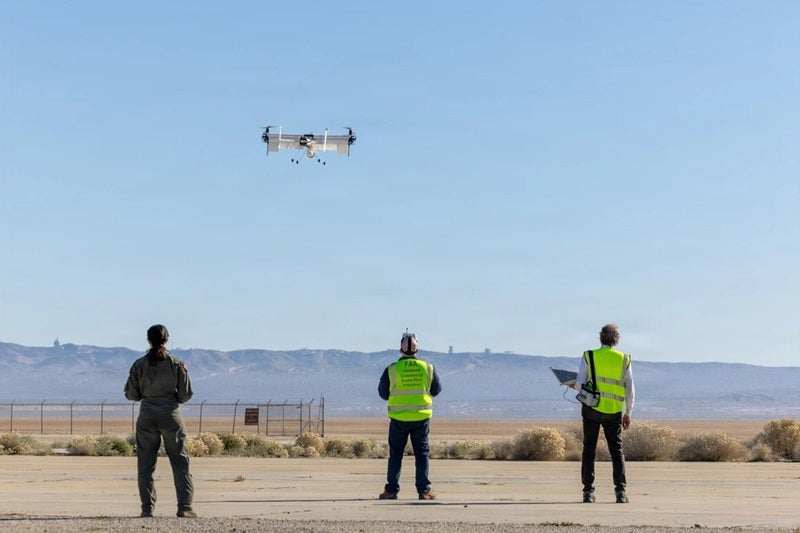
Success will hinge on the Acquisition Transformation Strategy (ATS), published in early November last year, which implements provisions that enable industry. The real question is whether these provisions, which go so far as to put industry on a “war footing” – whatever that looks like – will succeed in producing systems at a rate not seen for decades.
“Nothing’s fundamentally changed until it’s fundamentally changed,” said Dr Jerry McGinn, a fellow at the Center for Strategic and International Studies, in conversation with Army Technology at the time the ATS was published in November.
“Implementation is going to be a bear,” he continued, “ending a big requirements process means you have to replace it with something.”
Integrating drones in the force structure
Details of the DDP, which are scant at this stage, only address the industrial scale required for UAS, a market in which the analytics firm GlobalData projects considerable growth from $15bn in 2025 to $28bn in 2035.
While the ambition for scale is a laudable one, the Department has not set out how it will integrate these “hundreds of thousands” of combat UAS – at least 300,000 projected – into the force structure by next year.
“The operative question is whether drones positioned somewhere further up the logistical chain from the BCT troop level are included in those ‘hundreds of thousands’,” considered GlobalData defence analyst James Marques.
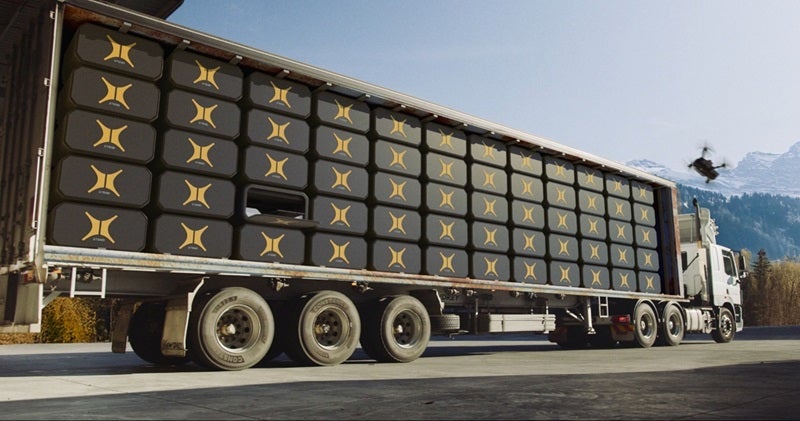
There is also the question of how it will deploy these disposable attack drones, which programme details do not currently specify.
“I suspect the most likely scenario for the DDP based on requirements for low-cost OWA is the development of ‘manpack’ drones that can be carried and launched by a single soldier,” contemplated Fox Walker, another GlobalData defence analyst.
“It will be worth watching which suppliers the DoD takes interest in to determine what specifications the US is taking an interest in, but with 25 initial suppliers, it’s probably too soon to say,” Walker concluded.


