

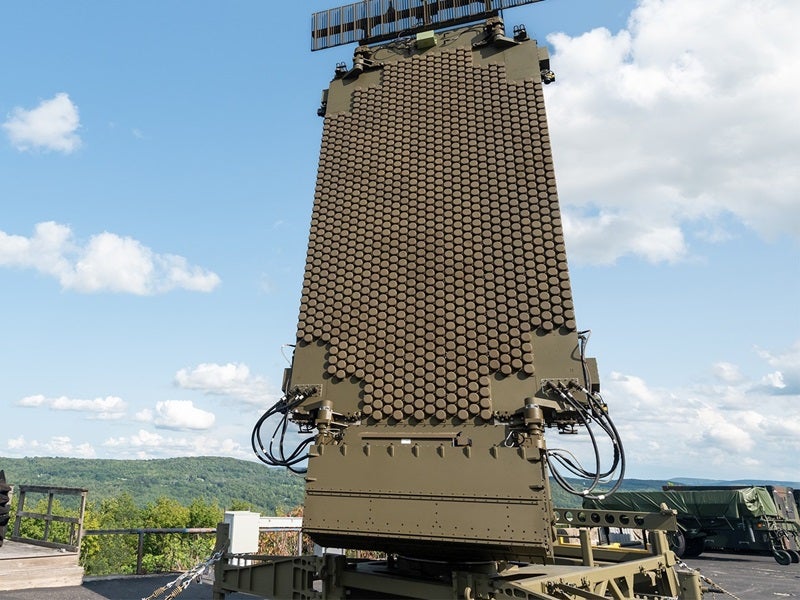
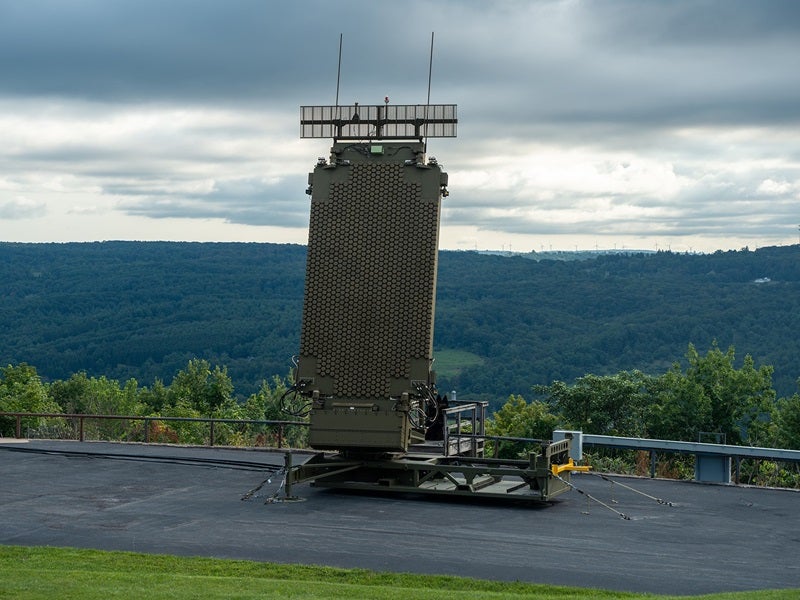
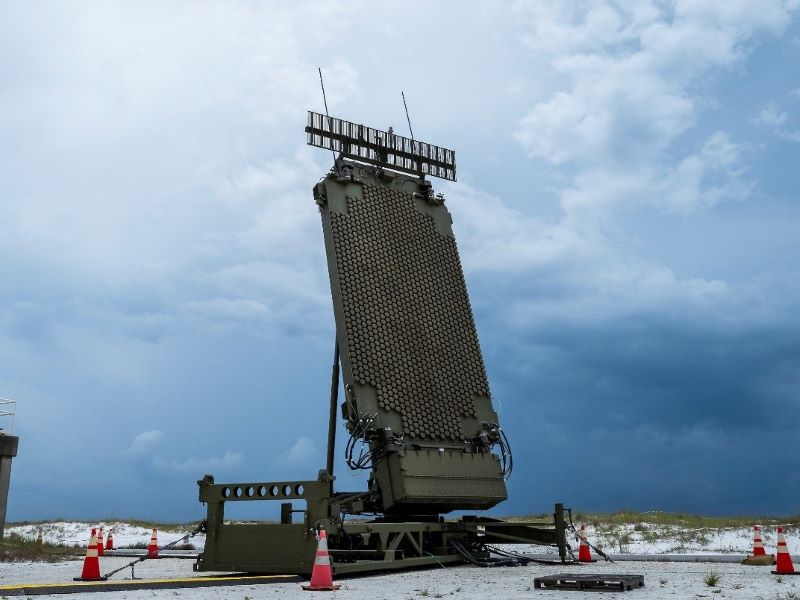
Lockheed Martin’s TPY-4 is a ground-based, multi-mission air defence surveillance radar developed to operate effectively in heavily contested electromagnetic environments.
It enables armed forces to detect and track a wide spectrum of current and evolving threats. The system employs gallium nitride technology to increase efficiency and reliability, representing a substantial step beyond earlier radar generations.
Recommended White Papers

Recommended Buyers Guides

The radar received its formal designation from the US Government in July 2021 and production of the initial radar was completed in May 2022.
Kongsberg Defence & Aerospace provided the platform electronics subsystem for the first TPY-4 unit.
TPY-4 design and features
The TPY-4 is a 3D element-based digital active electronically scanned array (AESA) radar. It features gallium nitride transmitters, advanced digital processing, high-density antenna electronics and graphic processing unit-based data processing.
The radar operates in the L-band between 1,215 megahertz (MHz) and 1,400MHz and supports multiple rotation modes, including continuous rotation at around six revolutions per minute (rpm) and a stop-and-stare mode.
The system delivers full 360° azimuth coverage but can also concentrate on a narrower horizontal sector of roughly 90° when increased focus is required. Its instrumented range is around 555km, with configurations available to extend coverage towards 1,000km.
It can monitor targets at high altitude, supporting surveillance up to approximately 30.5km.
The radar’s antenna incorporates more than 1,000 radiating elements, each controlled independently in digital form for both transmission and reception.
As the radar is fully digital, performance upgrades can be introduced through software updates without modifying hardware or undertaking disruptive changes to the underlying architecture.
TPY-4 radar system capabilities
The TPY-4 can support multiple missions simultaneously. It is capable of general airspace surveillance, detection of low‑observable uncrewed aerial systems, dedicated search and tracking of ballistic missiles, maritime surveillance and satellite tracking.
The radar can be employed in harsh environments and uses an open-standards interface, while also being able to operate in fully remote mode.
The TPY-4 can discriminate smaller, low‑signature threats in dense clutter environments, including reflections from terrain, sea surfaces and wildlife.
The radar supports Mode 5 identification and is available in fixed and highly mobile variants. It is designed for transport by C-130 and C-17 aircraft, as well as by truck, rail or helicopter, which facilitates rapid deployment and redeployment as operational requirements change.
The system remains effective under jamming and delivers long-range early warning against tactical ballistic missiles.
Orders and deliveries
The US Air Force selected the TPY-4 in March 2022 for its three-dimensional expeditionary long range radar (3DELRR) rapid prototyping programme. The associated contract includes options to produce 35 long-range radars, intended to reach initial operational capability once fielded.
In September 2024, the programme team and Lockheed Martin completed risk‑reduction testing of the TPY-4 under the 3DELRR framework, a key step towards operational deployment.
In November 2022, Kongsberg Defence & Aerospace and Lockheed Martin signed an agreement covering Kongsberg’s role in delivering TPY-4 radars to Norway under the Norwegian Radar Sensor project.
The Norwegian Defence Materiel Agency exercised an option for three additional systems in September 2024, bringing Norway’s total order to 11 radars. The Royal Norwegian Air Force will field and manage this fleet as part of a broader national air surveillance and air defence network.
In June 2025, Sweden’s Defence Materiel Administration chose the TPY-4 to reinforce the country’s long-range air surveillance capability, making Sweden the third nation to procure this fifth‑generation radar.
Deliveries to the Swedish Air Force are due to begin in 2027, positioning the system as a central element of Nordic and wider European air defence architecture.
In December 2025, the Danish Ministry of Defence Acquisition and Logistics Organisation placed an order for three TPY-4 radars, with an option for a fourth, to strengthen the country’s long-range air defence capability.
