

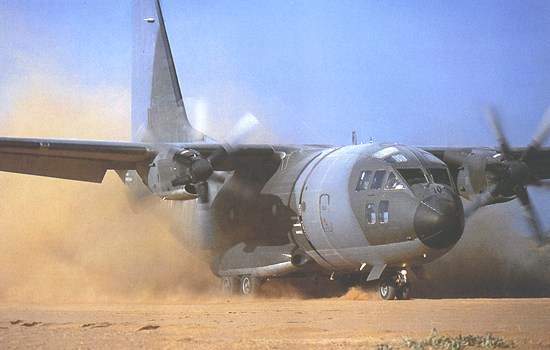
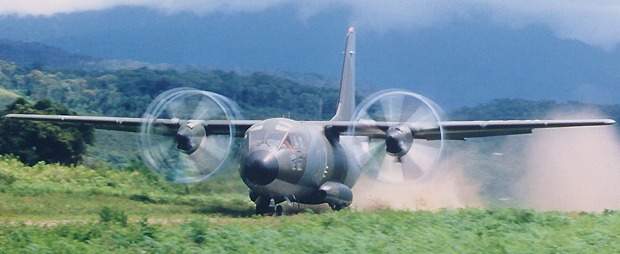
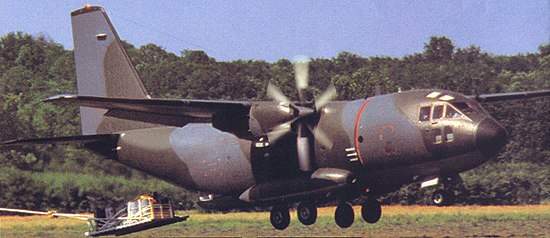
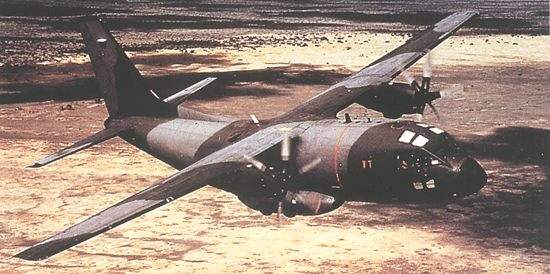
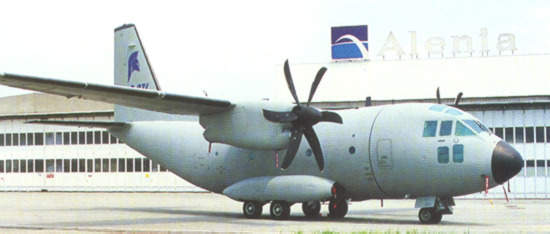

Launched in 1997, the C-27J Spartan tactical transport aircraft incorporates the same propulsion system and advanced avionics as the C-130J Hercules Transporter.
Recommended White Papers

Recommended Buyers Guides

The C-27J has been developed by Lockheed Martin Alenia Tactical Transport Systems (LMATTS). LMATTS is a joint venture company based in Marietta, Georgia, which was set up by Lockheed Martin and Alenia Aeronautica, which is part of the Finmeccanica company of Italy.
In July 2012, Alenia rolled out a new multi-mission variant designated MC-27J. Derived from C-27J Spartan, the MC-27J is an armed aircraft specially designed to meet the requirements of air forces and Special Forces. The aircraft is being jointly manufactured by Alenia and ATK.
US Army / US Air Force C-27J joint cargo aircraft (JCA)
In June 2007, the C-27J was chosen as the US Army / Air Force new joint cargo aircraft (JCA). The initial contract is for 78 aircraft (54 for the army and 24 for the USAF). L-3 Communications Integrated is prime contractor and is teamed with Alenia North America, Boeing Integrated Defense Systems and Global Military Aircraft Systems (a joint venture of L-3 and Alenia). The C-27J JCA’s maiden flight was in June 2008 and the first aircraft was delivered to the US Army and Air Force in September 2008. The first JCA training class began in November 2008.
Finmeccanica received a $319m contract from the USAF in June 2010 to supply eight C-27J JCA for delivery in 2012.
The US Special Operations Command will receive seven C-27Js from the USAF, as part of intra-service transfer. All the aircraft are expected to be transferred by April 2014 and will be operated by the US Army Special Operations Command. The USAF will also transfer 14 C-27Js to the US Coast Guard.
C-27J Spartan design and construction
The aircraft design is based on the proven G-222 airframe from Alenia, with turboprop engines from Allison and advanced systems from Lockheed Martin.
Final assembly of the C-27J Spartan takes place in Italy. Lockheed Martin is responsible for the propulsion and avionics and takes lead responsibility for product support and worldwide marketing. Alenia Aeronautica takes responsibility for the certification process and for most of the manufacturing and flight testing operations.
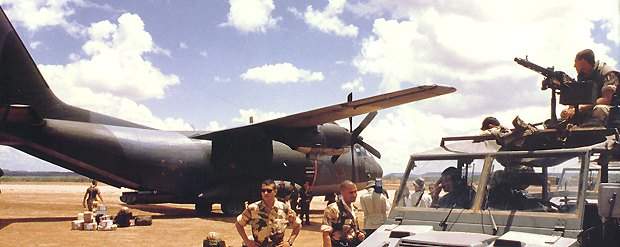
The C-27J Spartan has the same logistical and maintenance characteristics of the Lockheed Martin C-130J Hercules medium tactical airlifter, and also shares commonality of the cargo capacity. The primary roles of the C-27J are cargo transport, troop transport, and material and paratroop air drop. Other missions include maritime patrol, tactical operations, medical evacuation, ground refuelling, fire-fighting and aerial spraying.
Global Military Aircraft Systems (GMAS) is a joint venture that has been set up between Alenia and L-3 Communications for the US Army future cargo aircraft (FCA) and the USAF combat rescue tanker requirement.
Cockpit
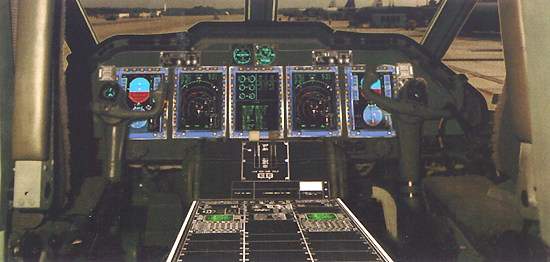
The two-pilot cockpit is night-vision-goggle (NVG) compatible. The flight deck is very similar to that of the C-130J Hercules. The electronic flight instrumentation system (EFIS) incorporates five liquid crystal head-down colour displays.
C27J Spartan cargo systems
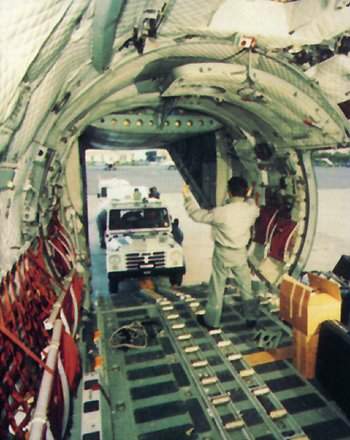
The Spartan is constructed with a floor strength equal to that of a Hercules transporter, and the large cargo cabin cross-section is able to accommodate Hercules pallets.
Without modification, HMMWV (high-mobility medium wheeled vehicle), AML-90, Perentie 6×6 armoured vehicle, M113 armoured personnel carrier or similar military vehicles can be driven on and off the Spartan via a hydraulically operated rear-loading ramp. The aircraft is constructed to offload vehicles quickly while taking fire.
An upward-opening door is installed in the underside rear fuselage, which is used for air drops of pallets or CDS (container delivery systems) units. The air-drop speed is typically in the range 110kt to 140kt.
The aircraft is pressurised and air conditioned in the cockpit and cargo compartment. In the medical evacuation role, the aircraft can carry 24 casualties on litters (stretchers) and four medical attendants. The cargo compartment is equipped with a dedicated aero-medical oxygen supply and 12 power centres for medical or auxiliary equipment.
For the paratroop role, the aircraft is equipped with door-jump platforms and static lines, and can carry up to 24 fully equipped paratroops. Paratroop jumps can be carried out from the paratroop doors on both sides of the cargo compartment or from the cargo ramp and rear door.
Avionics
The C-27J is equipped with a digital avionics suite integrated by Lockheed Martin Aeronautical Systems. The mission computers are supplied by Sanders, a Lockheed Martin company, and the displays by ADC. Honeywell provides the autopilot and the standby instruments are supplied by BF Goodrich.
Engines
The C-27J is equipped with two AE 2100D3 turboshaft engines, supplied by Rolls-Royce Defence North America (formerly Allison). The engines are rated at 4,637shp. Messier-Dowty supply the six-bladed composite propellers.
The aircraft’s propulsion system allows the C-27J Spartan to access a wide range of airfields, including short, unprepared strips in hot-and-high altitude conditions while transporting heavy loads.
The Spartan can perform 3g tactical airlift operations under severe conditions. The navigation and night piloting systems allow the aircraft to fly just above tree height even at night.
The propulsion system provides an increase in aircraft range by 35% and cruise ceiling by 30%, in comparison to the current G-222 tactical transporter configuration from Alenia.
Performance
The C-27J can fly with a maximum speed of 602km/h. The maximum cruise and stall speed of the aircraft are 583km/h and 194km/h respectively. Its range is 1,852km. The ferry range and service ceiling are 5,926km and 9,144m respectively.
C-27J transporter orders and deliveries
The first flight of the development aircraft was in September 1999 and the aircraft received full Italian military type certification in December 2001. The Italian Air Force ordered 12 aircraft to replace the G.222. Deliveries began in January 2007 and were completed in May 2009.
In January 2003, LMATTS received the first export order for the C-27J when Greece signed a $272.72m contract to buy 12 aircraft with three on option. The first was delivered in August 2005.
In February 2006, the Defence Ministry of Bulgaria signed a contract for five C-27J aircraft, with an option for three more. Deliveries began in November 2007. Two C-27J Spartans were delivered to the Bulgarian Air Force by December 2010. Bulgaria reduced the C-27J orders from five to three due to financial crisis. The Bulgarian Air Force received the third and final C-27J Spartan aircraft in March 2011. These aircraft replaced the existing An-26s fleet.
In June 2006, Lithuania placed a €75m ($97.5m) order for three C-27J aircraft. The first was delivered in December 2006, the second in December 2008 and the third was delivered on 21 October 2009.
In December 2006, it was announced that Romania had selected the C-27J with a requirement for seven aircraft. A €217m ($308m) contract was signed in December 2007 after facing legal appeals from Romania’s public procurement controlling authority. The first C-27J Spartan was delivered to the Romanian Airforce in July 2009 to the Bucharest-Otopeni Air Base. The second was delivered in April 2010 with the remaining five delivered by 2012.
In December 2008, the Slovakian government announced the selection of the C-27J with a requirement for up to four aircraft.
Ten C-27J Spartans had been delivered to the Hellenic Air Force by July 2010.
In November 2010, the first C-27J full flight simulator was delivered to the Italian Air Force at its base in Pisa, Italy. The simulator is principally used for training the C-27J crews at a competitive operating cost.
Mexico placed a $200m contract for four C-27J aircraft in July 2011. The first aircraft was delivered in September 2011 and the remaining three were delivered by 2012.
In May 2012, Australia confirmed the acquisition of 10 C-27J Spartan aircraft for its Royal Australian Air Force (RAAF) through a €800m Foreign Military Sales (FMS) agreement with the US. The first aircraft completed maiden flight in December 2013. Deliveries are expected to begin in 2015 and the initial operating capability is expected by the end of 2016.
The Peruvian Ministry of Defense selected the C-27J in November 2013 and placed a contract worth €100m ($135.8m) for two aircraft in December 2013.
The Global Military Aircraft Market 2011-2021
This project forms part of our recent analysis and forecasts of the global military aircraft market available from our business information platform Strategic Defence Intelligence. For more information click here or contact us: EMEA: +44 20 7936 6783; Americas: +1 415 439 4914; Asia Pacific: +61 2 9947 9709 or via email.
