

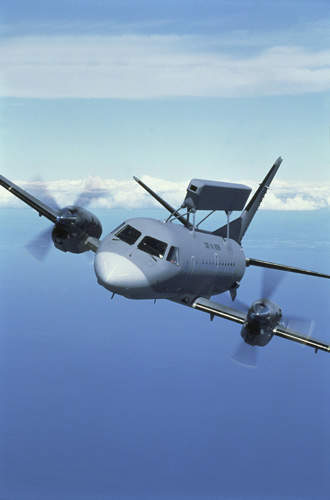
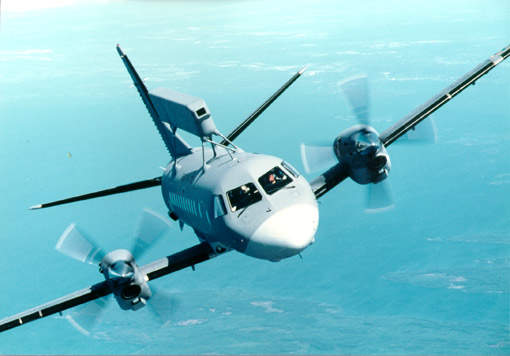
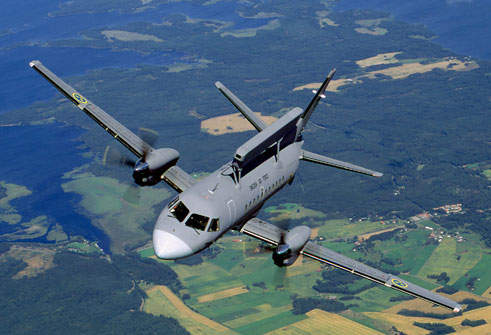
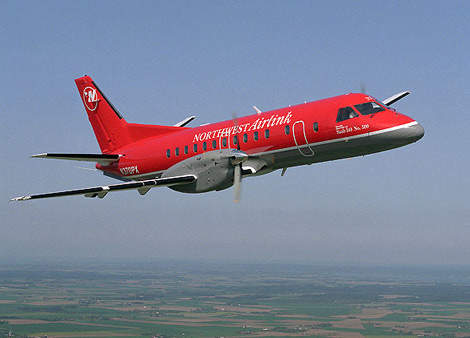
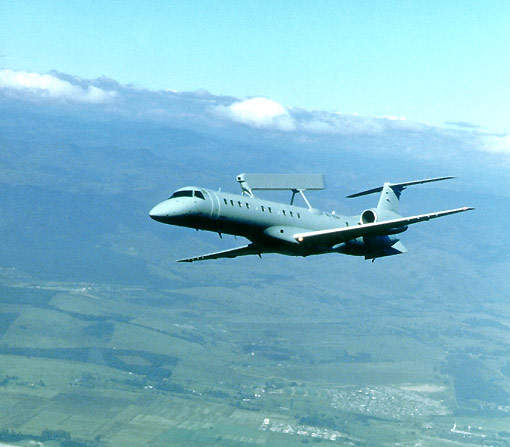


The S100B Argus airborne early warning and control aircraft entered service with the Swedish Air Force in 1997. The S100B is a Saab 340B aircraft, built by Saab Aircraft, with an Erieye mission radar from Saab (formerly Ericsson) Microwave Systems.
Recommended Buyers Guides

Six S100B Argus aircraft were produced for the Swedish Air Force, four of which are permanently equipped with early warning radar and two fitted for transport missions during peacetime.
Two were loaned to Greece prior to the delivery of EMB-145 Erieye systems, which commenced in 2003.
S100B Argus AEW&C upgrades and deliveries
In July 2006, Saab was awarded a contract to upgrade two of the Swedish Air Force’s S100B aircraft for surveillance missions and for deployment in multi-national operations. The two upgraded aircraft, the Saab 340 AEW-300, were delivered to the Swedish Armed Forces in April 2009.
In November 2007, Thailand announced the intention to buy two S100B AEW aircraft from the Swedish Air Force. The first S100 B AEW aircraft was delivered in 2010. The second aircraft, fitted with Erieye radar, is scheduled for delivery in 2013.
In July 2006, Pakistan placed an order for five Erieye systems mounted on Saab 2000 aircraft, rather than the Saab 340. The first Saab 2000 equipped with Erieye Systems was delivered to the Pakistani Air Force (PAF) in December 2009. The second was delivered in April 2010. The aircraft will undergo final tests in Pakistan, primarily focusing on the radar systems.
On patrol the aircraft operates at a typical cruise speed of 300km/h and at an altitude of 2,000m to 6,000m depending on the mission parameters.
S100B modified Saab 340B aircraft design
The airframe is a modified Saab 340B which is the hot and high variant of the Saab 340 regional aircraft, powered by GE CT-9B engines. The thrust lines of the engines, instead of being symmetrical about the centre line of the aircraft, are both angled to the starboard side in order to give improved aerodynamic control in balance with the installation of the spine-mounted radar.
The aircraft structure incorporates larger strakes below the rear section of the fuselage below the position of the tail fin. Small blade vortex generators have been built into the wing and tail to modify the local airflow and give improved control.
Erieye-based FSR 890 Flygburen spaning radar
The mission radar, the Flygburen spaning radar with the Swedish Air Force designation FSR 890, is based on the Erieye side-looking airborne radar (SLAR) from Ericsson Microwave Systems. The Erieye SLAR is a long-range pulse Doppler radar, fitted with fixed active phased array antennae and operating within the 2GHz to 4GHz, Nato E to F bands, (the US S band). The 9m-long, 900kg antenna unit is mounted on the upper spine of the fuselage and gives the aircraft its distinctive appearance.
The Erieye radar provides 360° coverage with optimum performance of the radar over the 150° azimuthal sectors on each side of the aircraft. The radar can detect fighter aircraft at a range of 350km in a dense hostile electronic warfare environment, in heavy radar clutter and at low target altitudes. The radar has a sea surveillance mode.
The Erieye system has full interoperability with Nato air defence command systems. The system uses solid-state electronics, open-system architecture and ruggedised commercial off-the-shelf (COTS) hardware, with general-purpose programmable workstations and full-colour liquid crystal displays.
The radar incorporates an identification friend or foe and a secondary surveillance radar (IFF SSR) with an electronic support measures unit operating over the Nato E to J bands from 2GHz to 18GHz.
The main cabin is equipped with a suite of multifunction workstations for up to three operators for radar, fighter control and functions associated with the land-based operations.
The aircraft has a secure voice and datalink communications suite with HF and VHF / UHF links. The V / UHF datalink operates at 4,800bps.
Cockpit
The cockpit accommodates two pilots and a mission commander.
The main avionics bay is installed immediately aft of the cockpit. The avionics suite includes a military instrument landing system (TILS), a Rockwell Collins APS-85 automatic flight control system, a Lockheed flight data recorder and Sundstrand ground proximity warning system. The aircraft’s navigation system includes an integrated inertial navigation and global positioning INS / GPS system.
Engines
The GE CT7-9B engines have automatic power reserve and are fitted with Kidde engine fire detection systems. A Cox electrical anti-icing system is installed in the engine air intakes. The Dowty four-bladed constant speed propellers, with auto-feathering and reverse pitch, have a diameter of 3.35m.
There are four fuel tanks, with an inboard and an outboard tank in each wing, of total fuel capacity 3,220l.
A single point pressure refuelling inlet is installed in the leading edge of the starboard outer wing and a gravity refuelling point is installed in the centre of the outer section of both wings.
A Hamilton Sundstrand auxiliary power unit is installed in the modified and extended tailcone. A third air cycle pack dedicated to mission system cooling is installed in the cargo compartment.
Landing gear
The AP Precision hydraulically operated retractable landing gear is fitted with Goodyear wheels, ABS carbon disc brakes on the main landing units and a Hydro Aire anti-skid system.
The minimum turning radius is 8.90m.
