

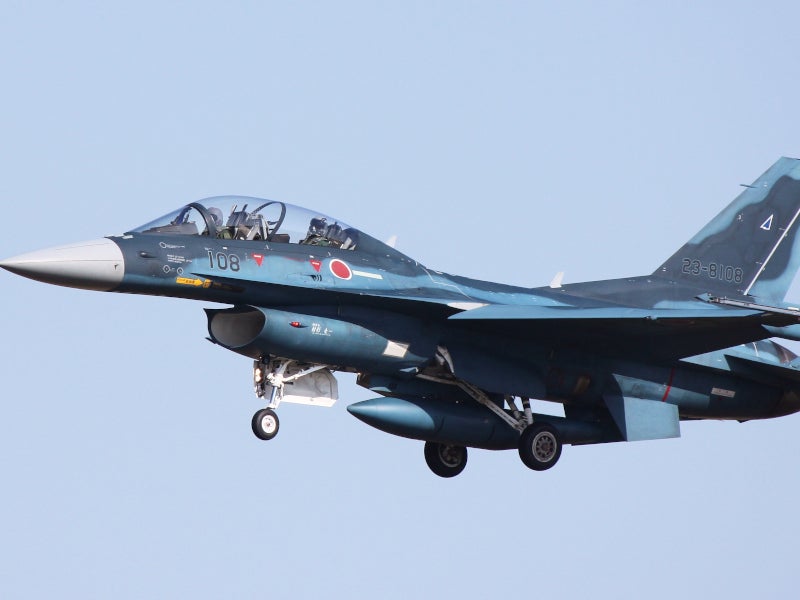
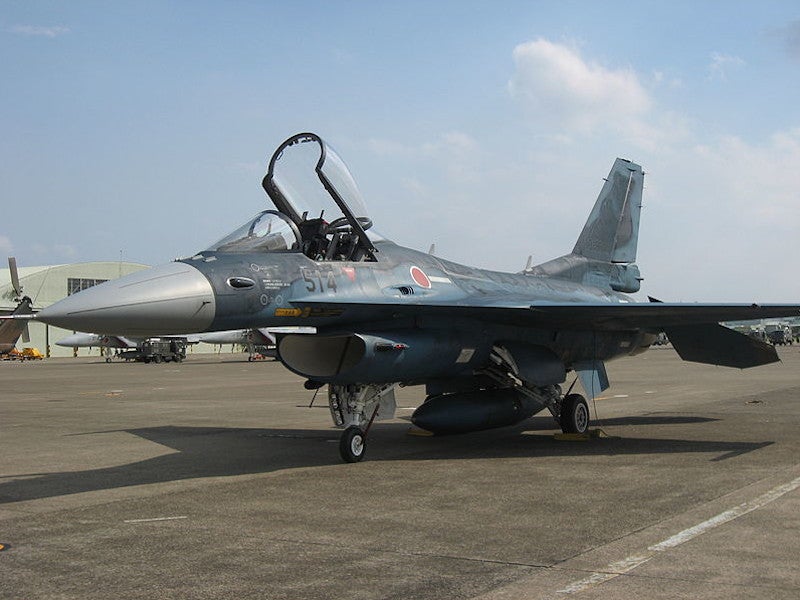
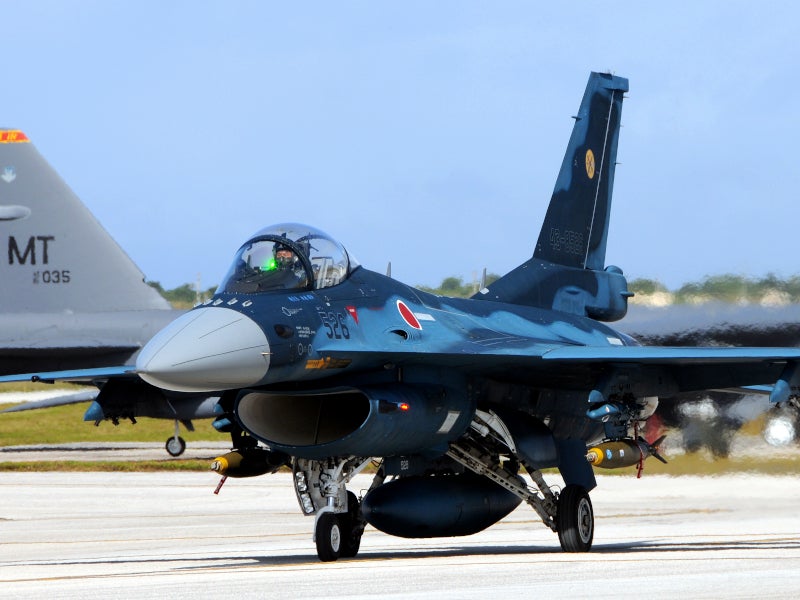
The F-2 support fighter aircraft is a multi-role single engine fighter aircraft principally designed for the Japan Air Self Defence Force (JASDF). It is the result of a joint Japan and USA development programme.
Mitsubishi Heavy Industries (MHI) is the prime contractor and Lockheed Martin Aeronautics Company serves as the principal US subcontractor. The F-2A is the single-seat version and F-2B is the two-seat version.
Recommended White Papers

Recommended Buyers Guides

The Japanese Defence Agency originally planned to procure a total of 130 F-2 aircraft (83 single-seat and 47 two-seat aircraft) with deliveries to beyond 2010, but in early 2007 this number was reduced to 94.
The initial order was for 81 aircraft. A further five were ordered in March 2007 in a $150m contract. MHI awarded a further $250m contract to Lockheed Martin in April 2008 to manufacture components for eight more F-2 aircraft. The contract was the 12th annual contract awarded by MHI to Lockheed Martin.
Japan is curently delveloping a new advanced fighter jet to replace the Mitsubishi F-2 support fighter aircraft.
F-2 fighter programme and development
In 1987, the JASDF selected a variant of the F-16C as the Japanese FS-X aircraft to replace the Mitsubishi F-1 aircraft, and in 1988 Mitsubishi was selected as prime contractor for the aircraft, which became known as the F-2. The programme involved technology transfer from the USA to Japan, and responsibility for cost sharing was split 60% by Japan and 40% by the USA.
Four flying prototypes were developed, along with two static prototypes for static testing and fatigue tests. Flight trials of the prototypes were successfully completed by 1997, and the aircraft entered production in 1998.
The first production aircraft was delivered to the Japanese Defence Agency in March 2005. The aircraft are being assembled at Mitsubishi’s Komaki South Plant in Nagoya. MHI expects to complete deliveries of 76 aircraft in the near future.
In June 2007, the F-2 made its first overseas deployment to Andersen AFB in Guam for joint US / Japan exercises. The F-2 dropped live weapons for the first time during the exercises.
F-2 fighter design
Kawasaki is responsible for the construction of the midsection of the fuselage, as well as the doors to the main wheel and engine. Mitsubishi builds the forward section of the fuselage and the wings.
Mitsubishi has also designed the lower-wing box structure, which includes lower skin, spars, ribs and cap, and is made from graphite-epoxy composite and co-cured together in an autoclave. This is the first application of co-cured technology to a production tactical fighter.
Fuji manufactures the upper-wing surface skin, the wing fairings, the radome, flaperons and the engine air-intake units and the tail section. Lockheed Martin Aeronautics Company supplies the rear section of the fuselage, the port-side wing boxes and the leading-edge flaps.
Cockpit
The cockpit is equipped with three multifunction displays, including a liquid crystal display from Yokogawa. The pilot’s head-up display was developed by Shimadzu.
Integrated weapons system of F-2 fighter
The aircraft’s integrated electronic warfare system, mission computer and active phased array radar were developed by Mitsubishi Electric.
An M61A1 Vulcan 20mm multi-barrel gun is installed in the wing root of the port wing. There are 13 hardpoints for carrying weapon systems and stores: one on the fuselage centreline, one on each wing-tip and five under each wing. The stores management system is supplied by Lockheed Martin.
There are two Frazer Nash common rail launchers manufactured by Nippi. The aircraft is capable of deploying the Raytheon AIM-7F/M medium-range Sparrow air-to-air missile, the Raytheon AIM-9L short-range Sidewinder and the Mitsubishi Heavy Industries AAM-3 short-range air-to-air missile.
The F-2 is armed with the ASM-1 and ASM-2 anti-ship missiles. Mitsubishi started developing the Type 80 series anti-ship missiles, ASM-1 and ASM-2, in 1980, originally for the F-1 fighter.
The fighter aircraft can also carry 500lb bombs, CBU-87/B cluster bombs and rocket launchers. The centreline and the inner-wing hardpoints can carry drop tanks with a 4,400kg fuel capacity.
Avionics and flight controls
Lockheed Martin is responsible for the avionics systems. The aircraft’s digital fly-by-wire system has been developed by Japan Aviation Electric and Honeywell (formerly Allied Signal) under a joint development agreement.
The fly-by-wire modes include control augmentation, static stabilization, and load control during manoeuvres.
Communications
The communications systems fitted in the F-2 are the AN/ARC-164 transceiver, operating at UHF band and supplied by Raytheon, a V/UHF transceiver supplied by NEC, a Hazeltine information friend or foe interrogator, and an HF radio, developed and supplied by Kokusai Electric.
F-2 turbofan engine
The aircraft is equipped with a General Electric F110-GE-129 afterburning turbofan engine. The engine develops 131.7kN and the speed of the aircraft is Mach 2. The F-2 produces 17,000lb of thrust, with 29,000lb generated when the burners are switched on.
