

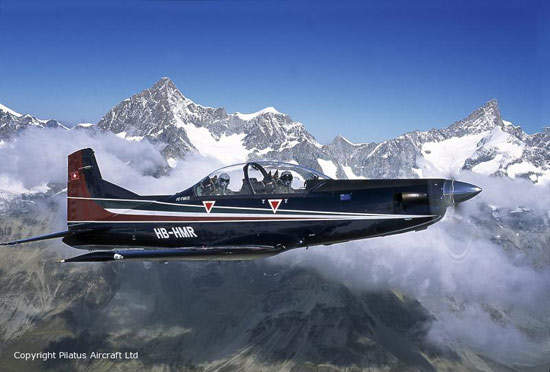
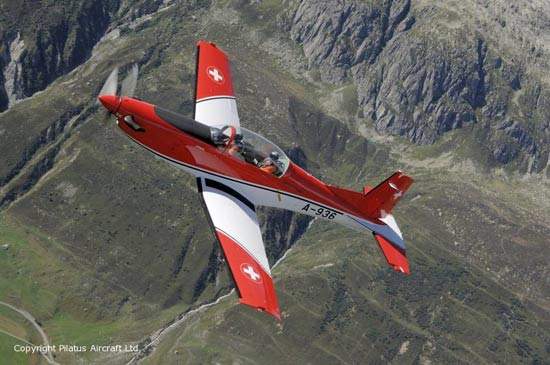
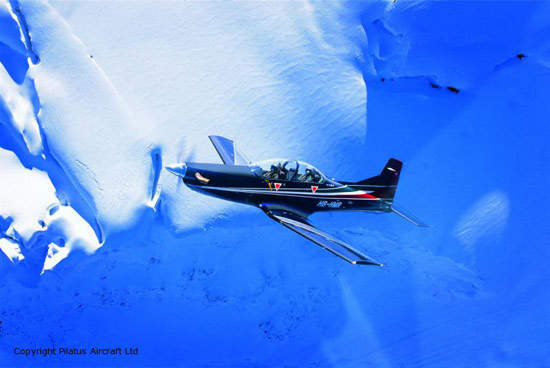
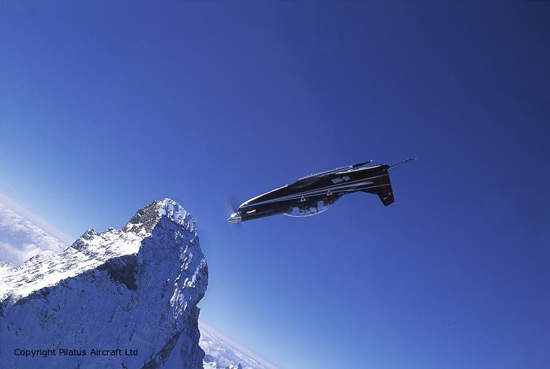
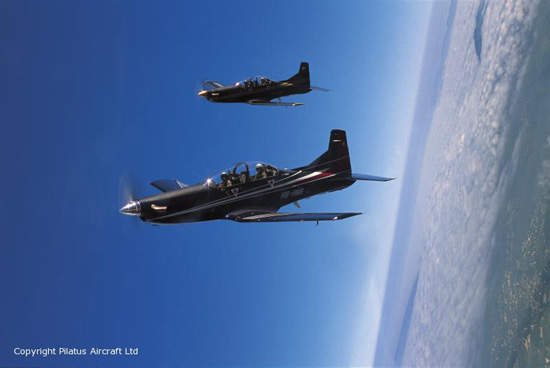
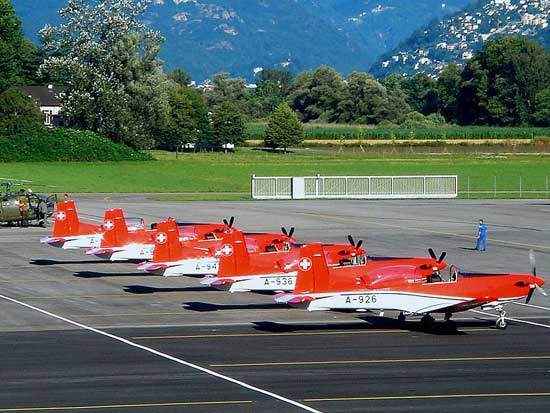
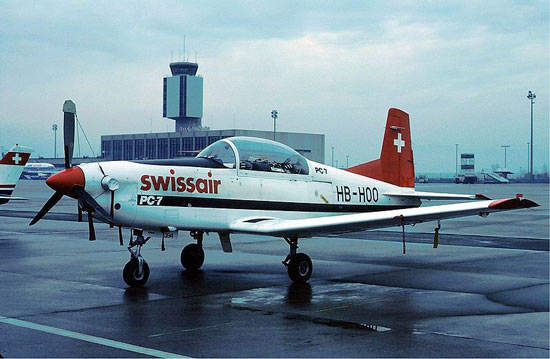
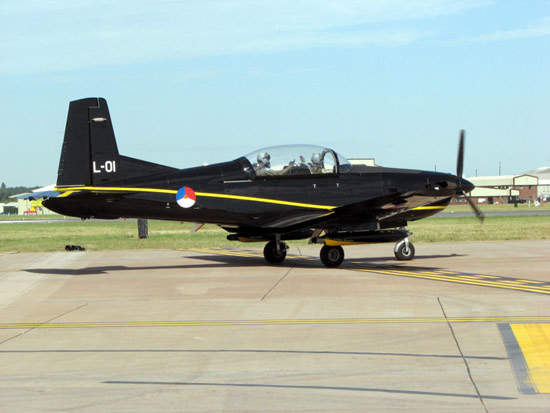

The two-seat light trainer aircraft Pilatus PC-7 turbo was built by Pilatus Aircraft in Switzerland. It can perform various functions, including aerobatics and tactical and night flying.
Recommended Buyers Guides

The PC-7 can accommodate a crew of two members (a student and trainer) and has six underwing hardpoints.
Selected by 20 air forces to train military pilots, the aircraft is fully operational in civil and military pilot training bases worldwide, and is equipped with a single Pratt and Whitney PT6A-25A turboprop engine.
The first series of the aircraft was delivered to the Myanmar Air Force in 1979. It also received Federal Aviation Administration (FAA) and Federal Office of Civil Aviation (FOCA) certifications for European and US regulations.
PC-7 orders and deliveries
More than 500 PC-7 and PC-7 MkII aircraft have been sold to 21 countries. Mexico purchased 88 PC-7s, deliveries of which began in 1980, while approximately 52 PC-7s were bought by Iraq, with deliveries beginning in 1980. However, the Iraqi fleet was destroyed during the US invasion in 2003. Malaysia acquired 44, deliveries of which began in 1983.
Other Pilatus PC-7 customers include the Swiss Air Force (40), Angola (27), Austria (16), Bolivia (24), Bophuthatswana (three), Botswana (seven), Chile (ten), France (five), Guatemala (12), Iran (35), Myanmar (19), Netherlands (13), UAE / Abu Dhabi (31) and Uruguay (six).
Deliveries to Angola began in 1982 and to the Swiss Air Force in 1986. Meanwhile, deliveries to Austria, Bolivia, Bophuthatswana, Botswana, Chile, France, Guatemala, Iran, Myanmar, Netherlands, UAE / Abu Dhabi and Uruguay, began in 1984, 1979, 1989, 1990, 1980, 1991, 1980, 1983, 1979, 1989, 1982 and 1992, respectively.
In May 2012, the Indian Air Force placed a $523m contract with Pilatus Aircraft for 75 PC-7 MkII aircraft.
The first was inducted into service in May 2013, followed by the first training course in July 2013. By April 2014, the Indian Air Force had received 35, with the remaining aircraft scheduled to be delivered by mid-2015.
The Botswana Defence Force (BDF) announced in 2011 that is was replacing PC-7 with the PC-7 MkII.. As of February 2013, the military has received and commissioned five MkII.
PC-7 development
The PC-7 was derived from the Pilatus P-3 training aircraft, which was launched in the early 1950s.
A P-3 prototype first flew on 12 April 1966, but the PC-7 development programme was delayed when the prototype crashed due to forced landing.
In 1973, the programme resumed using a modified engine and the new aircraft was named PC-7. The prototype completed its maiden flight on 12 May 1975, followed by a fully produced PC-7 on 19 August 1978.
Variants of PC-7 aircraft
The PC-7 has two variants: PC-7 MkII and NCPC-7. The PC-7 MkII variant is also known as the Astra, and was developed because of South Africa’s requirement for an advanced version of the PC-7.
MkII was derived from the PC-9 M aircraft and the M denotes the aircraft’s modular features. The PC-9 M aircraft is powered by a Pratt and Whitney PT6A-62 turboprop engine, which provides 863kW of output power.
This is equipped with advanced avionics and an onboard oxygen generation system (OBOGS). The PC-7 MkII aircraft consists of two underwing hardpoints, compared to the PC-7’s six.
The first PC-7 MkII had its maiden flight in August 1994 and the first delivery of was made to the South African Air Force (SAAF) in November 1994. In total, 60 were delivered to the SAAF by 1996.
The SAAF’s 35 Pilatus Astra PC-7MkII aircraft were upgraded with advanced glass cockpit components by removing the disused avionics systems, under a contract signed with Pilatus Aircraft in 2009. This also included incorporating two new flight training devices, ground based training systems and spares.
PC-7 MkII maiden flight and orders
Upgrades of the first aircraft were carried out at the Pilatus facility in Switzerland during 2009. The maiden flight of the first upgraded PC-7 MkII aircraft took place on 23 September of the same year.
Aerosud, with assistance from Pilatus field service engineers, undertook the modernisation of the remaining MkII fleet at Langebaanweg Air Force Base in South Africa.
In December 2010, Malaysia unveiled plans to procure 12 additional PC-7 MkII trainers in two batches by selling its older aircraft to the Philippines. It is currently operating 17 of 19 aircraft, as two were destroyed in accidents.
Pilatus Aircraft was awarded a BWP40m contract by the Botswana Defence Force (BDF) in April 2011 to supply five PC-7 MkII trainers to replace its PC-7 fleet, which has been in service since 1990. The contract also covers a ground base training system, spare parts and support equipment..
The NCPC-7 was developed by upgrading the standard PC-7. New features include a glass cockpit, GPS, autopilot and a second VHF radio. It was developed for the Swiss Air Force for training pilots.
In total, 18 PC-7 aircraft were upgraded to NCPC-7 and a contract for upgrading ten more was signed in February 2008.
Cockpit and avionics
The PC-7 MkII features a dual glass cockpit and is equipped with primary flight display (PFD), secondary flight display (SFD) and secondary instruments display panel (ESDP), as well as an audio radio management system (ARMS).
In addition, it includes very-high frequency communication (VHF COM) 1, VHF COM 2, ultra-high frequency communication UHF COM, VHF NAV 1, VHF NAV 2, distance measuring equipment (DME) and automatic direction finders (ADF).
A mode S transponder, GPS, radar altimeter, attitude heading reference system (AHRS), emergency locator beacon (ELT) and air data computer avionics are also installed in the cockpit.
Performance and cruise speed
The PC-7 can climb at a rate of 865m per minute. It has a cruise speed of 415km/h and can fly at 460km/h. The range and service ceiling are 1,950km and 9,150m, respectively.
Take-off and landing distances are 590m and 625m, respectively, while the maximum g-load capacity is -3 / +6 and maximum take-off weight is 2,700kg.
Turboprop engine
The Pilatus PC-7 is powered by a single Pratt & Whitney PT6A-25A turboprop engine and a three-blade Hartzell HC-B3TN-2 propeller. It can generate 485kW of output power.
The PT6A-25A is a two-shaft engine with a multi-stage compressor driven by a single-stage compressor turbine. It has another independent shaft coupling the power turbine and propeller through an epicyclic concentric reduction gearbox.
A single 522.2kW Pratt and Whitney PT6A-25C turboprop engine powers the PC-7 MkII. This offers a lower engine operating cost than the PC-7 engine.
The main difference between the engines used in the PC-7 and the MkII variant is the output capacities.
Meanwhile, the NCPC-7 has a single Pratt & Whitney PT6A-25A turboprop engine, similar to that used in the standard PC-7 aircraft.
The Global Military Aircraft Market 2011-2021
This project forms part of our recent analysis and forecasts of the global Military Aircraft market available from our business information platform Strategic Defence Intelligence. For more information click here or contact us: EMEA: +44 20 7936 6783; Americas: +1 415 439 4914; Asia Pacific: +61 2 9947 9709 or via email.
