
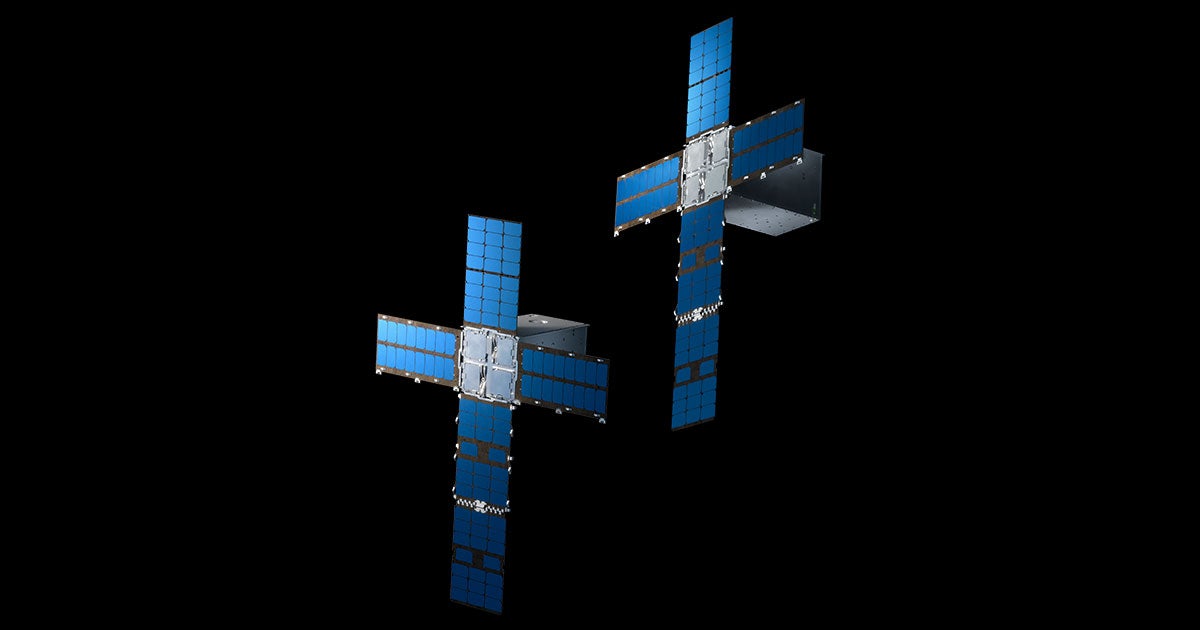
General Atomics Electromagnetic Systems (GA-EMS) has received a contract to demonstrate space-to-air optical communication using its Laser Interconnect and Networking Communication System (LINCS) and a MQ-9 Reaper.
The contract to conduct space-to-air optical communication experiment was awarded by the US Space Development Agency (SDA).
Go deeper with GlobalData


Discover B2B Marketing That Performs
Combine business intelligence and editorial excellence to reach engaged professionals across 36 leading media platforms.
SDA is the US Department of Defense’s (DoD) constructive disruptor for space acquisition.
Under this contract, GA-EMS and SDA will conduct a suite of experiments later this summer.
GA-EMS president Scott Forney said: “This space-to-air experiment is one of the first steps to validate the use of optical communication to provide low latency, secure data directly to weapons and warfighters operating in theatre, a key enabler for Joint All-Domain Command and Control.
“This award demonstrates the efficacy of GA-EMS’ optical communication technology to support the full requirements of the National Defense Space Architecture.”
LINCS is an internally developed spacecraft and consists of two 12U cubesats. A C-band dual-wavelength full-duplex Optical Communication Terminal (OCT) and an Infrared (IR) payload are hosted on each of the cubesats.
The demonstration will see the spacecraft communicate with a GA-EMS OCT integrated on a General Atomics Aeronautical Systems MQ-9 in flight at some 25,000ft.
GA-EMS and SDA are collaborating to launch the LINCS this month. On 1 June, the company performed a free space interconnect demonstration ground test of the LINCS spacecraft.
GA-EMS Missile Defense and Space Systems vice-president Nick Bucci said: “Optical communication to an air, ground, or maritime asset proposes a different set of challenges than space-to-space communication, because you have to account for distortions to the optical beam caused by atmospheric elements like weather, clouds, dust, and even wind.
“GA-EMS has invested significantly in enabling technologies, including adaptive optics that compensate for such distortions, to allow our OCTs to provide two-way, low latency, high-bandwidth, secure communication to warfighters in whatever domain they operate.”



