

- Anduril, BAE Systems, Leonardo, Lockheed Martin UK, Syos, Tekever, and Thales have been selected to put forward a design for a loyal wingman to support the Apache helicopter
- The drones will operate on a “command rather than control” principle
- In March 2026 the shortlist will be down selected to four suppliers, when they will be offered contracts to participate in producing a concept demonstrator
Seven suppliers will put forward a design for an uncrewed air system (UAS) that will support the British Army’s Apache AH-64E attack helicopters.
After a “rigorous” pre-qualification phase, the UK Ministry of Defence (MoD) has called on Anduril, BAE Systems, Leonardo, Lockheed Martin UK, Syos, Tekever, and Thales to present a viable UAS design under Project NYX, which first launched in November 2025, titled the Land Autonomous Collaborative Platform (ACP) project.
Go deeper with GlobalData


Discover B2B Marketing That Performs
Combine business intelligence and editorial excellence to reach engaged professionals across 36 leading media platforms.
In March 2026 the shortlist will be down selected to four suppliers, when they will be offered contracts to participate in research and development to produce a concept demonstrator, with initial operational capability for 2030.
Land ACP at a glance
The government envisage these drones functioning as “loyal wingmen” to a crewed helicopter; they will perform a variety of complex tasks such as reconnaissance and surveillance in contested areas, strike and target acquisition and electronic warfare.
Furthermore, the drones will operate on a “command rather than control” principle, making use of artificial intelligence for independent decision-making within the bounds of mission parameters.
This is not the first UK industry competition for an ACP: the Royal Air Force is also pursuing its own ACP to support its extant F-35 and future Tempest fighter jets.
Sovereign manufacturing
In their press release, the MoD maintain that they are “backing British companies” and “making defence an engine for growth”. This assertion is reinforced by the Defence Industrial Strategy, published last year, which assured the defence industry that if overseas investment does occur, the British economy will benefit in turn with “jobs and novel technologies”.
But it is also understood that the MoD will not purchase foreign off-the-shelf systems at all going forward, which places more significance on having manufacturing presence.
While each of the seven suppliers do have a footprint in the UK in some capacity, a few may lack their own manufacturing facility.
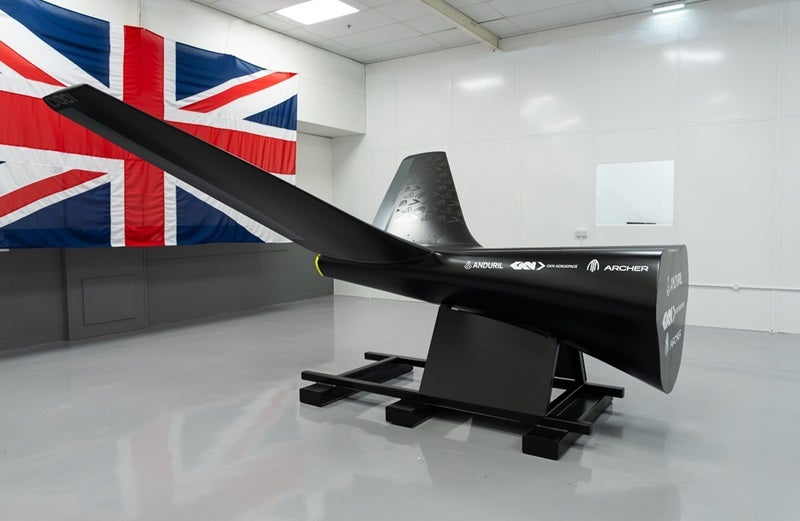
Anduril, for example, does not have a UK building site however it does plan to establish one in Wales. But in the weeks prior to the government announcing its seven Land ACP designers, Anduril shrewdly entered a partnership to collaborate on UAS solutions with GKN Aerospace, which has a significant British manufacturing base.
It could be said that Lockheed Martin UK face a similar issue, too. While the subsidiary does have a centre of excellence in Ampthill, Bedfordshire, for armoured vehicle turrets for the troublesome Ajax and general platform integration related to the F-35 Joint Strike Fighter, it does not directly manufacture systems in their entirety.
This may prove to be a potential issue for Lockheed when it comes to their tender for the UK’s Wideband Satellite System since it does not currently build satellites in Britain at present.


