
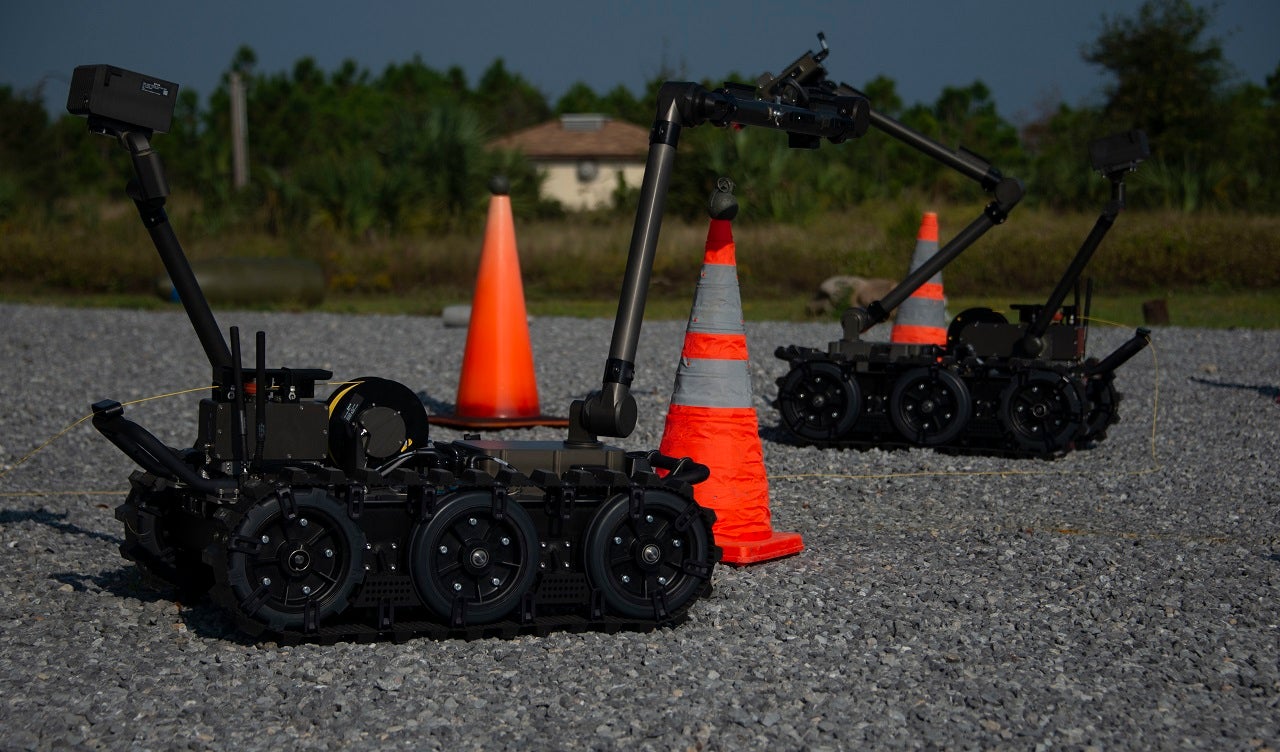
The US Air Force (USAF) Civil Engineer Center’s (AFCEC) Readiness Directorate has started delivery of new robots to explosive ordnance disposal (EOD) units.
Known as the Man Transportable Robot System Increment II (MTRS II), the medium-sized remotely operated robots are designed to offer enhanced protection capability for forces operating in harmful environments.
Go deeper with GlobalData


Discover B2B Marketing That Performs
Combine business intelligence and editorial excellence to reach engaged professionals across 36 leading media platforms.
Using the robot, EOD units can operate from a safe distance when detecting and disposing of unexploded explosive ordnance.
The USAF’s 325th Civil Engineer Squadron EOD flight at Tyndall Air Force Base (AFB) was the first unit to receive the first four units of the robotic system.
In addition, the 823rd Rapid Engineer Deployable Heavy Operational Repair Squadron, Detachment 1 took delivery of three units.
AFCEC EOD equipment programme manager master sergeant Justin Frewin stated that the US AFCEC plans to deliver 333 high-tech robots to every EOD flight across the USAF over the coming 16 to 18 months.
Around three to five robots will be delivered to all active-duty, guard and reserve flight.
The MTRS II will replace the old Air Force Medium-Sized Robot (AFMSR).
Frewin said: “Much like iPhones and laptops, this technology moves at such a rapid speed; the difference in capabilities between the MTRS II and the AFMSR are significant.
“The MTRS II controller is comparable to an Xbox or PlayStation-style controller, something the younger generation can pick up and immediately use with ease.”
The need to replace the outdated AFMSR technology increased after Hurricane Michael damaged all robots at Tyndall AFB in 2018.
Commenting on the adaptability and flexibility of the new system, 325th CES Senior Airman Kaelob King said: “Being able to update or rewrite the software means the Air Force can easily expand our capabilities down the road by adding tools, sensors and other attachments, whereas the old model required hardware updates.
“In our field, having a flexible, autonomous robot is a really good thing.”
In June, AFCEC Readiness Lab identified ways to continue the use of expired M295 decontamination kits used in chemical defence ensembles.


