
Visit our Covid-19 microsite for the latest coronavirus news, analysis and updates
Follow the latest updates of the outbreak on our timeline.
Go deeper with GlobalData


Discover B2B Marketing That Performs
Combine business intelligence and editorial excellence to reach engaged professionals across 36 leading media platforms.
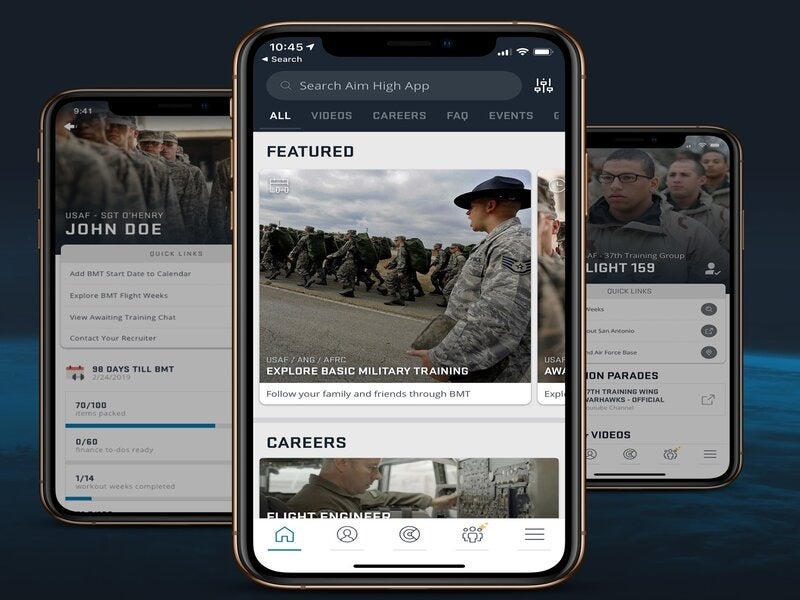
The US Air Force Recruiting Service’s (AFRS) Innovation team has launched a mobile phone application called Aim High.
Developed to help recruiters overcome the challenges posed by the coronavirus (Covid-19), the comprehensive, intuitive recruiting tool will allow them to communicate with new recruits.
It will permit improved communication between potential applicants and recruits throughout the process of joining the service with the US Air National Guard or Air Force Reserve.
The Aim High app also comes with embedded tools to guide new recruits in their career path.
AFRS Innovation superintendent chief master Sargent Jason O’Donley said: “The Aim High app has been in the works since 2018 and was originally set to be released this summer.
“But with the current Covid-19 situation, we have been working tirelessly to get it released sooner to help our recruiters accomplish their mission.
“The app is full of information about the airforce and many of the features will help recruiters and applicants communicate, allowing people to make an informed decision based on the information all in one location.”
Powered by a data-rich solution, the Aim High app provides insights about a recruit’s training to its family and friends.
Using Google Analytics, recruiters can monitor the number of active users, the pages visited, and time spent on each page.
O’Donley added: “One of the main tenets of the Aim High app is to enable all airmen to capture leads and be able to pass them directly to AFRS.
“By broadening recruiting, the airforce will increase the pool of qualified recruits and, in turn, increase the appropriate career-to-airman matches.”


